Posted by Altair Media on September 29, 2026 · Leave a Comment
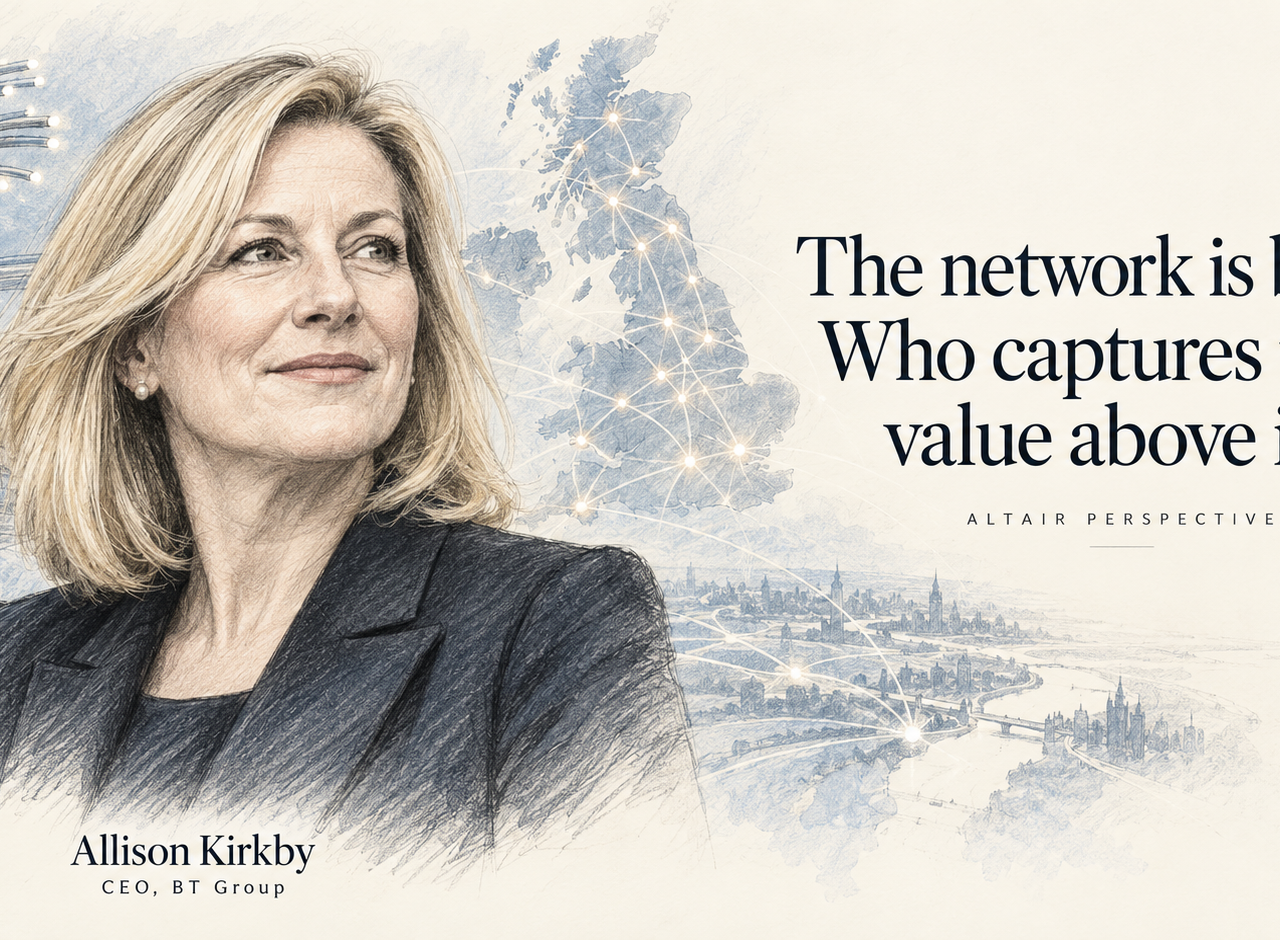
The Verizon venture gives BT global reach with less direct exposure to its international business. At home, a vast fibre network is nearing completion. The harder question is whether BT can earn more from the services built on top of it.
Allison Kirkby is changing the shape of BT. The proposed venture with Verizon would combine the companies’ international enterprise operations in a jointly owned business. BT would retain a stake in global connectivity while directing more of its own management attention and capital towards the UK. The transaction is expected to close in 2027, subject to approvals.
This is a significant shift in emphasis. BT has spent years building the physical foundations of Britain’s digital economy. Openreach’s fibre network now passes 23.4 million premises, and 9.4 million are connected. The build is approaching its target of 25 million premises by December 2026. The question for Kirkby is what kind of company BT becomes as construction gives way to competition for customers and cash flow.
The question for Kirkby is what kind of company BT becomes as construction gives way to competition for customers and cash flow.
Read More
Category: Perspective, Capital, Digital Infrastructure, Featured Headlines, Infrastructure, Insights, Telecom · Tags: Allison Kirkby, BT Group, Digital Infrastructure, Fibre Infrastructure, Openreach, sovereign AI, Telecommunications, Verizon
Posted by Altair Media on September 29, 2026 · Leave a Comment
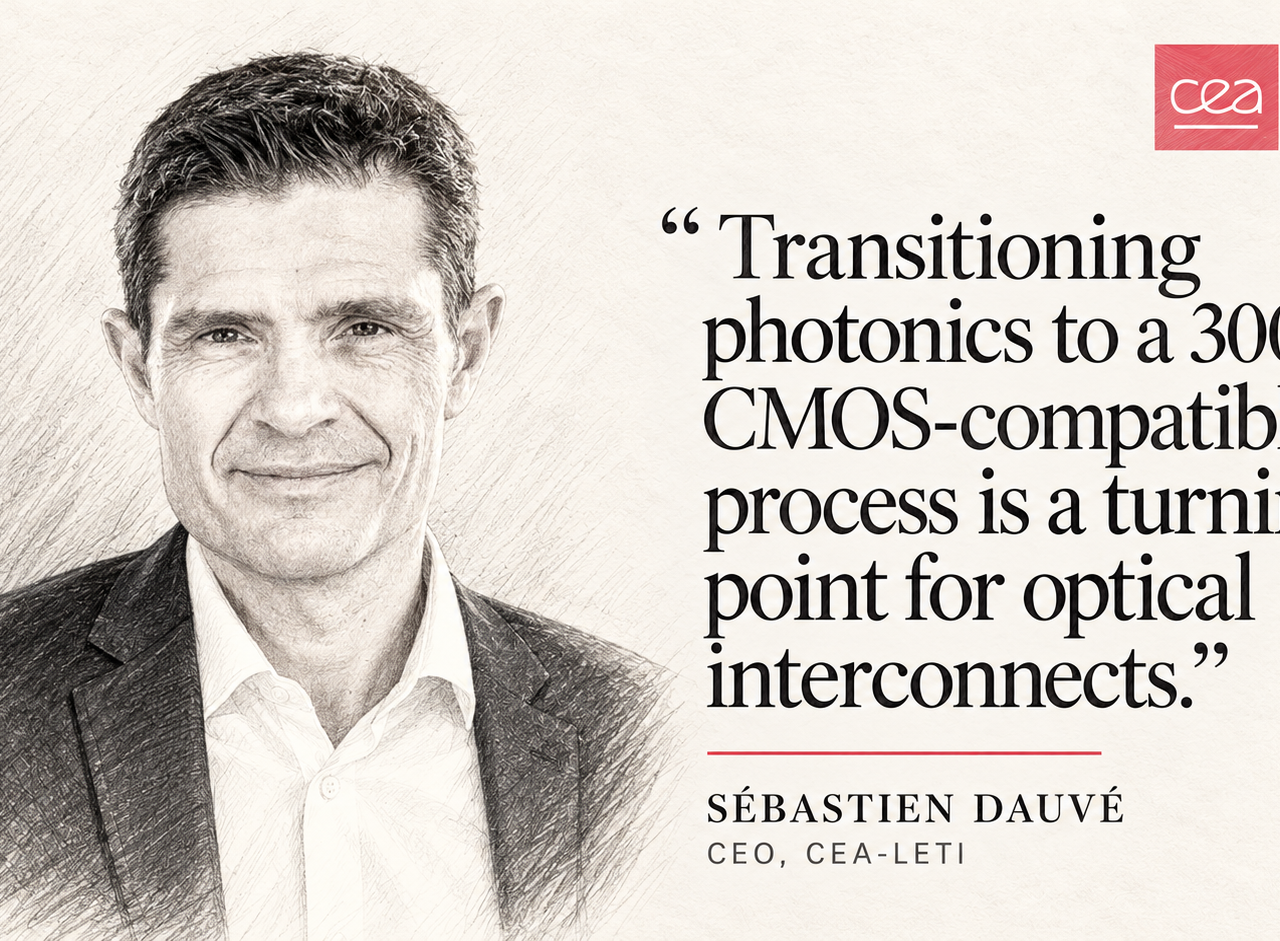
Near Grenoble, silicon photonics is already entering volume production. CEA-Leti is working on what comes next. The distance between those two facts defines Europe’s industrial opportunity.
Europe’s photonics story is often told in the future tense. New pilot lines will open. Start-ups will scale. Optical connections will help AI systems move more data with less energy. Around Grenoble, part of that future has already arrived. The harder question is whether European companies can turn technical and manufacturing strength into influence over the systems their chips serve.
The distinction matters. CEA-Leti develops technologies and processes that industry may be able to manufacture. Nearby in Crolles, STMicroelectronics is already producing its own PIC100 silicon photonics platform on 300 mm wafers for optical connections in data centres and AI clusters. These are separate industrial trajectories, but together they show how much of the photonics challenge has moved beyond the laboratory.
A production contract can bring revenue, technical learning and a stronger position for the next product generation. It does not, by itself, settle who defines the larger AI system.
The next contest is over reliability, capacity, customers and the architecture of the finished system.
Read More
Category: Perspective, Capital, Digital Infrastructure, Featured Headlines, Infrastructure, Insights, Photonics · Tags: AI infrastructure, CEA-Leti, European Industry, Grenoble, optical interconnects, Semiconductor Manufacturing, silicon photonics, STMicroelectronics
Posted by Altair Media on September 28, 2026 · Leave a Comment
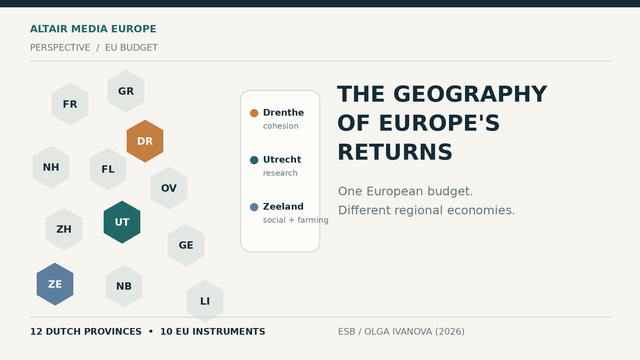
What a Dutch study of EU funds reveals about the places Europe chooses to strengthen
The Netherlands is a net contributor to the European Union. In budget negotiations, that fact often becomes the beginning and end of the argument. Money goes to Brussels; the question is how much comes back.
But money does not return to a country as a single sum with a single effect. It enters research institutions, farms, transport networks and regional economies. Its impact depends on what those places already do, what they lack and how they are connected to the rest of Europe.
A recent study by Olga Ivanova for Economisch Statistische Berichten makes that geography visible. Using the Dutch Environmental Assessment Agency’s EU-EMS model, she estimates the economic effects of ten EU funding instruments on the Netherlands’ twelve provinces. For every euro of Dutch contribution used as a benchmark, the estimated increase in provincial GDP ranges from €0.84 in North Holland and North Brabant to €2.00 in Drenthe. Seven provinces exceed one euro; the average is approximately €0.99.
“Money does not return to a country as a single sum with a single effect.”
Altair Media Europe
These are modelled economic effects, not cash repayments to provincial governments. Nor does the study calculate a return for every region in Europe. Its value lies elsewhere: it shows how misleading a national balance sheet can be when the benefits of European investment have a regional shape.
Read More
Category: Perspective, Capital, Financial Governance, Financial Infrastructure, Governance, Infrastructure, Insights, Physical Infrastructure · Tags: Cohesion Policy, Competitiveness, Dutch Provinces, Economic Geography, EU Budget, European investment, Horizon Europe, regional development
Posted by Altair Media on September 28, 2026 · Leave a Comment
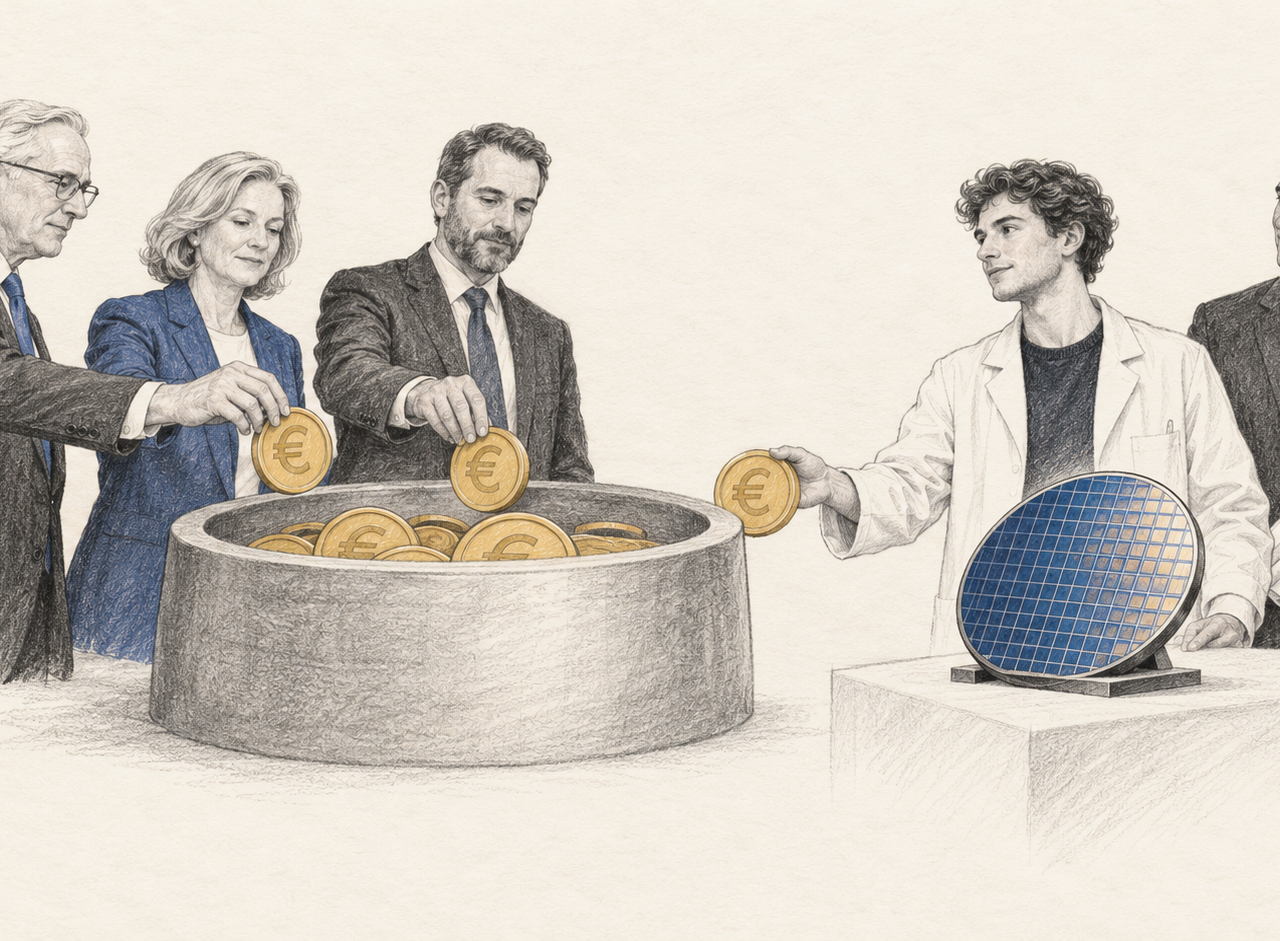
ABP has joined the Scaleup Europe Fund. Samsung is investing alongside it. How do these different sources of capital work together?
Dutch pension fund ABP has committed €250 million to the Scaleup Europe Fund. Alongside the European Commission, Novo Holdings, EIFO and CriteriaCaixa, five publicly announced commitments now total €2.2 billion. EQT is already investing in companies while it continues to raise money for the fund. The familiar €5 billion figure is its target, but the final size could be higher.
Five questions show how the fund works — and what its first investments can tell us.
🟦 Who actually finances the fund?
The European Commission has committed €1 billion. Novo Holdings has announced €500 million, ABP and CriteriaCaixa €250 million each, and the Danish investment institution EIFO €200 million. Other founding investors include Allianz, Wallenberg Investments, Santander/Mouro Capital and a group of Italian institutions. EQT has said it will contribute its own capital too. These investors provide the pool from which EQT can invest across multiple companies.
🟦 Where does Samsung’s money go?
Samsung led Mistral’s €3 billion financing round, with the Scaleup Europe Fund and PSG Equity as co-leads. Samsung invested in Mistral, alongside the fund. The €3 billion is the total raised by the company from its investors; it is not an addition to the fund’s capital, nor does it reveal the size of EQT’s investment.
That distinction is central to the model. The fund needs enough European capital to enter large rounds. It can then invest alongside financial and industrial partners from around the world.
🟦 Is €5 billion the limit?
EQT calls €5 billion its fundraising target and says the final amount may be higher or lower. Novo Holdings has referred to a possible ceiling of €6–7 billion, while EQT has said the formal hard cap still needs to be agreed. For now, €5 billion describes the ambition; it does not establish how much has been raised or the final upper limit.
🟦 What do the first six investments show?
ICEYE, Lovable, Mistral, The Exploration Company, Tandem Health and EUCLYD give the fund an early shape across space, AI, healthcare and computing infrastructure. EQT has shown that it can put capital to work while fundraising continues. Six companies are still too few to judge how widely the fund will invest across European industries and countries.
🟦 Does this give Europe a clearer vision?
The purpose is clear: bring European institutions together so promising companies can find substantial growth capital while remaining anchored in Europe. The fund gives that ambition an investment vehicle. Its long-term effect depends on the decisions made through it: which companies receive capital, whether its participation brings in additional investment, and what influence European shareholders retain as those companies grow.
The signal
ABP’s commitment strengthens the European capital behind the Scaleup Europe Fund. Samsung’s role in Mistral shows how international capital can join it around a company. The fund has begun to connect those two flows. Its harder test is whether doing so helps Europe finance its most important technologies — and remain a meaningful investor when they reach global scale.
Image credit
Illustration: Altair Media / AI-generated
Caption
European institutions contribute to a shared fund, while another investor joins a technology company directly. The figures symbolise distinct flows of capital and do not represent specific investors.
Category: Featured, Capital, Financial Governance, Financial Infrastructure, Governance, Infrastructure, Insights, Signal · Tags: ABP, Deep Tech, EQT, European investment, Growth Capital, institutional investors, Scaleup Europe Fund, Strategic Autonomy
Posted by Altair Media on September 27, 2026 · Leave a Comment
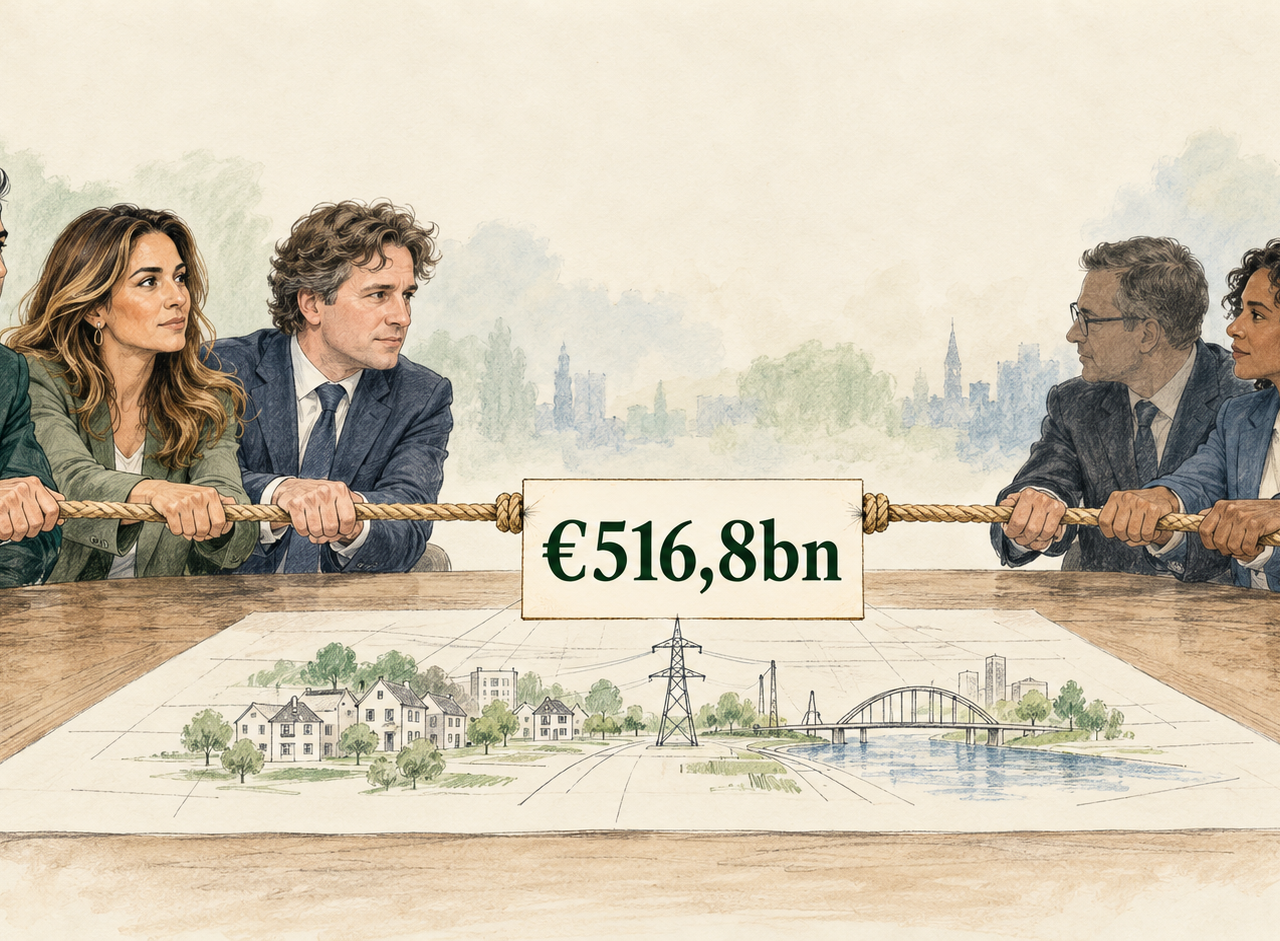
The Dutch budget talks are moving. Can the parties stop pulling long enough to build a common plan?
Coalition and opposition are negotiating over a €516.8 billion budget. Behind that large number lie smaller, contested decisions about income, social security and taxation. Recent talks have shown cautious progress. The question now is whether parties can defend the interests of their voters while taking responsibility for choices the Netherlands must make together.
Five questions show what it would take to turn that progress into an agreement.
🟦 Is this a negotiation, or an extension of the campaign?
Every party has a duty to represent the promises it made to voters. That duty does not make every change of position a defeat. Leaders need room to explain what a compromise achieves, why they accepted it and which convictions they have preserved.
🟦 Can an invitation to talk become shared ownership?
The minority government has invited opposition parties to the table and adjusted its proposals. For those parties, support must come with a meaningful role in shaping the result. They must also show how their preferred changes fit within the budget as a whole. Until the costs and funding are clear, progress in the talks remains a prospect rather than an agreement.
🟦 What gets lost when measures are negotiated separately?
A purchasing-power measure may help households now. A change to social security plans may unlock political support. But new homes need grid connections and industrial investment needs energy, workers and permits. An agreement assembled measure by measure could secure a majority while leaving those dependencies unresolved.
🟦 How far beyond the Netherlands should the parties look?
Dutch choices on energy, defence and industry are shaped by European developments. The European Commission has identified grid congestion, housing, nitrogen and technology investment among the country’s challenges. Europe also assesses whether national budgets follow the agreed spending path. An agreement must therefore address Dutch priorities within the wider commitments the country has made.
🟦 What makes an agreement worth defending?
It should set out a few shared objectives, explain who pays and show how the measures will be delivered. It must also be credible in both chambers of Parliament. Each party should be able to tell voters what it contributed and why the whole agreement deserves support.
The signal
The talks have begun to move. Their test is whether that movement produces a temporary exchange of concessions or decisions the country can sustain. Political differences will remain. The Netherlands needs those differences to lead somewhere beyond the next vote.
Image credit
Illustration: Altair Media / AI-generated
Caption
Rob Jetten, Dilan Yeşilgöz and Henri Bontenbal face fictional opposition representatives across the 2027 budget. The tug of war is symbolic; it does not depict an actual meeting.
Category: Signal, Capital, Featured, Financial Governance, Financial Infrastructure, Governance, Infrastructure, Insights, Strategic Culture, Strategy Governance · Tags: Budget Negotiations, European governance, Miljoenennota 2027, Minority Government, Netherlands, Political Compromise, Rob Jetten, Serie - Governing Without a Majority, Strategic Planning
