Monday, September 21, 2026

Europe needs Ericsson to preserve technological agency, but Ericsson needs global markets to remain relevant. The company’s strategic value lies not in technological isolation, but in keeping Europe influential inside the standards and architectures shaping worldwide communication.
Read More
Sunday, September 6, 2026

Ericsson and Nokia appear to occupy the same market, yet their industrial centres of gravity differ. Ericsson builds outward from the intelligent mobile network; Nokia connects broader infrastructure spanning radio, fibre, IP, optical systems and data centres.
Read More
Thursday, September 3, 2026

Europe has the savings and the industrial ambition. What it still lacks is the architecture connecting banks, public institutions and institutional capital to investable projects across technology, energy, agrifood, health and advanced manufacturing.
Read More
Tuesday, September 1, 2026

A mobile standard is not merely a neutral technical agreement. It is where research, institutional consensus and patented inventions become shared infrastructure. Ericsson’s influence lies deep inside this process, helping shape the grammar of global communication.
Read More
Sunday, August 30, 2026

Mobile networks are built before society fully understands how they will be used. As Ericsson helps shape 6G, it is defining the technical space from which future applications, industries and economic systems may emerge over the coming decades.
Read More
Saturday, August 22, 2026
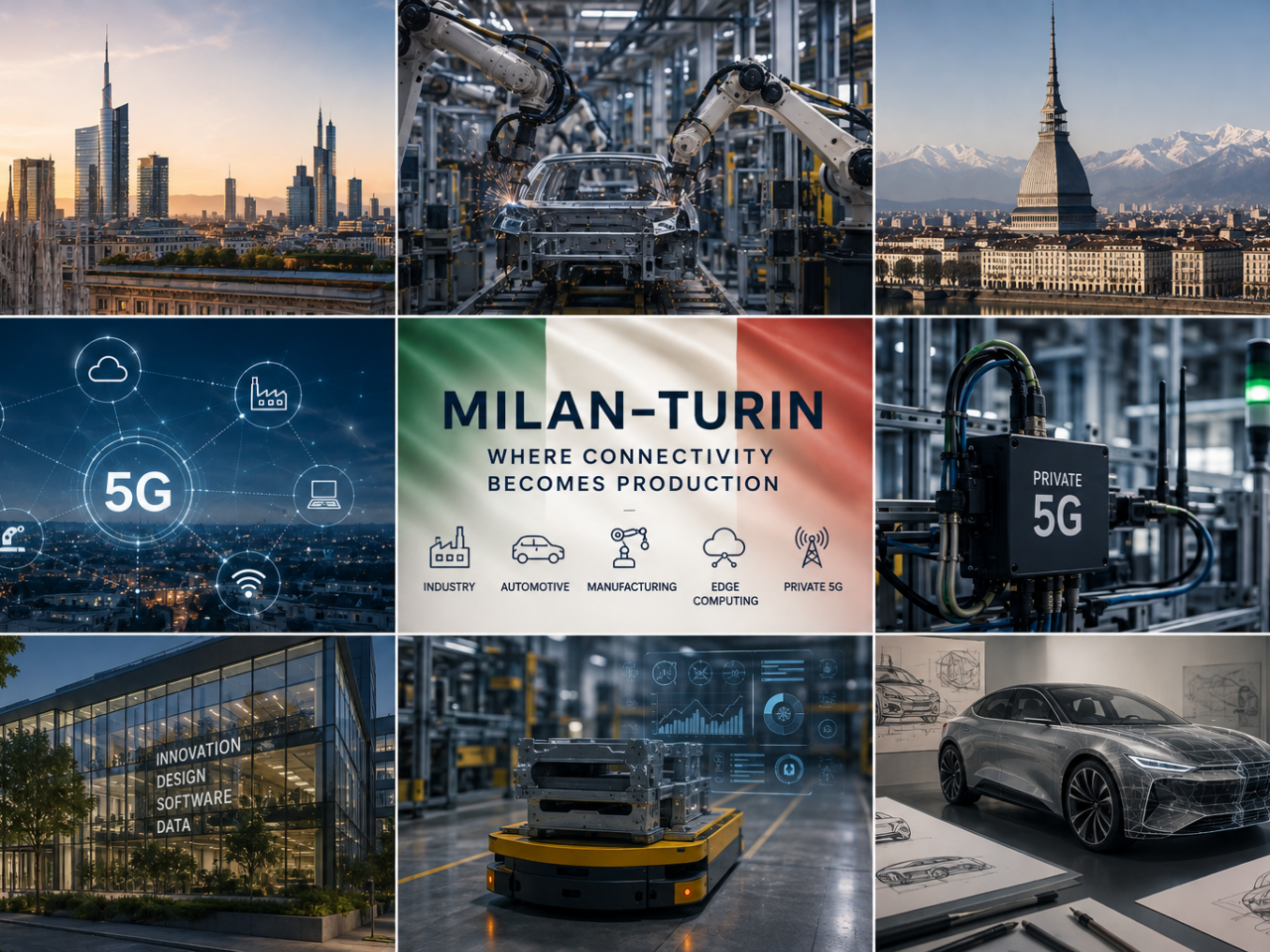
Northern Italy demonstrates how connectivity becomes production. Across the Milan–Turin corridor, private 5G, edge computing, artificial intelligence and advanced manufacturing converge to transform factories into intelligent production environments—where Europe’s digital infrastructure ultimately creates physical value.
Read More
Monday, July 27, 2026
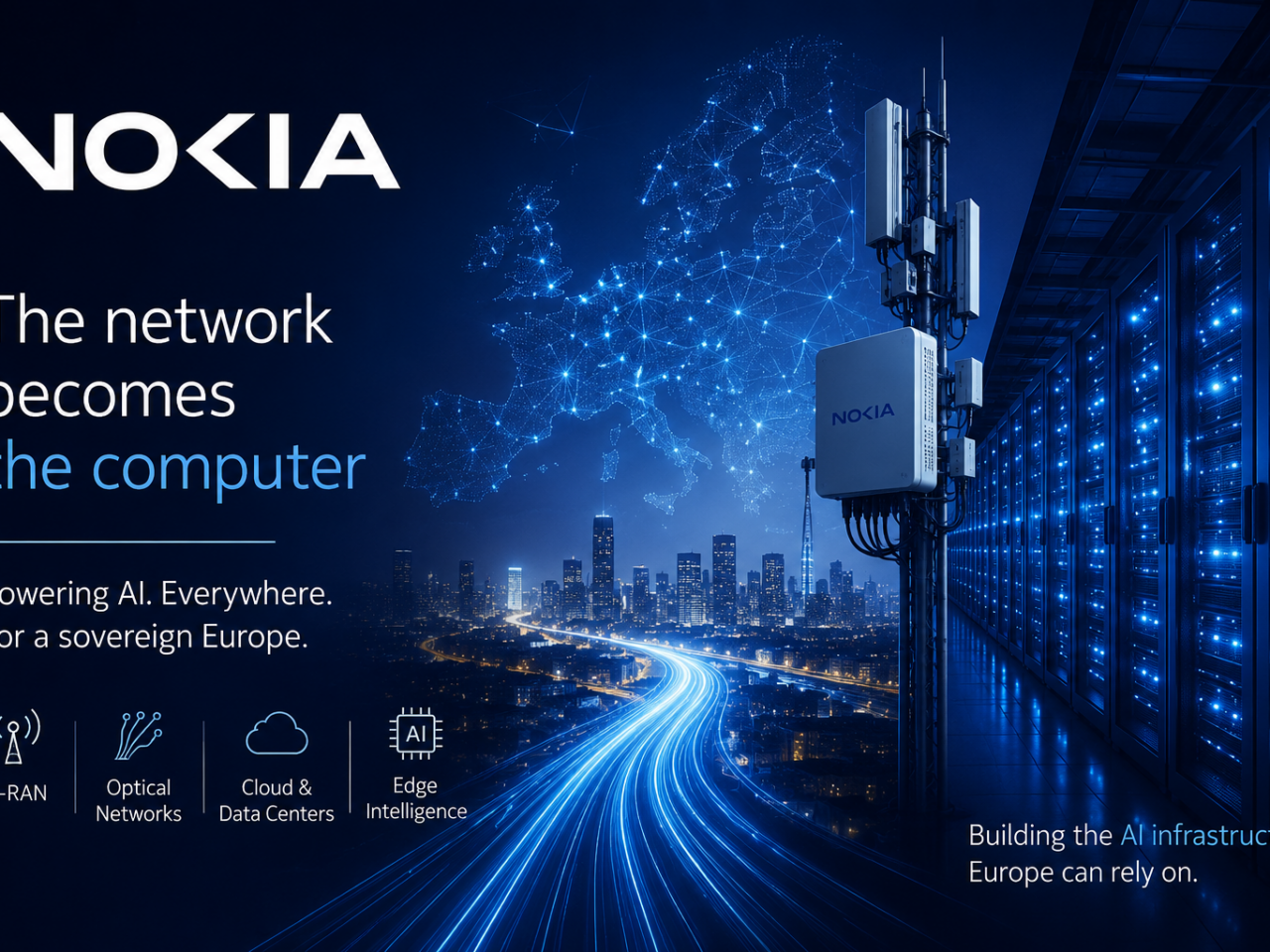
Nokia’s latest results suggest more than commercial success. As AI moves beyond hyperscale data centres towards edge computing, telecom infrastructure itself may become a strategic layer of artificial intelligence—reshaping Europe’s position in the next phase of digital sovereignty.
Read More
Thursday, July 23, 2026
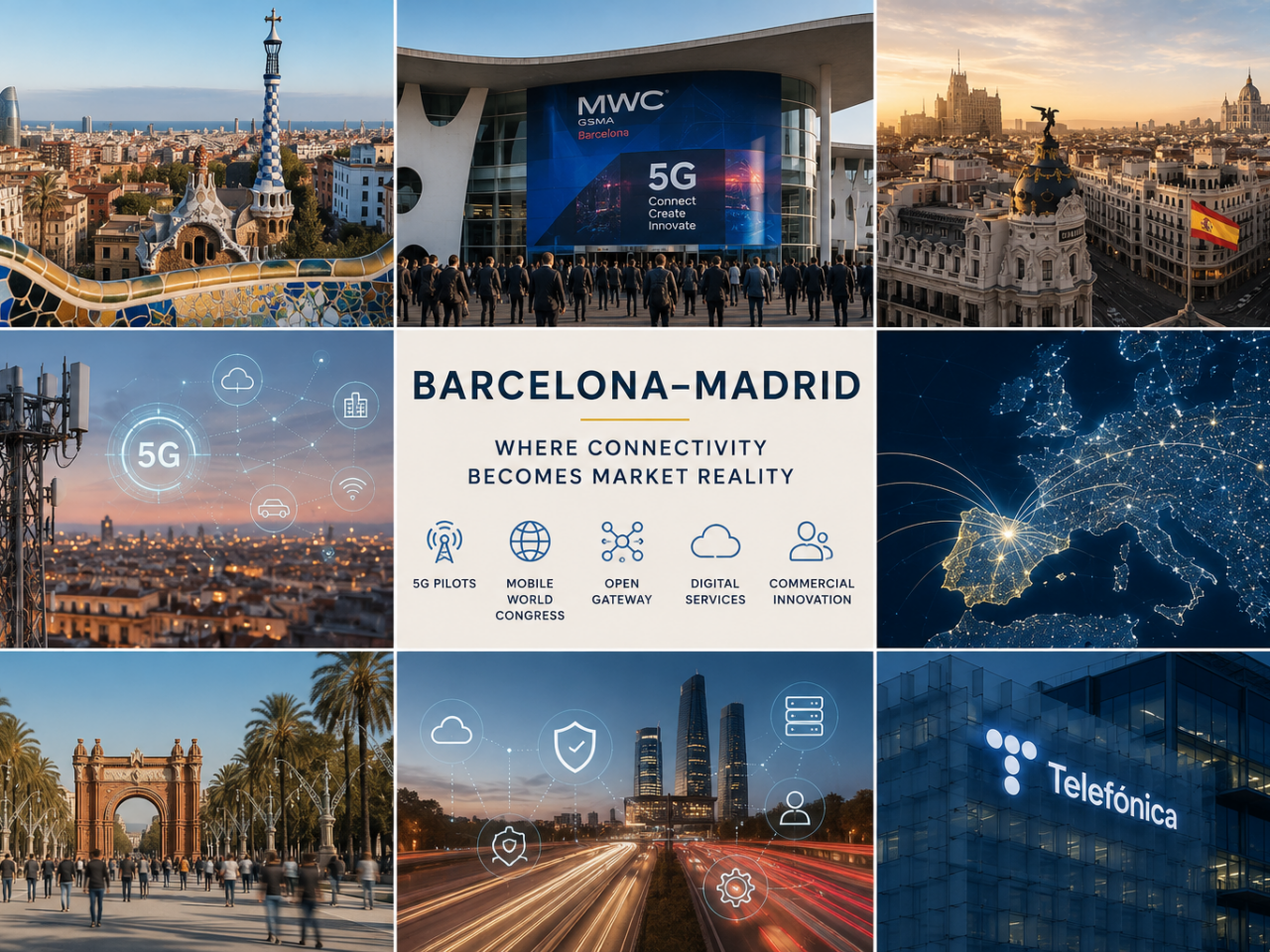
Barcelona and Madrid illustrate an often-overlooked stage of Europe’s innovation ecosystem. Beyond research and engineering, they demonstrate how connectivity, programmable networks and digital services are transformed into market-ready applications—bridging the gap between technological capability and societal adoption.
Read More
Monday, July 13, 2026
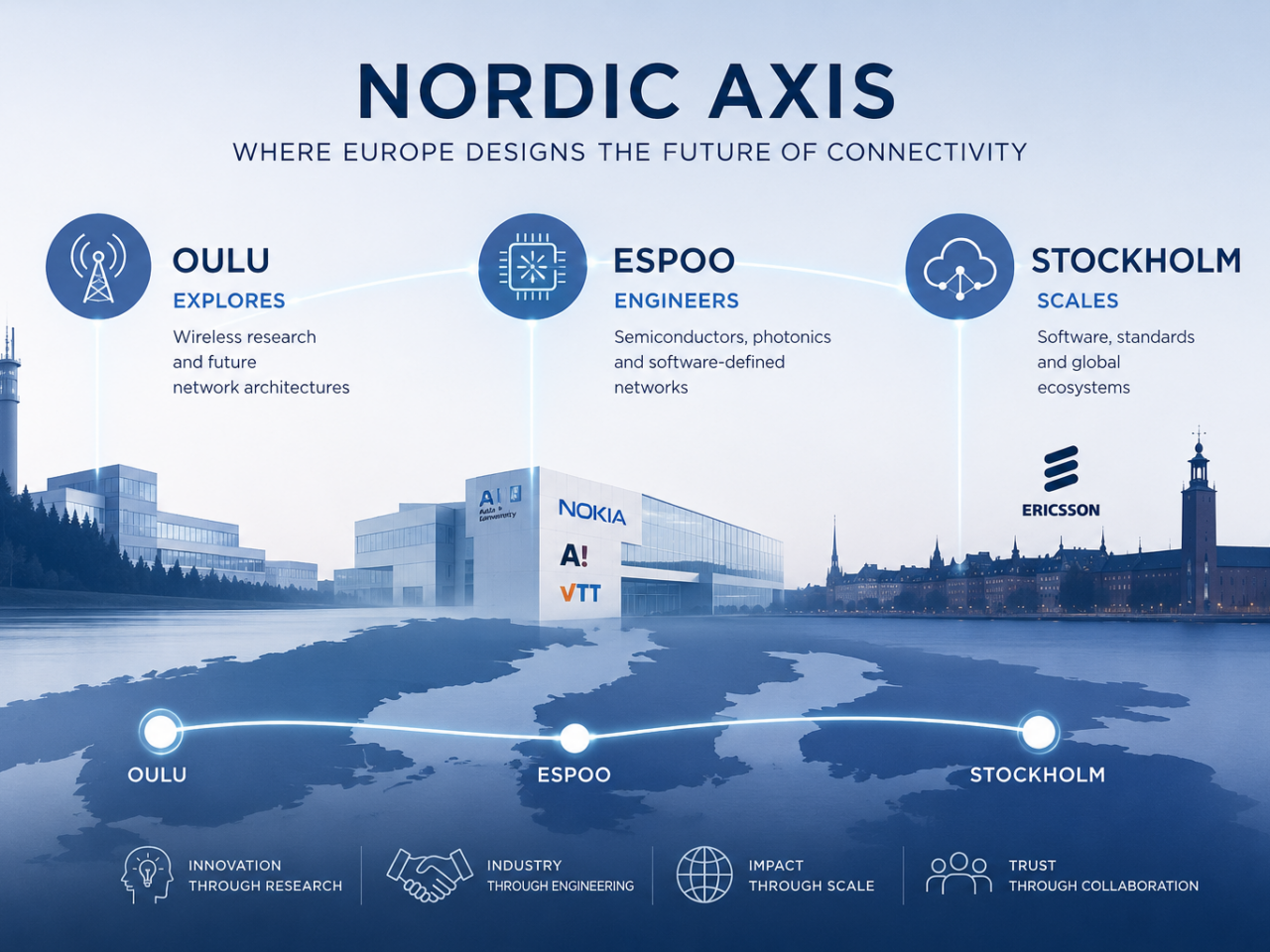
Europe’s future telecommunications leadership is not concentrated in a single city. Across Oulu, Espoo and Stockholm, a distributed ecosystem of research, engineering and industrial collaboration demonstrates how specialised regions together can shape the next generation of intelligent connectivity.
Read More
Friday, July 3, 2026
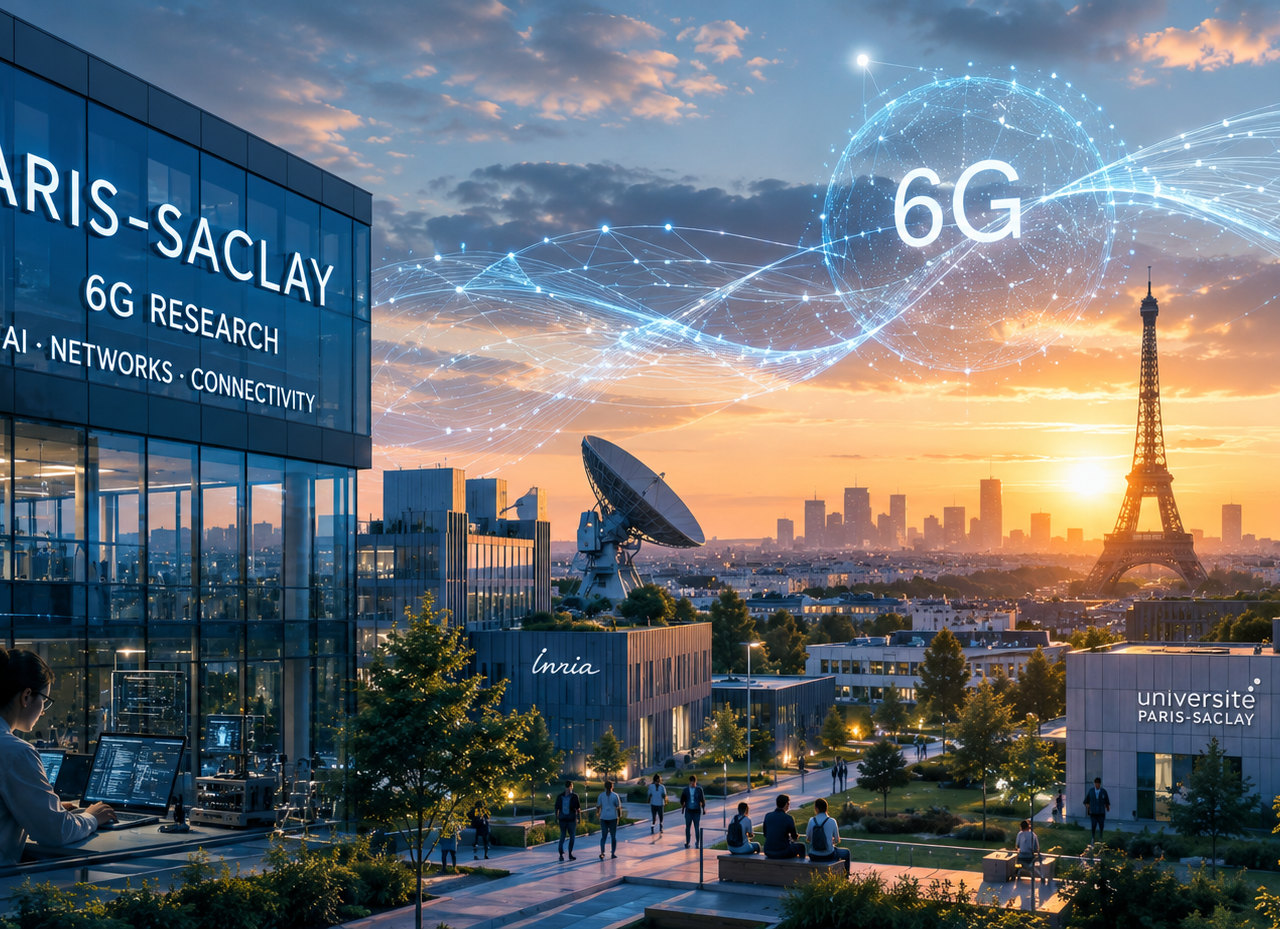
Paris-Saclay represents the intellectual foundations of Europe’s future communications systems. By combining artificial intelligence, software-defined networks, advanced research and scientific collaboration, the ecosystem increasingly shapes the concepts, architectures and paradigms that may define tomorrow’s connectivity.
Read More

 Available here: