Governing Beyond the Campaign
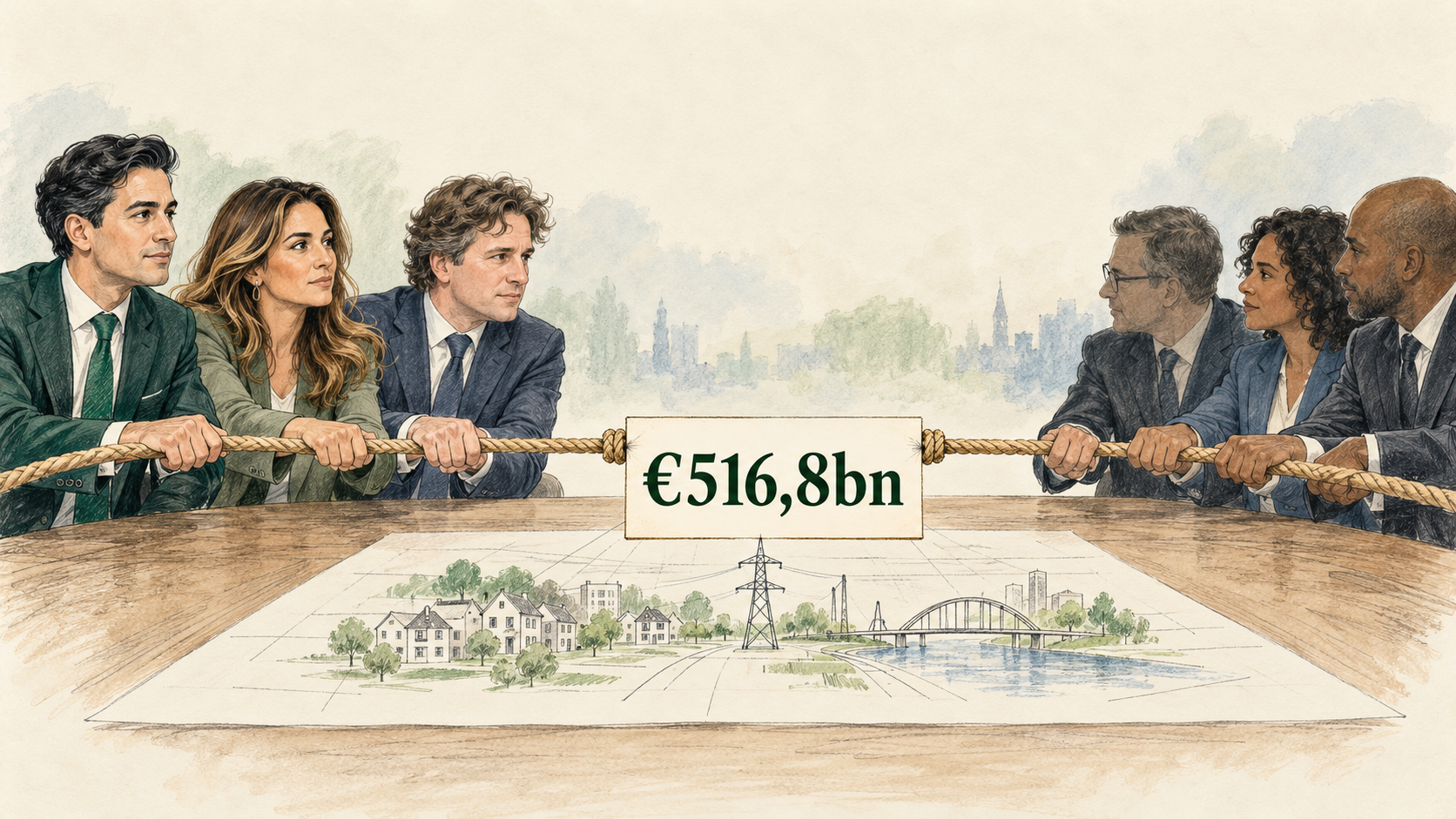
The Dutch budget talks are moving. Can the parties stop pulling long enough to build a common plan?
Coalition and opposition are negotiating over a €516.8 billion budget. Behind that large number lie smaller, contested decisions about income, social security and taxation. Recent talks have shown cautious progress. The question now is whether parties can defend the interests of their voters while taking responsibility for choices the Netherlands must make together.
Five questions show what it would take to turn that progress into an agreement.
🟦 Is this a negotiation, or an extension of the campaign?
Every party has a duty to represent the promises it made to voters. That duty does not make every change of position a defeat. Leaders need room to explain what a compromise achieves, why they accepted it and which convictions they have preserved.
🟦 Can an invitation to talk become shared ownership?
The minority government has invited opposition parties to the table and adjusted its proposals. For those parties, support must come with a meaningful role in shaping the result. They must also show how their preferred changes fit within the budget as a whole. Until the costs and funding are clear, progress in the talks remains a prospect rather than an agreement.
🟦 What gets lost when measures are negotiated separately?
A purchasing-power measure may help households now. A change to social security plans may unlock political support. But new homes need grid connections and industrial investment needs energy, workers and permits. An agreement assembled measure by measure could secure a majority while leaving those dependencies unresolved.
🟦 How far beyond the Netherlands should the parties look?
Dutch choices on energy, defence and industry are shaped by European developments. The European Commission has identified grid congestion, housing, nitrogen and technology investment among the country’s challenges. Europe also assesses whether national budgets follow the agreed spending path. An agreement must therefore address Dutch priorities within the wider commitments the country has made.
🟦 What makes an agreement worth defending?
It should set out a few shared objectives, explain who pays and show how the measures will be delivered. It must also be credible in both chambers of Parliament. Each party should be able to tell voters what it contributed and why the whole agreement deserves support.
The signal
The talks have begun to move. Their test is whether that movement produces a temporary exchange of concessions or decisions the country can sustain. Political differences will remain. The Netherlands needs those differences to lead somewhere beyond the next vote.
Image credit
Illustration: Altair Media / AI-generated
Caption
Rob Jetten, Dilan Yeşilgöz and Henri Bontenbal face fictional opposition representatives across the 2027 budget. The tug of war is symbolic; it does not depict an actual meeting.
