Interview — Professor Martijn Heck (2)

The Architecture of Intelligence: Why Better Chips Matter More Than Bigger Datacenters
I travelled to Eindhoven again, this time not to speak about geopolitics or sovereignty, but about something far less visible — architecture. Not the architecture of buildings, but of systems. Because in the age of artificial intelligence, power no longer resides primarily in steel, land or energy. It resides in the way information moves.
Professor Martijn Heck received me in the same understated manner as before: no grand statements, no rehearsed narrative, only a willingness to follow the logic wherever it led. Our previous conversation had revolved around photonics and Europe’s position in the world. This time, I asked a simpler question:
What, in his view, is the core of the story?
He did not hesitate.
“Heterogeneous integration.”
Prof. Dr. Martijn Heck
Professor of Photonic Integration — Eindhoven University of Technology
The term sounds technical, almost administrative. But as he spoke, it became clear that he was describing something far more consequential: the merging of fundamentally different technologies — electronic chips, photonic components, radio-frequency systems, memory and packaging — into a single functioning whole.
Not a better component, but a different kind of system.
Read MorePrivate Architects of the AI State
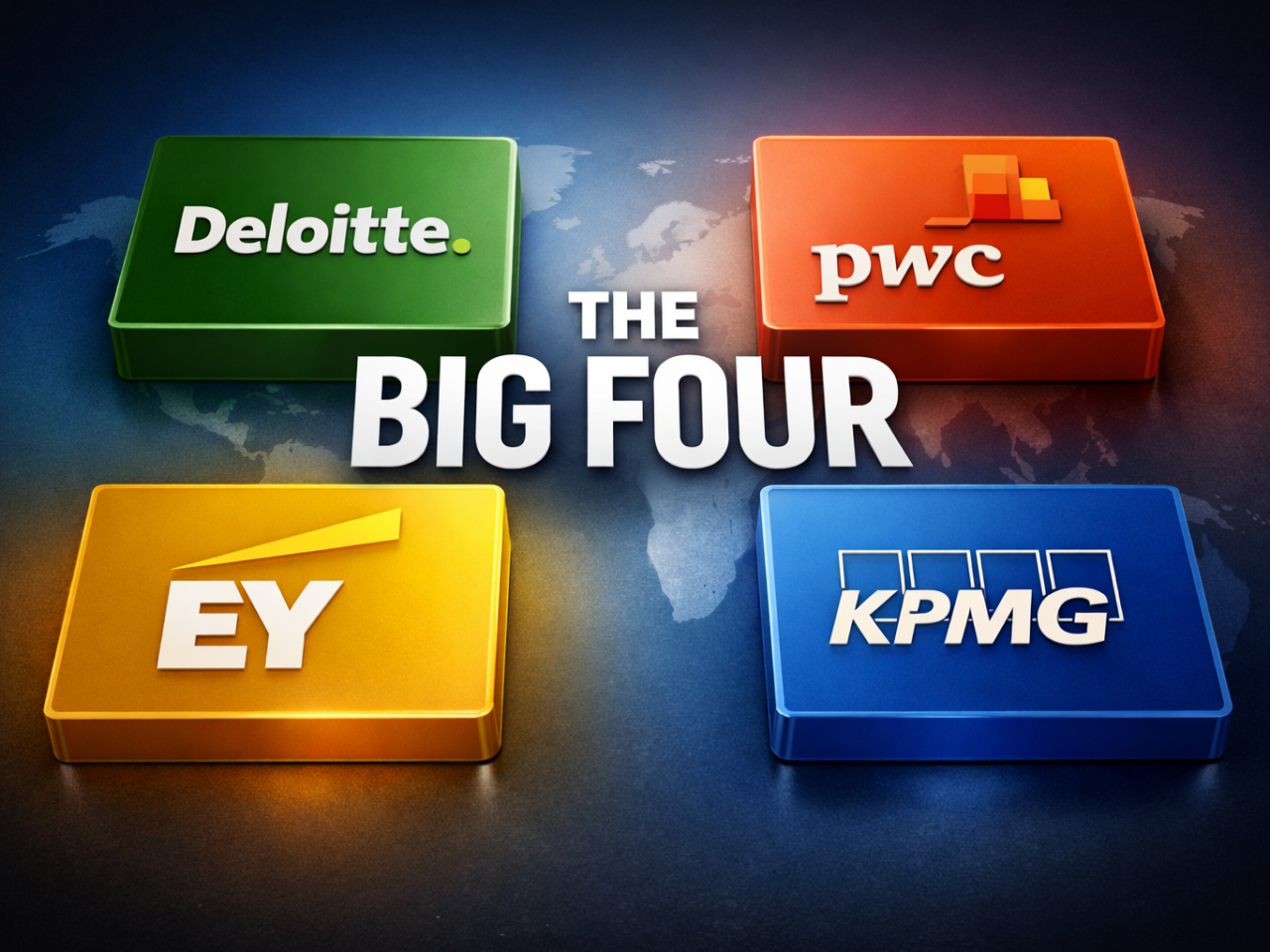
How four accounting firms became the operating system of modern governance
The Big Four
In 2024, a European government department quietly awarded a major transformation contract to one of the Big Four. The firm would redesign core data systems, advise on regulatory compliance, oversee risk management frameworks and later help audit the results. To insiders, this was routine. To outsiders, it raised an unsettling question: when the same organizations design, implement and assess the machinery of government, where does independent oversight actually reside?
This pattern repeats across Western economies. From tax systems and healthcare reforms to defense procurement and AI governance, Deloitte, PwC, EY and KPMG now sit inside the control rooms of both state and market. Their formal mandate may differ — auditor, consultant, systems integrator — but their practical role increasingly converges: they operate the connective tissue of complex societies.
“The consulting industry does not just provide advice; it performs a ‘confidence trick’. By outsourcing their brains, governments are losing the ability to think for themselves, becoming ‘infantilized’ and increasingly dependent on the very firms that hollowed them out.” Mariana Mazzucato — Professor of Economics, University College London; author of The Big Con
Mazzucato’s critique captures a deeper transformation. The Big Four are no longer merely service providers; they are becoming institutional memory banks, policy translators and operational architects for governments that have shed internal expertise over decades of outsourcing and austerity. In the process, a new form of “shadow governance” has emerged — not conspiratorial, but structural.
Read MoreThe Governance Layer

Who Designs the Rules of Artificial Intelligence in Europe?
When the European Union’s AI Act entered into force, it was presented as a historic moment. Europe, once again, had set a global standard. In Brussels, the ceremony marked not merely a legislative milestone but a declaration of intent: artificial intelligence would not evolve unchecked. It would be governed.
Yet legislation is only the beginning of power.
Laws are text. Governance is architecture. Between the formal proclamation of democratic control and the operational reality of risk dashboards, audit trails and compliance matrices lies an invisible layer — one that determines how artificial intelligence will actually function inside European institutions and corporations.
That layer does not reside in Parliament. It resides in translation.
Read More