
Mobile networks are built before society fully understands how they will be used. As Ericsson helps shape 6G, it is defining the technical space from which future applications, industries and economic systems may emerge over the coming decades.
Innovation & Technology Lab
Exploring the technologies, research ecosystems and innovations shaping the future.

Axelera AI shows how Europe’s semiconductor challenge extends beyond invention. The Eindhoven company is building energy-efficient AI processors, attracting substantial capital and global customers. The next test is whether Europe can also provide the adoption, liquidity and public markets required for long-term scale.
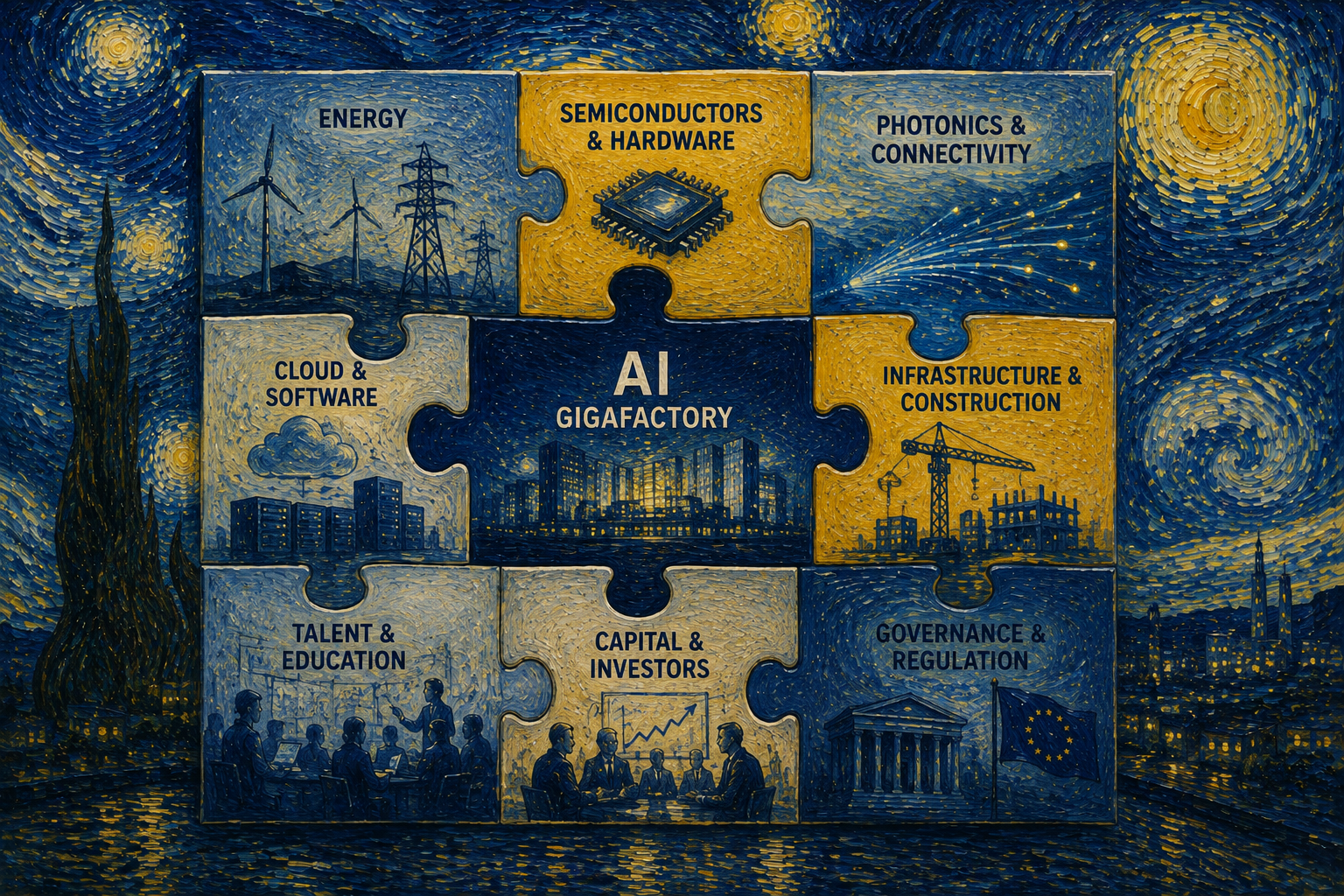
Europe’s AI ambitions will not be realised by policy announcements alone. Behind every proposed AI Gigafactory lies a vast industrial ecosystem in which energy, semiconductors, connectivity, capital and talent must be coordinated into a single infrastructure.

Europe’s energy transition is often discussed as though every country is following the same path. In reality, Europe is building its future through a remarkably diverse landscape of nuclear power, hydropower, offshore wind, solar energy and interconnected electricity networks. Understanding that diversity is essential to understanding Europe’s emerging electro-powered continent.
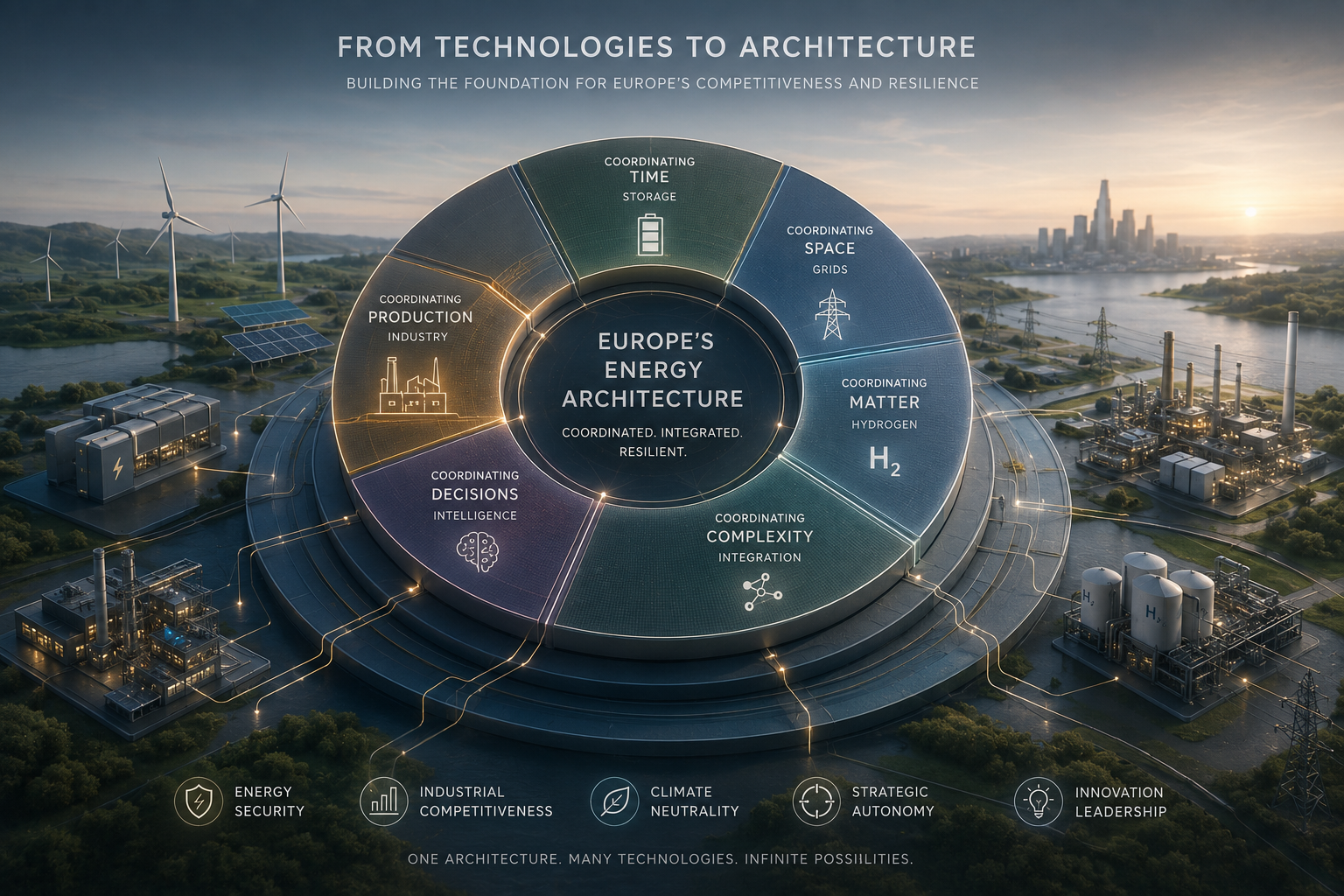
Europe’s energy transition is evolving beyond individual technologies. Storage, grids, hydrogen, digital systems and industrial transformation are converging into an integrated energy architecture in which infrastructure, intelligence and institutions increasingly function as one coordinated system.
Europe’s next energy challenge lies beyond electricity generation. As heavy industry seeks to reduce emissions while remaining globally competitive, the transition increasingly depends on redesigning production itself—rethinking heat, materials, industrial processes and manufacturing as part of a new energy architecture.
