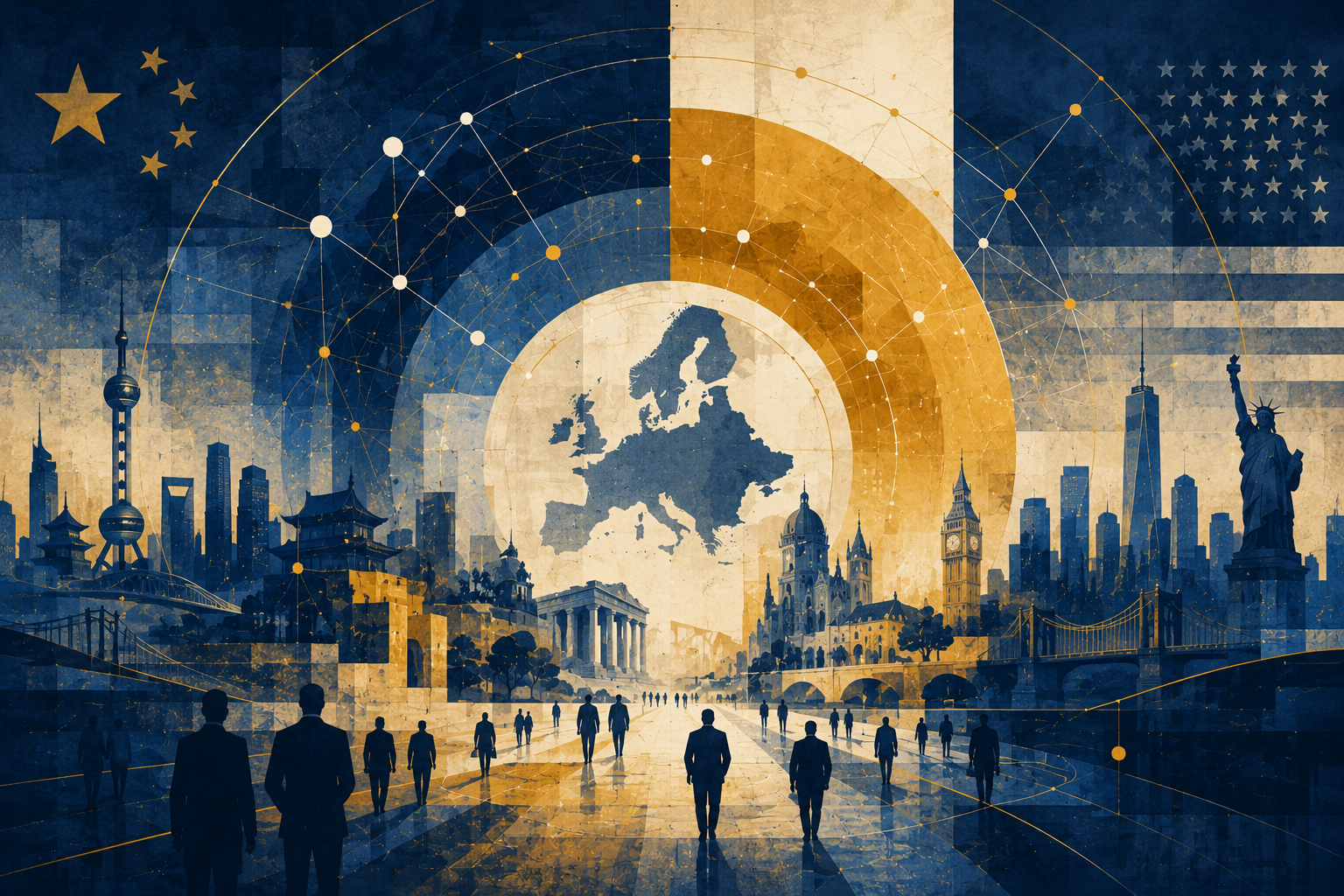
As China plans and America scales, Europe faces a deeper question: can democratic societies still build long-term technological and social direction? This opening essay explores infrastructure, sovereignty, culture and public systems in the search for a new European architecture for the digital age.
The European Architecture
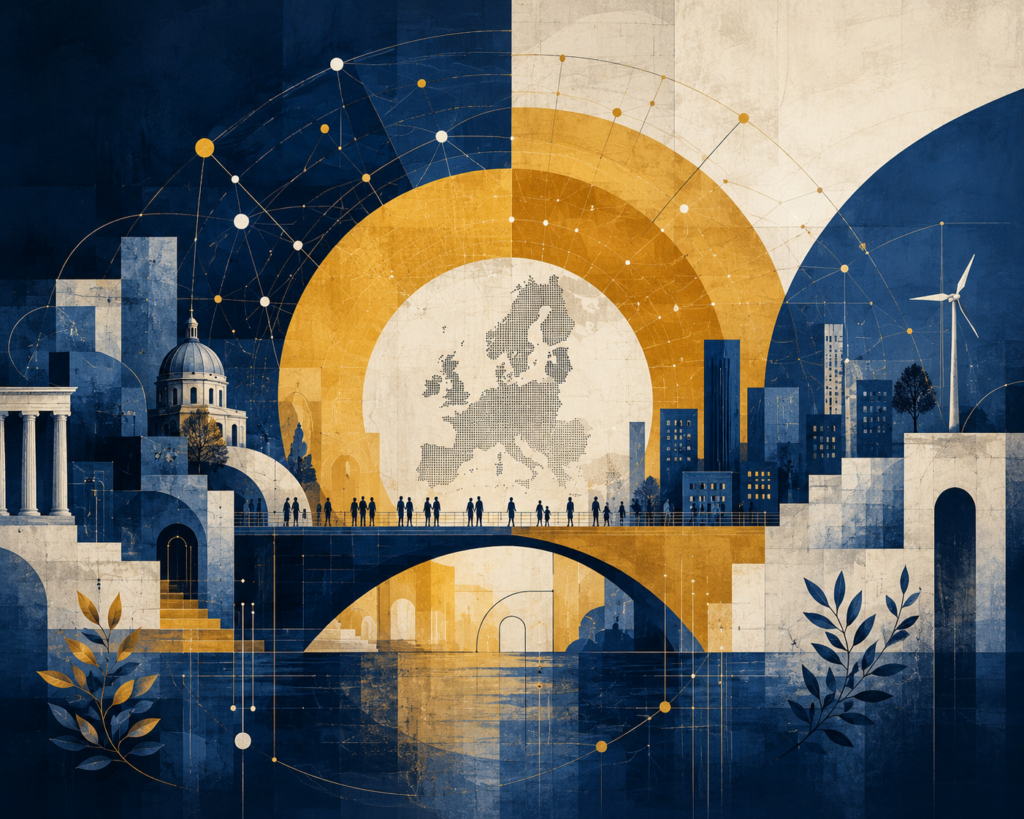
Rethinking Infrastructure, Society and Democracy in the Digital Age
A new editorial series exploring how Europe can reconnect infrastructure, democracy, culture and society in the digital age.
The European Architecture explores the growing tension between technological acceleration, economic scale and the social foundations of European society.
Across a series of essays and analyses, Altair Media Europe examines how infrastructure, finance, AI, public services, culture and democratic legitimacy are increasingly shaping daily life — and how Europe may need a new long-term societal vision for the digital age.
The series does not argue for a return to the past, but asks how Europe can modernise while preserving human connection, public trust, social cohesion and democratic resilience in an era defined by automation, platforms and algorithmic systems.

Europe spent decades treating infrastructure as a market. But cloud, telecom, AI and financial systems are no longer just services — they increasingly form the operational foundations of society itself. What happens when democratic institutions no longer fully control the systems modern civilization depends on?

Across Europe, cities are becoming smarter, faster and more efficient. But beneath the convenience of platforms and logistics, something quieter is changing: the gradual disappearance of public life, spontaneous encounter and the social spaces that make urban communities feel human.

Across Europe, citizens increasingly encounter systems that still function, but no longer feel human. As AI, automation and procedural logic reshape institutions, a deeper question emerges: does a citizen still have the right to meaningful human interpretation inside the systems governing everyday life?

Across Europe, societies are increasingly shaped by speed, stimulation and continuous availability. But as digital systems compete for attention and reaction time, a deeper question emerges: should Europe accelerate endlessly — or learn how to protect cognitive space, social rhythm and the human capacity for reflection?

Europe increasingly debates infrastructure in terms of chips, cloud and AI. Yet beneath every technological system lies another layer that is far less visible: culture. Not as entertainment, but as the shared meaning, memory and public cohesion that allow democratic societies to remain socially recognizable at all.
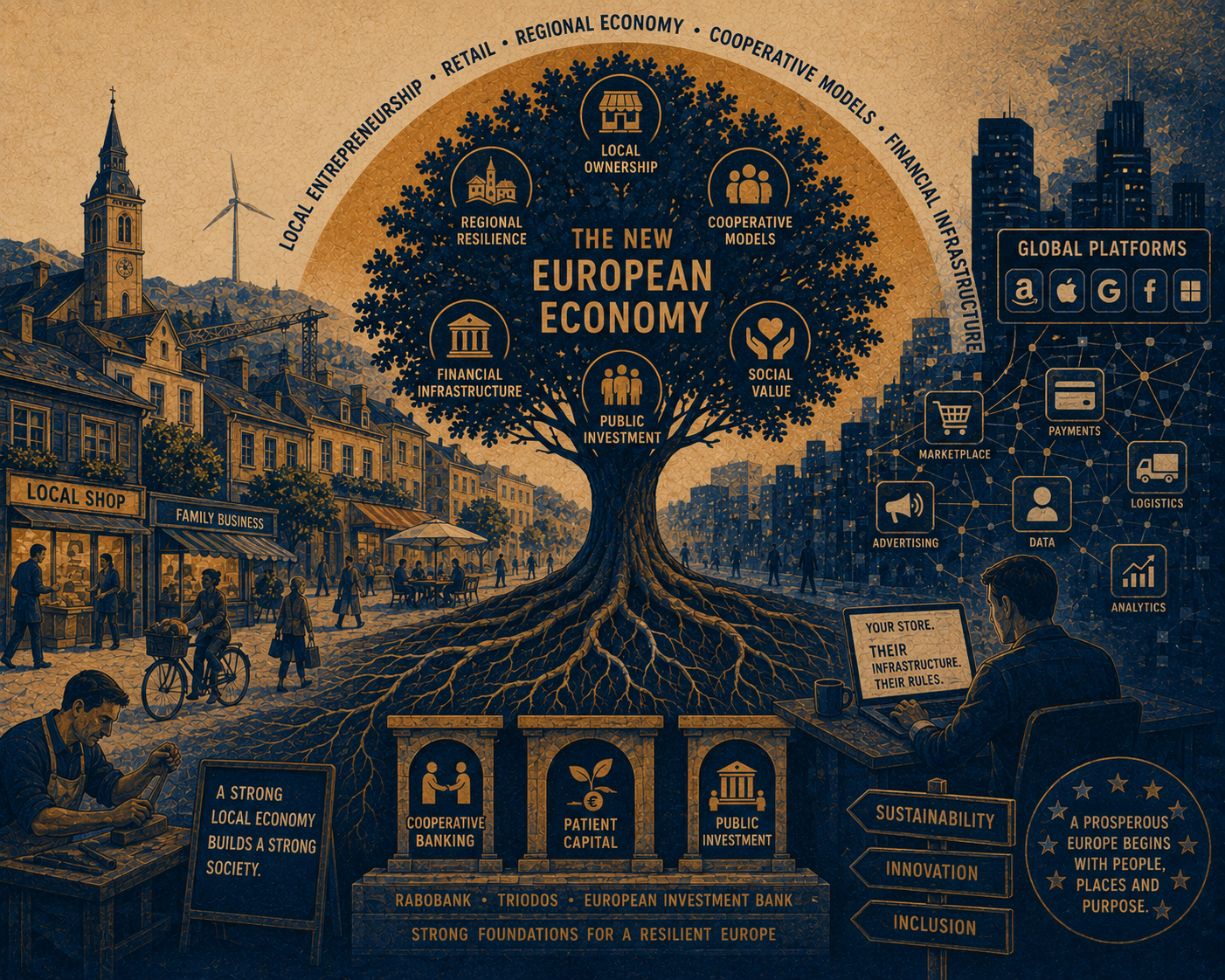
As digital platforms increasingly control visibility, logistics, payments and customer relationships, Europe faces a deeper economic question: can it remain globally competitive while preserving local ownership, regional resilience and democratic control over the infrastructure of everyday economic life?
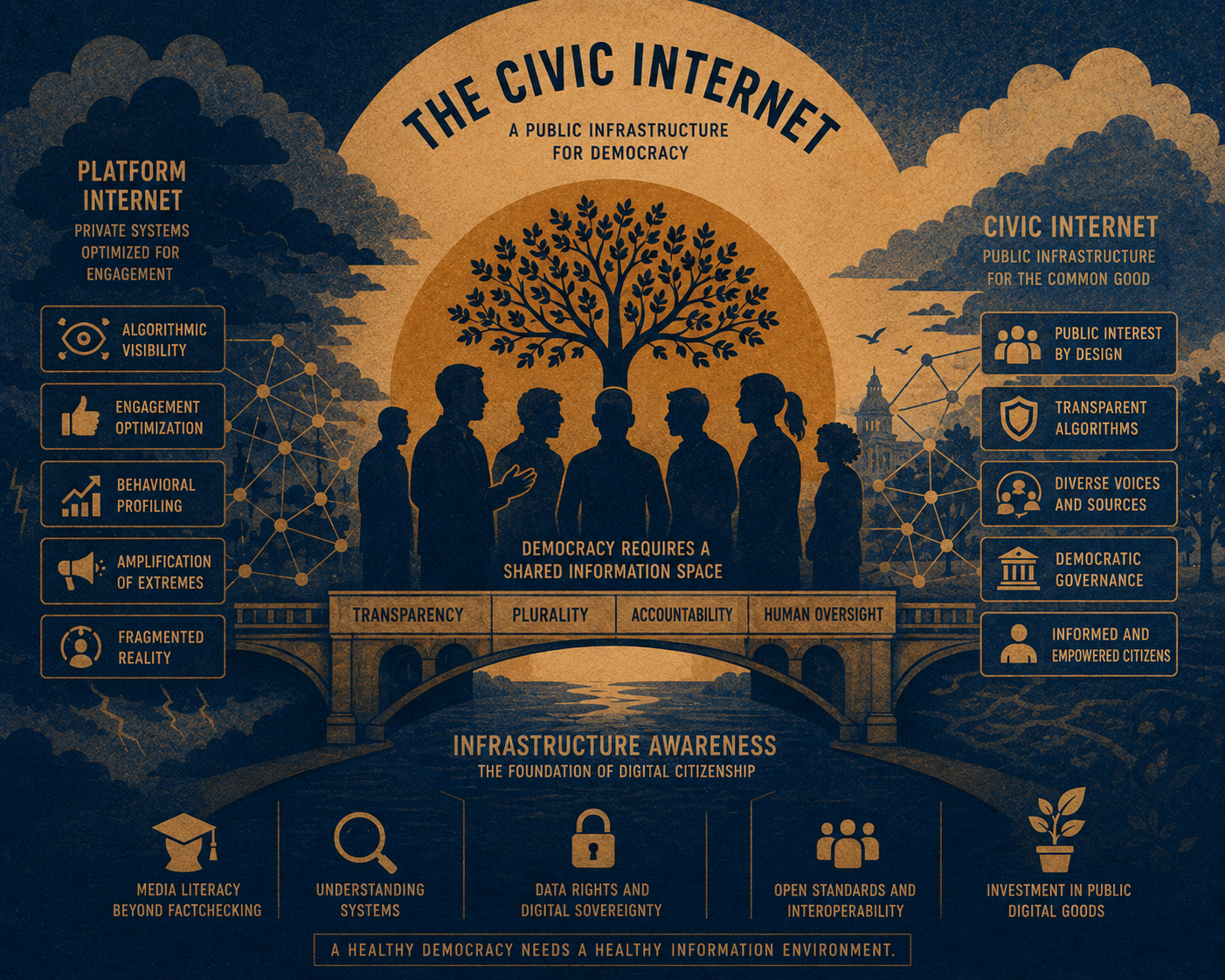
The internet is no longer merely a communication network. It has become the civic environment in which democratic reality itself is increasingly shaped. As algorithms and AI systems organize visibility, attention and interpretation, Europe faces a deeper challenge: can democratic societies still retain meaningful control over the infrastructures shaping public perception?

As Europe accelerates into an age shaped by AI, platforms and geopolitical instability, a deeper question emerges beneath the technological transformation: can societies modernize without slowly eroding the human, democratic and cultural foundations that make collective life socially recognizable in the first place?
