Posted by Altair Media on October 21, 2026 · Leave a Comment
Sultan Al Jaber and the attempt to finance both sides of the energy transition
Sultan Al Jaber occupies an unusual position in the global energy system. As CEO of ADNOC, Chairman of Masdar and Executive Chairman of XRG, he operates across hydrocarbons, renewables, advanced materials and international energy investment. His challenge is not simply choosing between the old energy system and the new one. It is deciding how the cash flows, infrastructure and capabilities of one can finance the other.
ADNOC remains the foundation. It produces the hydrocarbons that generate cash flow, support Abu Dhabi’s industrial economy and give the UAE significant weight in global energy markets. Masdar operates on another part of the spectrum, developing renewable power, storage and increasingly round-the-clock clean-energy systems.
XRG adds a third layer. ADNOC’s international investment company, valued at more than $150 billion, is building positions across natural gas, chemicals, advanced materials and energy infrastructure. Its purpose is not merely geographic expansion. It allows Abu Dhabi to move further along international energy and industrial value chains, from producing commodities towards owning assets that convert energy and feedstocks into higher-value products.
The old energy system can finance the next one — but only if the balance sheet eventually shifts.
Viewed separately, ADNOC, Masdar and XRG can appear to be very different businesses. Under Al Jaber, they increasingly form different components of the same energy balance sheet: current cash flows, future power and international industrial ownership.
More energy, not simply different energy
That distinction matters because the UAE is pursuing an addition strategy more than a simple replacement strategy.
ADNOC continues to increase oil-production capacity towards 5 million barrels per day by 2027, reflecting its expectation that hydrocarbons will remain an important part of global energy demand. At the same time, it has allocated $23 billion to reducing emissions from its own operations and developing lower-carbon technologies, while targeting a 25% reduction in operational greenhouse-gas intensity by 2030 and net zero across its operations by 2045.
Masdar is expanding in parallel. Its renewable portfolio reached 65 GW in 2026, with a target of 100 GW by 2030, and it is increasingly combining solar, wind and large-scale batteries to make renewable electricity more reliable.
These strategies are not necessarily contradictory from an energy-company perspective, but they expose the central tension in Al Jaber’s model. Lowering the emissions intensity of each barrel is an operational efficiency achievement; increasing production capacity is a volume strategy. The first can reduce emissions per unit of output without necessarily reducing absolute emissions if overall production rises.
Energy addition is not the same as energy transition.
Al Jaber’s approach is therefore better described as energy addition: maintain hydrocarbon supply while constructing the lower-carbon infrastructure that must eventually carry a larger share of global energy demand.
XRG moves the model downstream
XRG makes that strategy particularly interesting because it changes what international expansion means for Abu Dhabi.
Its investments in gas can secure positions in future supply chains, while its chemicals and advanced-materials portfolio takes the strategy further downstream. The acquisition of Covestro, for example, gives XRG exposure to materials used across construction, mobility, electronics and industrial manufacturing.
This matters because the next energy economy will not be built from electricity alone. Data centres need reliable power and cooling. Batteries require chemicals and materials. Advanced manufacturing depends on complex industrial inputs, while natural gas remains important to power systems and industrial processes in many economies.
XRG turns energy capital into international industrial ownership.
XRG therefore represents more than diversification away from oil. It is an attempt to transform Abu Dhabi from primarily a producer and exporter of energy commodities into an investor across the international infrastructure and industrial chains that use those commodities.
That makes capital allocation increasingly inseparable from industrial strategy.
Germany shows the architecture
Germany provides perhaps the clearest example of how the three platforms can work alongside one another.
In 2026, ADNOC, XRG and Masdar expanded partnerships across the German economy covering LNG and gas, renewable power, battery storage, advanced materials and industrial technology. The wider UAE–Germany relationship also included plans for substantial additional long-term investment across energy and industry.
The significance lies less in any single transaction than in the combination. ADNOC and XRG strengthen gas and energy-security relationships. Masdar builds renewable generation and storage. Covestro provides an industrial-materials platform, while partnerships with companies such as Siemens and Bosch connect the portfolio to technology and artificial intelligence.
The decisive question is not whether oil disappears, but where the next marginal dollar goes.
This is the energy balance sheet operating across borders. Hydrocarbons provide current liquidity and energy security; renewable investments create new generation capacity; industrial assets capture more value downstream; and technology is used to improve productivity and resilience across the system.
Rather than betting on one energy future, Al Jaber is building optionality across several of them.
The test is where the capital moves
That flexibility is also the greatest analytical challenge. An oil and gas company can invest billions in renewables and lower-carbon technology while continuing to commit even larger sums to hydrocarbons. Renewable capacity can grow rapidly without materially replacing fossil-fuel demand. New energy therefore does not automatically mean energy transition.
The more useful measure is capital allocation: where does the next dollar go, how long is it expected to remain there, and which businesses are expected to generate the cash flows of the future?
That test applies equally to gas. Gas infrastructure can strengthen energy security and provide flexibility to electricity systems, but long-lived assets can also lock capital into assumptions about demand that may later change. Al Jaber therefore has to manage two risks simultaneously: investing too slowly in the emerging energy system and overinvesting in assets whose economic life may prove shorter than expected.
This makes him a distinctive figure in The New Architecture of Gulf Capital. Yasir Al-Rumayyan uses sovereign capital to create markets at home. Khaldoon Al Mubarak uses it to connect Abu Dhabi to capabilities around the world. Al Jaber operates at the physical foundation beneath both models, where capital becomes electricity, molecules, materials and industrial capacity.
His strategy assumes that the transition will not arrive as a clean break between fossil fuels and renewables. For a considerable period, both systems will operate alongside one another and compete for capital, infrastructure and technical talent.
The old energy economy can help finance the next one. But it only becomes a genuine transition if the balance sheet itself gradually changes.
The decisive question is therefore not whether oil disappears, but where the next marginal dollar of energy investment goes.
This article is part of The New Architecture of Gulf Capital, an Altair Media series examining how sovereign wealth, energy and private enterprise are shaping the region’s post-oil economy.
Credit
Illustration: Altair Media / OpenAI
Caption
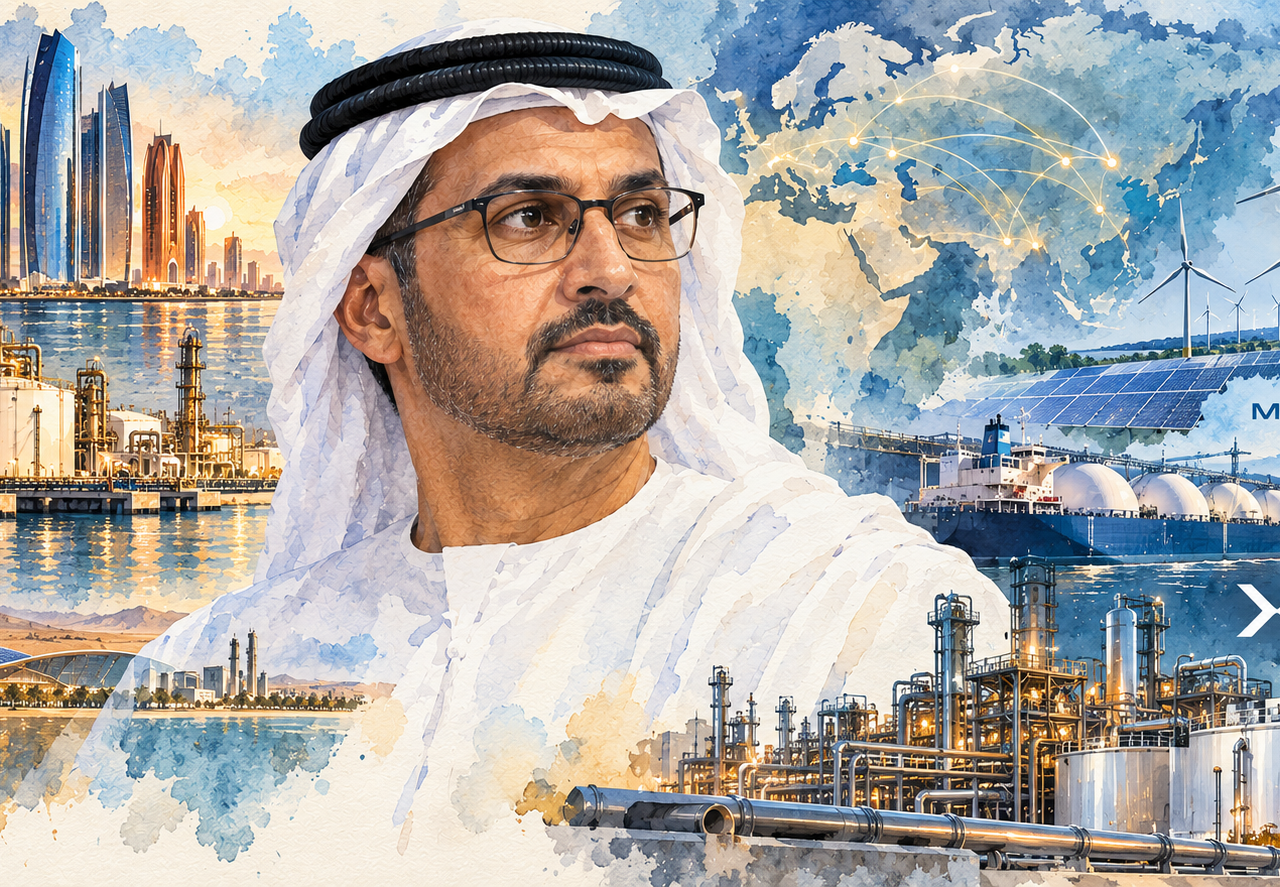
Sultan Al Jaber, Managing Director and Group CEO of ADNOC, Chairman of Masdar and Executive Chairman of XRG. His portfolio spans hydrocarbons, renewable power, advanced materials and global energy infrastructure — placing him at the centre of Abu Dhabi’s attempt to finance both sides of the energy transition.
Category: Featured, Capital, Energy, Energy Infrastructure, Financial Infrastructure, Governance, Infrastructure, Insights · Tags: Abu Dhabi, ADNOC, energy infrastructure, Energy transition, Gulf Capital, Masdar, Serie - The New Architecture of Gulf Capital, Sultan Al Jaber, XRG
Posted by Altair Media on October 20, 2026 · Leave a Comment

The Netherlands is moving towards a new box 3 system. The unresolved question is who pays for the change.
The Dutch government wants to tax more investment gains when they are realised. That may be easier to defend than taxing a rise in value before an asset is sold, but it can delay tax receipts. A proposed reduction in the tax-free annual return would help cover the cost. Parliament has pushed back because it would also affect people with modest savings.
Five questions reveal where a workable agreement might be found.
🟦 Why does changing the tax create a budget gap?
The existing box 3 bill combines annual taxation of some gains with taxation upon realisation for assets such as property. The cabinet’s proposed amendment would extend the latter approach. When tax is paid later, the government needs a credible way to manage the intervening loss of revenue. The precise cost depends on the final design and its assessment.
🟦 How much protection should small savers receive?
The cabinet proposed reducing the tax-free annual return from €1,800 to €1,000, a change estimated to raise €540 million on a structural basis. According to a motion led by ChristenUnie MP Pieter Grinwis, it would bring around 850,000 additional people into the new system. The motion passed, with D66 and CDA supporting it and the VVD voting against. Protecting modest returns has political support; replacing the expected revenue remains the harder part.
🟦 Which other tax advantages are parties willing to change?
Grinwis’s motion points to paper gifts: family transfers recorded as a debt, with interest paid to the recipient. Updating the prescribed interest rate could limit their advantage under gift and inheritance tax. But it cannot simply be entered as a €540 million solution. An earlier government estimate put the revenue from that specific change at €18 million in 2027, rising gradually to €51 million a year in the long run. The measure needs a fresh calculation within any final package.
🟦 Could the government find the money elsewhere?
Yes, but the type of money matters. The VVD has asked the cabinet to examine a lower box 2 rate; ChristenUnie and SGP MPs have also sought an assessment of whether a temporary change would encourage earlier dividend payments. That could bring tax receipts forward without necessarily increasing them permanently. Meanwhile, PRO — formerly GroenLinks-PvdA — and Volt want an alternative package within the wider taxation of wealth that does not fall on small savers. Moving costs across the budget is a political choice, but a temporary receipt cannot automatically fund a lasting shortfall.
🟦 What would make a compromise credible?
The cabinet could put each proposed measure in one public table: its revenue in 2027, its revenue after the new system starts, its long-term effect, and its impact on taxpayers and administration. That would give parties room to combine proposals without concealing what each one achieves. It would also let both chambers judge whether the legislation and its funding can survive together.
The Signal
There is room for a box 3 agreement. Parliament has identified people it wants to protect and several places to look for funding. The test now is whether the cabinet can turn those preferences into a costed package that distinguishes tax collected earlier from revenue raised permanently.
Image credit
AI-generated editorial illustration for Altair Media.
Caption
A balance between protecting modest savers and funding the shift towards taxing realised investment gains.
Category: Signal, Capital, Featured, Financial Governance, Financial Infrastructure, Governance, Insights · Tags: Box 3, Dutch Budget, Minority Government, Netherlands, Public Finance, Rob Jetten, Serie - Governing Without a Majority, Tax Reform, Wealth Taxation