Quality Without Borders
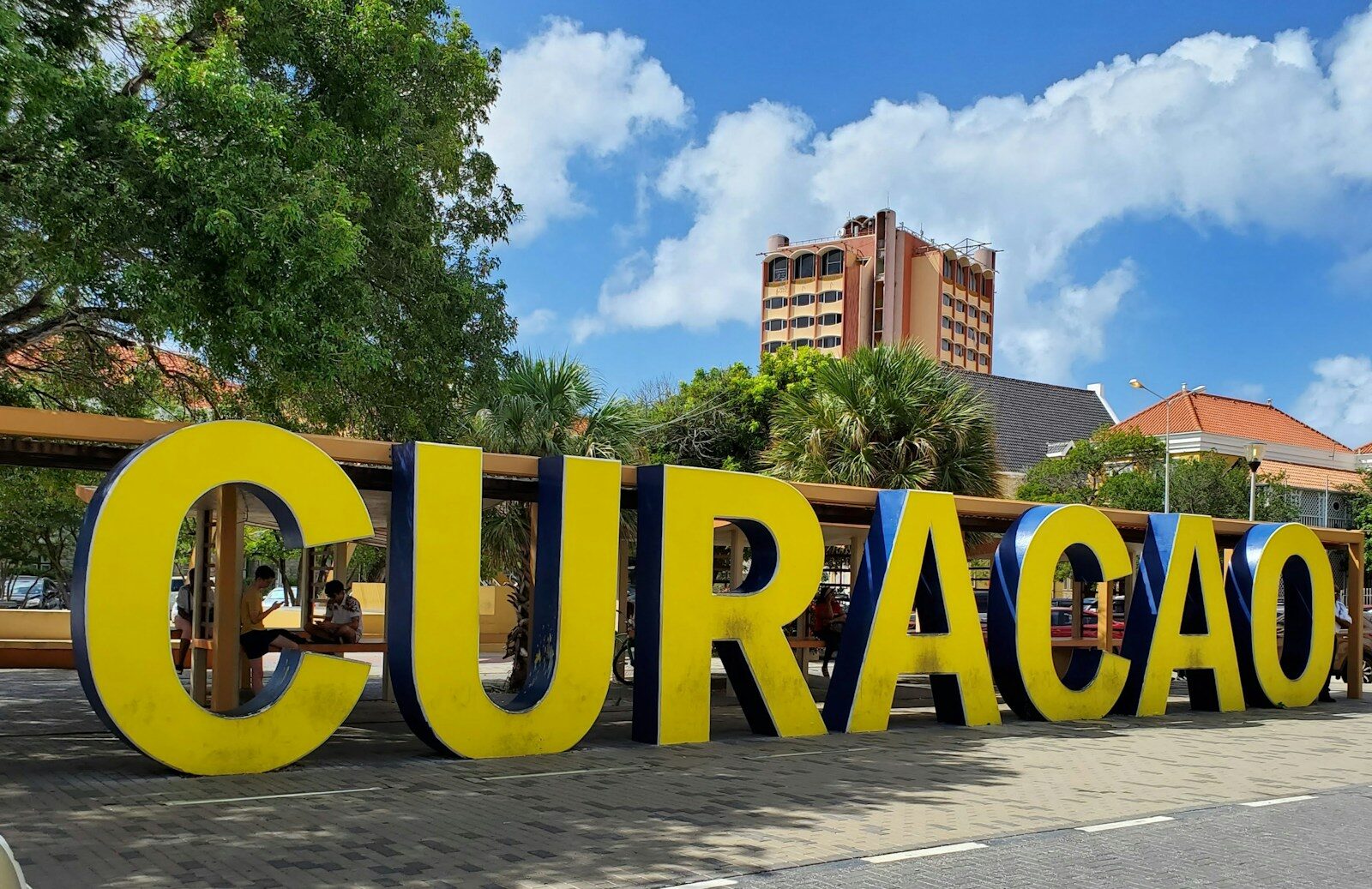
The strategic paradox of the University of Curaçao in a Caribbean reality
In a global higher education landscape increasingly defined by scale, rankings and standardisation, small universities often struggle to find their place. Yet in the Caribbean, institutions like the University of Curaçao Dr. Moises da Costa Gomez operate under a fundamentally different set of conditions—where size is limited, resources are constrained and societal expectations are immediate and tangible.
What makes the University of Curaçao particularly compelling is not just its scale, but its position at the intersection of multiple systems. It operates within the Kingdom of the Netherlands, adheres to European accreditation standards and at the same time serves a local Caribbean society with its own cultural, economic and educational realities.
This creates a structural tension—one that is not unique to Curaçao, but is rarely as visible or concentrated.
“The UoC is not an ivory tower, but the engine of Curaçaoan society. Our challenge is that we must meet strict European NVAO standards, while at the same time being an inclusive gateway for students from a Caribbean context that often requires a different approach.”
Dr. Francis de Lanoy
Former Rector Magnificus, University of Curaçao
A system between worlds
Unlike most European universities, the University of Curaçao does not operate within a neatly separated system of academic (WO) and applied (HBO) education. Instead, it functions as a hybrid institution, combining both under one organisational structure—more akin to an American model than a Dutch one.
In larger countries, such a structure might be considered unconventional. In Curaçao, it is a necessity.
The island’s scale does not allow for multiple parallel institutions, each specialising in a narrow segment of the educational spectrum. The university must therefore be both academically rigorous and practically relevant, preparing students for both local impact and international mobility.
This dual role becomes increasingly complex when external quality frameworks come into play.
The weight of European standards
Accreditation by European bodies such as the NVAO ensures that degrees remain internationally recognised. It is, in many ways, essential. Without it, graduates risk being disconnected from global academic and professional opportunities.
At the same time, these standards are developed in contexts that assume scale, resources and institutional depth—conditions that are not always present in small island environments.
“Higher education on the islands exists in a constant tension. There is a desire to remain aligned with the Dutch system for diploma recognition, but the societal challenges on the island require a level of customisation that does not always fit within frameworks developed in The Hague or Brussels.”
Prof. dr. Gerhard Hoogers
Professor of Comparative Constitutional Law, University of Groningen / Guest Professor at UoC
This tension is not merely administrative—it is structural. It raises fundamental questions about what “quality” means in different contexts and whether uniform standards can fully capture diverse educational realities.
Education as a societal anchor
In Curaçao, higher education is not an abstract system operating at a distance from society. It is deeply embedded in it.
The university plays a critical role in:
- training professionals for key sectors
- supporting social mobility
- strengthening local identity
This societal role adds another layer of complexity. Universities in larger countries can afford a degree of abstraction. For Curaçao, the connection between education and society is immediate and unavoidable.
“Education in Curaçao is about more than obtaining a degree; it is about identity formation and retaining talent for the region. If the gap between academic requirements and local reality becomes too large, we risk educating for export rather than for our own future.”
Prof. dr. Rose Mary Allen
Professor of Culture, Anthropology and History, University of Curaçao
The challenge, therefore, is not simply to meet international standards—but to do so without losing local relevance.
The limits of scale—and the opportunity within it
Small scale is often framed as a limitation. Fewer staff, fewer resources, fewer research opportunities. But it also offers something that larger institutions struggle to achieve: agility.
Where large universities can resemble oil tankers—slow to change direction—smaller institutions have the potential to adapt more quickly. This becomes particularly relevant in times of technological disruption.
Artificial Intelligence, for example, is reshaping education globally. Yet its implementation in large systems is often slow, fragmented and constrained by bureaucracy.
For smaller universities, the question is not whether they can compete on scale, but whether they can leapfrog through innovation.
“Small universities in the Caribbean should not try to replicate larger institutions. Their strength lies in hybridity. Technology and AI offer precisely this region the opportunity to transcend the physical limitations of an island and become a knowledge hub that serves both the region and the world.”
Dr. Francio Guadeloupe
Anthropologist, KITLV / University of Amsterdam
Rethinking the model
What emerges from this is not a story of limitation, but of potential redefinition.
The University of Curaçao is not simply navigating a tension—it is embodying a model that may become increasingly relevant elsewhere:
- a hybrid structure combining academic and applied learning
- a strong link between education and society
- a need to balance global standards with local realities
In a world where traditional boundaries between disciplines, institutions and learning formats are dissolving, such a model may no longer be the exception—but a precursor.
From constraint to blueprint
The central question, then, is not whether the University of Curaçao can fit into existing frameworks.
It is whether those frameworks are sufficient for the future of education.
If quality is defined solely by scale, output and standardisation, small institutions will always appear to be at a disadvantage. But if quality is also measured by relevance, adaptability and societal impact, a different picture emerges.
In that sense, Curaçao is not operating at the margins of the system—it is testing its limits. And perhaps, quietly, redefining them.About the author
About the author
Altair Media Europe explores the intersection of education, technology and society, with a focus on emerging models and international collaboration.
Photo by Dave Drury / Unsplash
