
Europe’s AI sovereignty debate is entering a new phase. Beyond algorithms and data, a third layer is emerging: compute. As frontier AI becomes increasingly dependent on hyperscale infrastructure, Europe’s next strategic challenge may be building—and financing—the infrastructure on which its own intelligence ultimately relies.
Digital Infrastructure
The digital networks, platforms and data systems that enable connectivity, digital services and the functioning of the modern digital economy.

Barcelona and Madrid illustrate an often-overlooked stage of Europe’s innovation ecosystem. Beyond research and engineering, they demonstrate how connectivity, programmable networks and digital services are transformed into market-ready applications—bridging the gap between technological capability and societal adoption.

The Microsoft–Mistral partnership reflects more than a strategic AI agreement. It raises a broader question about Europe’s technological future: can algorithmic sovereignty be achieved when the compute infrastructure on which it depends increasingly resides elsewhere?
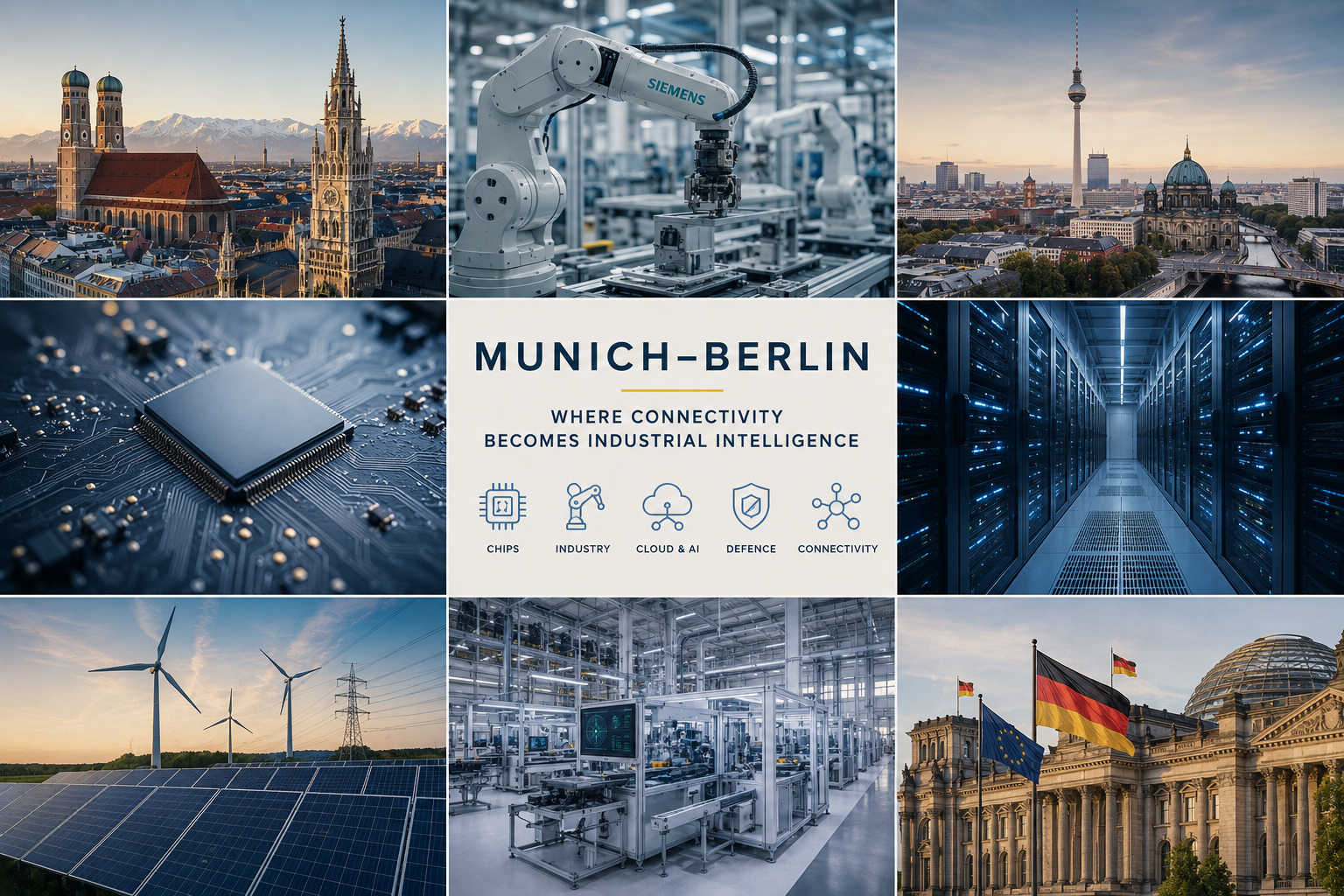
The Munich–Berlin corridor demonstrates how engineering, software, artificial intelligence and industrial infrastructure are converging into a new model of industrial intelligence. Future competitiveness will depend not on individual technologies, but on Europe’s ability to integrate them into one connected technological architecture.
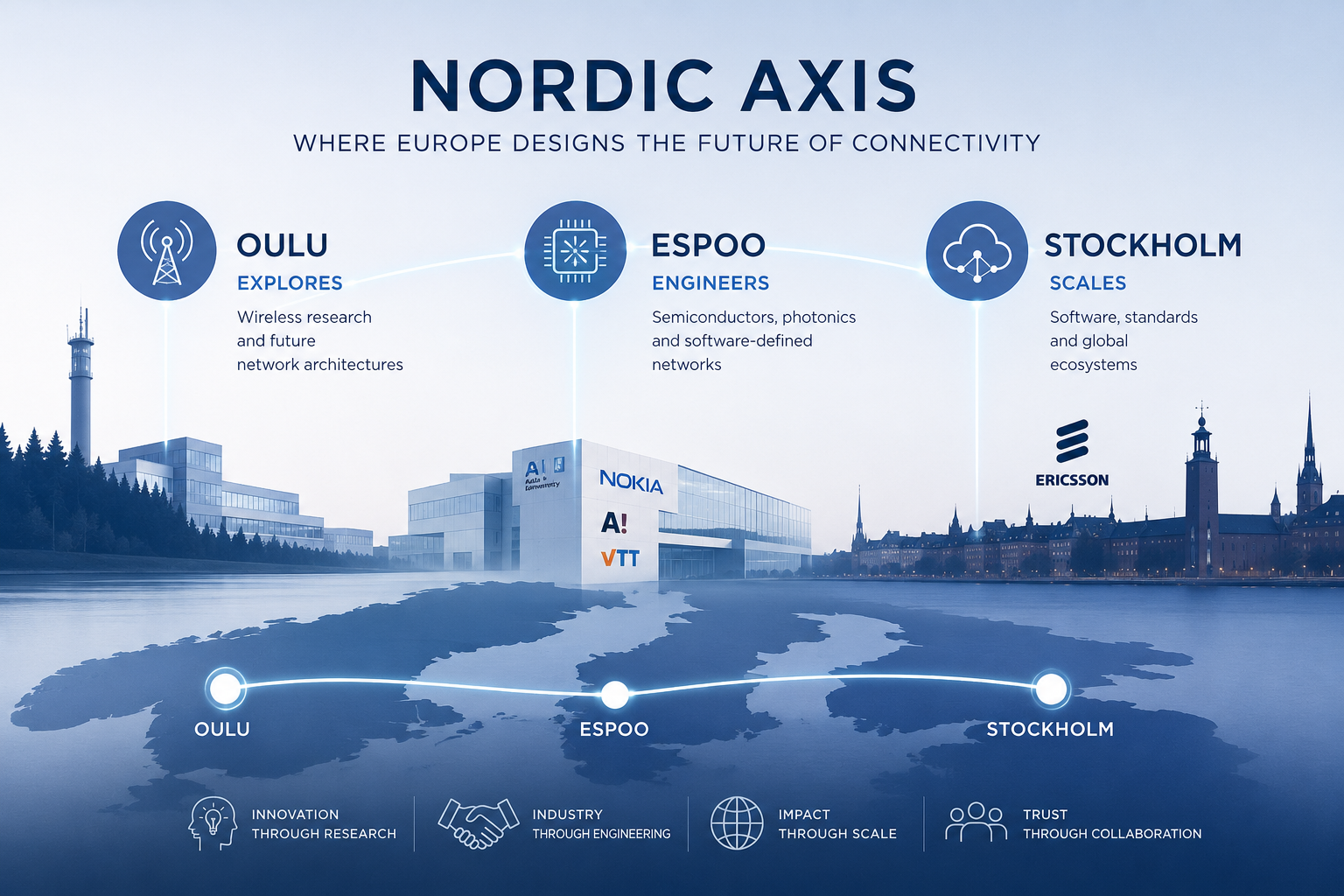
Europe’s future telecommunications leadership is not concentrated in a single city. Across Oulu, Espoo and Stockholm, a distributed ecosystem of research, engineering and industrial collaboration demonstrates how specialised regions together can shape the next generation of intelligent connectivity.
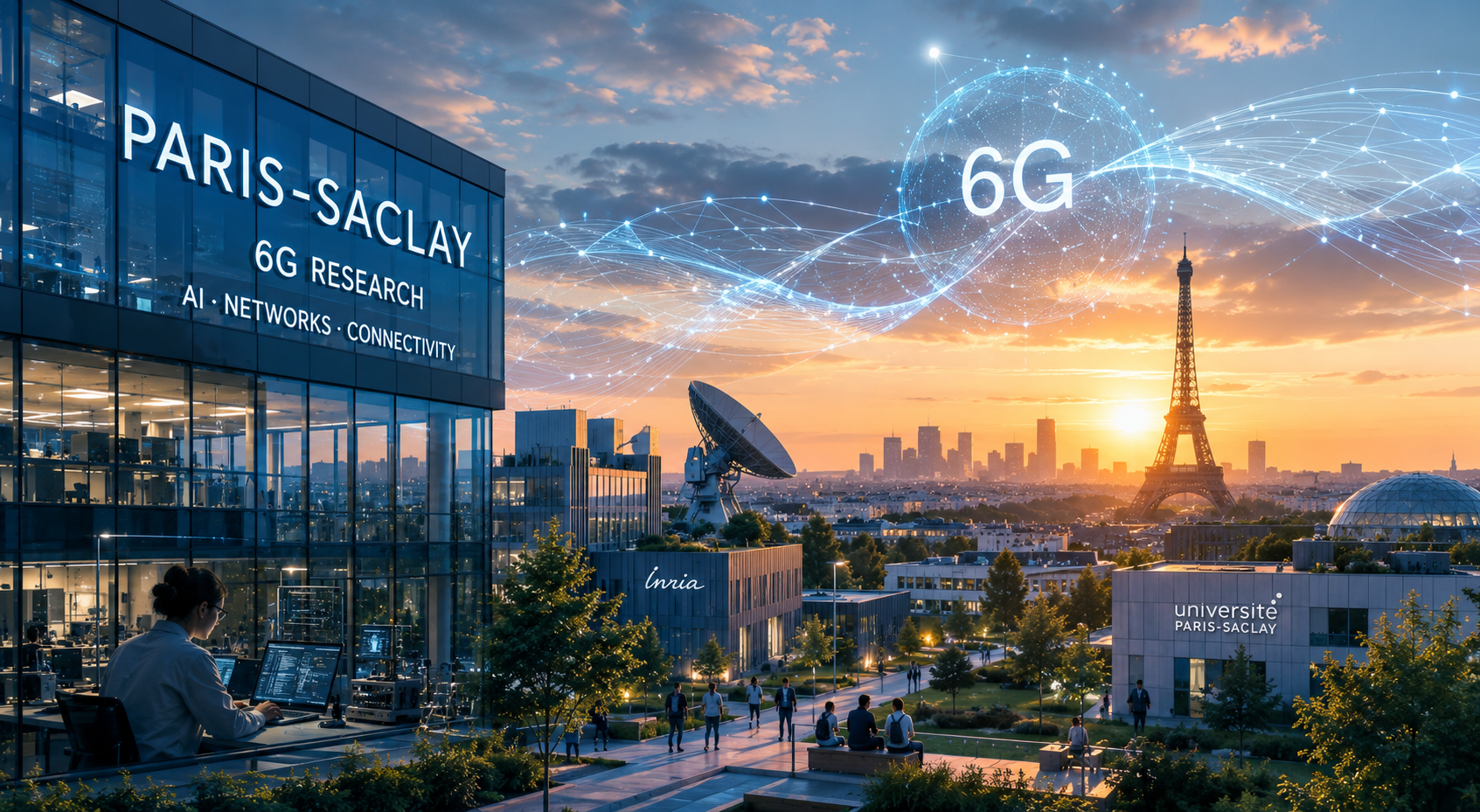
Paris-Saclay represents the intellectual foundations of Europe’s future communications systems. By combining artificial intelligence, software-defined networks, advanced research and scientific collaboration, the ecosystem increasingly shapes the concepts, architectures and paradigms that may define tomorrow’s connectivity.

Europe’s future may depend less on scale and more on capabilities that the rest of the world cannot easily replicate. Through the lens of ASML, this concluding essay explores how technological sovereignty, ecosystem resilience and strategic indispensability may shape Europe’s economic future.

Behind ASML lies a broader European ecosystem stretching from Eindhoven and Leuven to Dresden and Grenoble. Understanding the future of ASML may therefore require understanding the networks of expertise, research and industrial collaboration that surround it.

When seven European technology leaders issued a joint call for action, much of the discussion focused on regulation. Yet the significance of the coalition may lie elsewhere. By bringing together companies from semiconductors, telecommunications, industrial systems, software, artificial intelligence and aerospace, the statement reveals a broader shift in European thinking: from individual sectors toward interconnected technology ecosystems.
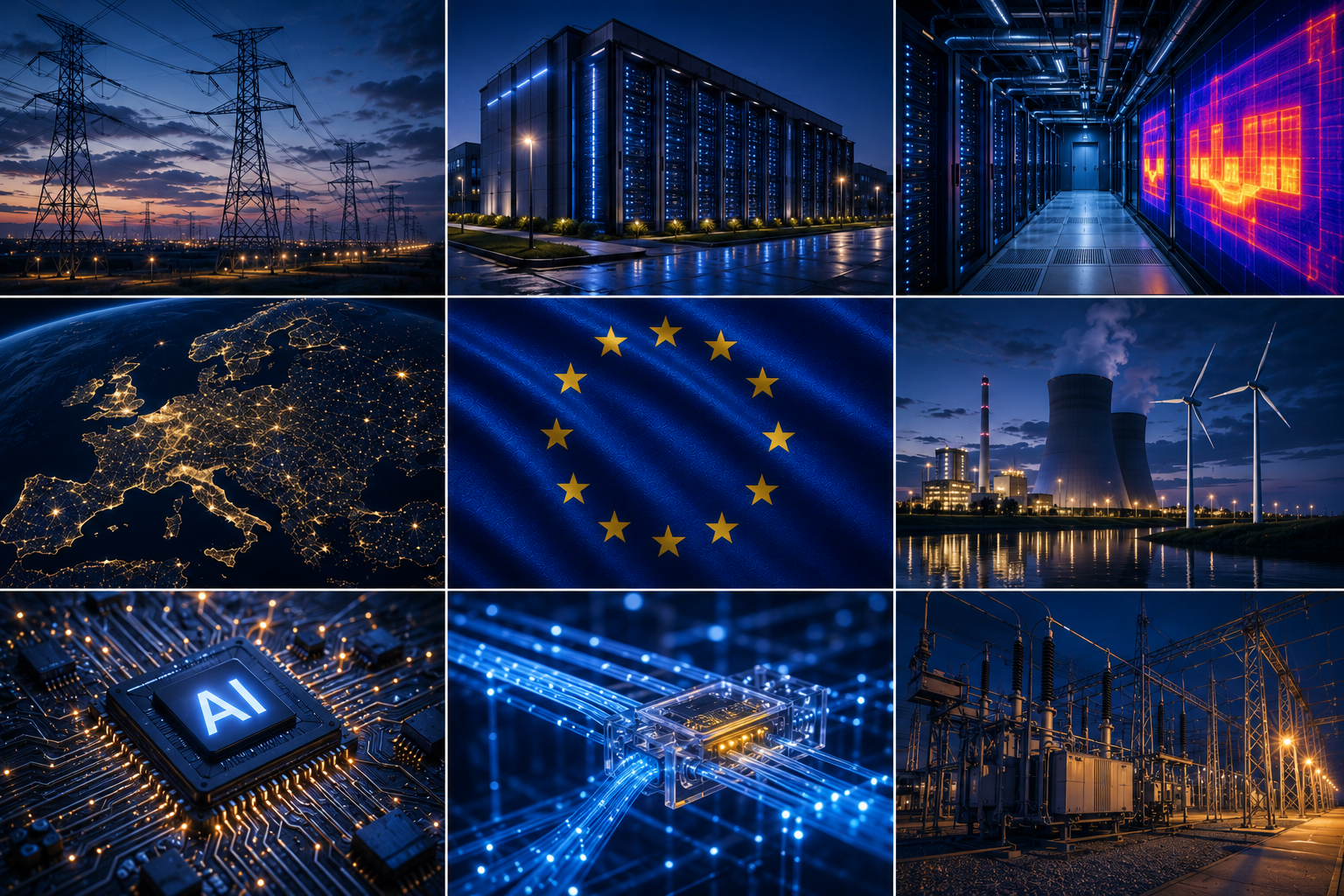
Artificial intelligence may be built with software, but it runs on electricity. As Europe expands its ambitions in AI, cloud computing and technological sovereignty, energy infrastructure is emerging as one of the most critical foundations of future competitiveness and resilience.
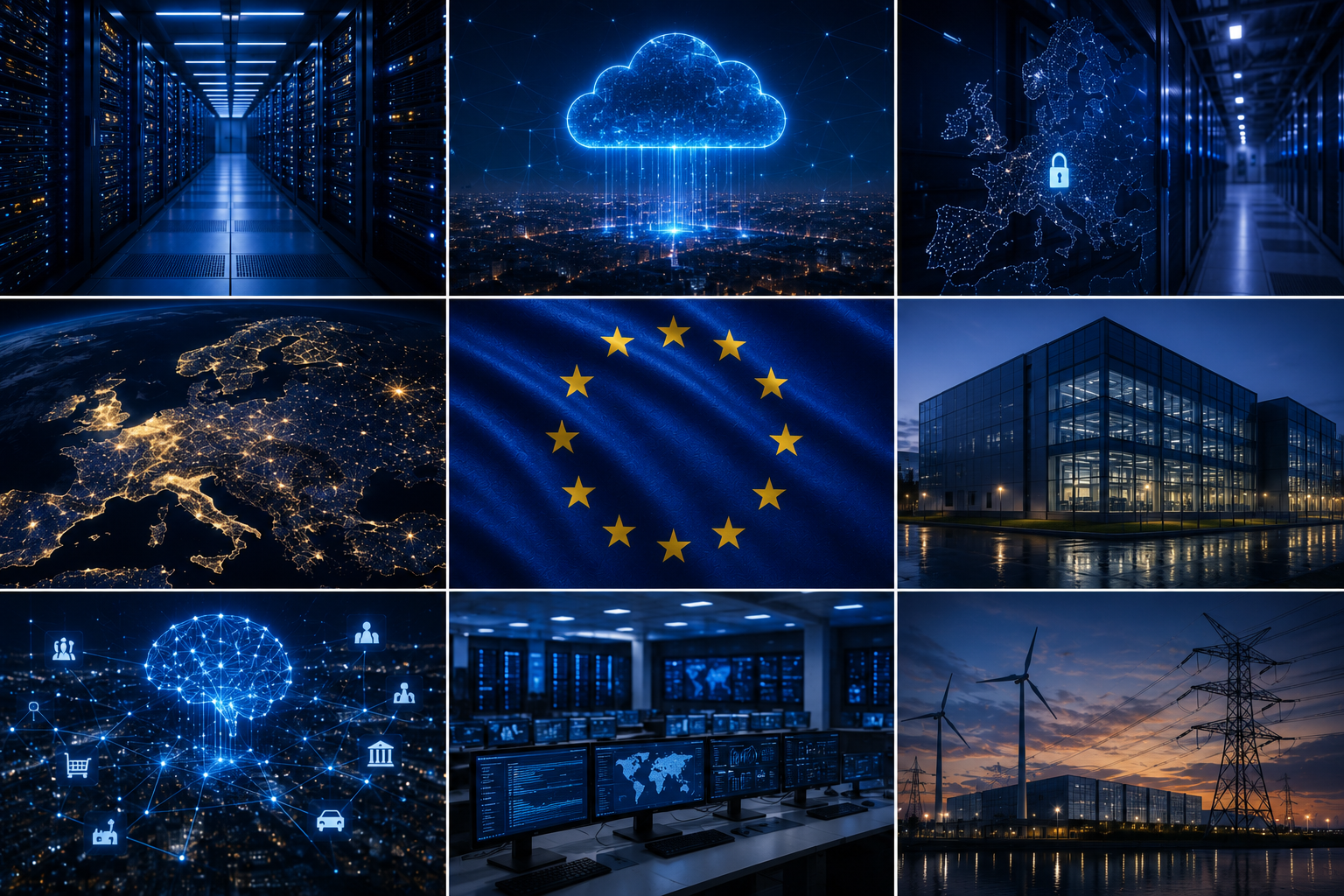
Cloud computing is increasingly becoming more than a commercial service. As Europe expands its ambitions in artificial intelligence and technological sovereignty, cloud infrastructure is emerging as a critical foundation for economic resilience, digital competitiveness and strategic autonomy.

The future of Europe’s semiconductor strategy may depend less on producing everything at home and more on controlling critical technologies. Chips Act 2.0 signals a shift towards technological indispensability, infrastructure resilience and long-term strategic competitiveness.
