What If Europe Has Already Solved the Innovation Problem?
SIGNAL
The European Innovation Council recently mapped nearly one hundred companies developing technologies for Europe’s future energy system. Yet hidden beneath this optimistic inventory lies a more uncomfortable question: what if innovation is no longer Europe’s primary challenge?
■ THE QUESTION
What if Europe has already solved the innovation problem?
For decades, European policymakers worried about technological decline. American technology giants dominated digital markets. China accelerated industrial development. The response was predictable: invest more in research, strengthen innovation ecosystems and support deep-tech entrepreneurship. The assumption was that Europe needed more innovation.
The latest EIC portfolio raises a different possibility. Across fields such as energy storage, advanced materials, grid technologies and renewable fuels, Europe is already producing companies capable of developing many of the technologies required for the next generation of energy systems.
The technologies increasingly exist. So why does the concern remain?
■ THE PARADOX
If Europe possesses the technology, why is Brussels still worried?
The answer may be that technology and industrial power are not the same thing. Developing a breakthrough in a laboratory is one challenge. Building factories, supply chains and industrial capacity around that breakthrough is another. One creates knowledge. The other creates capability.
Europe has spent decades strengthening its scientific foundations. Yet many of its strategic discussions continue to focus on competitiveness, resilience and deployment. That choice of language is revealing. It suggests the concern is no longer centred on invention itself. It is centred on what happens afterwards.
■ THE RETURN OF THE PHYSICAL WORLD
Because the energy transition does not scale like software.
For much of the digital era, growth appeared almost frictionless. A successful platform could reach millions of users without constructing factories, expanding power grids or securing access to industrial materials.
The energy transition follows different rules. Electricity must move through physical networks. Storage systems must be manufactured.Advanced materials must be extracted, refined and processed. Every kilometre of transmission infrastructure requires steel, copper, capital and time.
The laws governing these systems are not digital. They are physical. This is perhaps the deeper significance of the EIC statement. Europe is increasingly confronting challenges that cannot be solved through software alone. They require industrial capacity.
■ THE SCALE-UP GAP
What happens after the breakthrough?
This is where Europe’s long-standing vulnerability begins to emerge. The continent produces exceptional scientists, engineers and research institutions. It regularly generates technologies capable of competing on a global stage.
Yet the journey from laboratory to large-scale industrial deployment remains one of the weakest links in the European innovation system.
The pattern has become familiar. Public funding supports early-stage research. European companies prove technological viability. Then larger pools of foreign capital often finance industrial expansion and global scaling.
The knowledge is created in Europe. The economic value is frequently captured elsewhere.
Viewed through this lens, the EIC’s repeated calls for deployment, continuity of funding and faster implementation begin to sound less like celebration and more like concern.
■ THE WARNING
What is the EIC really telling us?
Read carefully, the document does not primarily describe a technology gap. It describes an execution gap. The technologies highlighted throughout the portfolio demonstrate that Europe continues to generate scientific excellence.
The uncertainty lies elsewhere.
• Can Europe build quickly enough?
• Can it finance industrialisation at scale?
• Can regulatory systems move at the speed required by strategic competition?
• Can promising technologies become industrial ecosystems before foreign competitors acquire, replicate or outscale them?
These are no longer scientific questions. They are economic and political ones.
■ THE SIGNAL
The most revealing aspect of the EIC statement is not the technologies it contains. It is the implicit recognition that technology alone is no longer enough. The document reads less like a celebration of innovation and more like a warning about execution.
Europe’s future energy system will not be determined solely by scientific breakthroughs. It will be determined by whether those breakthroughs can be transformed into factories, infrastructure, supply chains and industrial capability.
The energy transition is not a software update. It is an exercise in industrialisation. And that may be the deeper challenge Europe is only now beginning to confront.
Perhaps Europe’s greatest problem is no longer discovering what to build. It is learning how to build it before somebody else does.
Credit
Illustration: ChatGPT / OpenAI
Caption
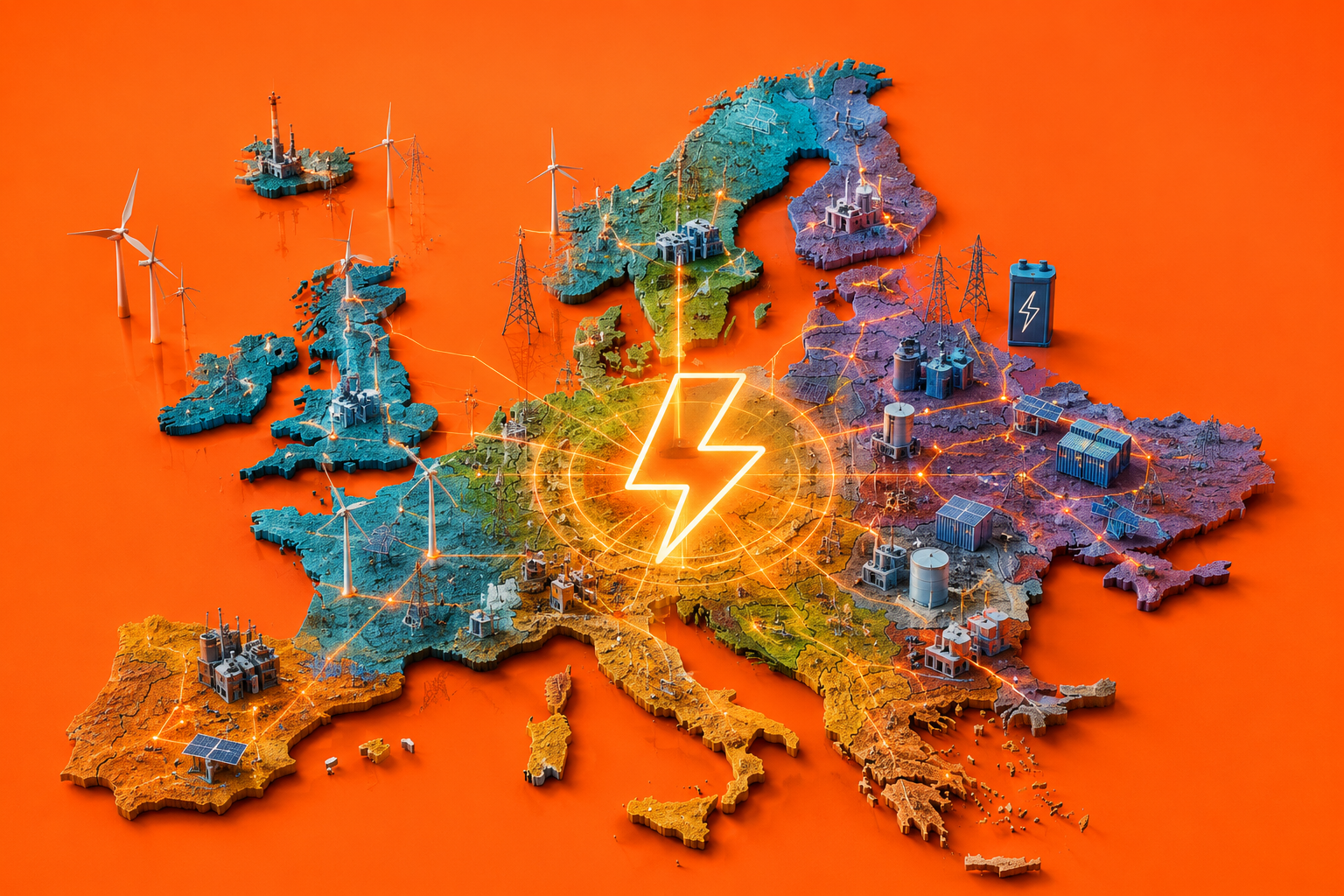
Europe’s energy transition is often presented as a technological challenge. Increasingly, it appears to be an industrial one. While European researchers and deep-tech companies continue to generate world-class innovations, the critical question is whether Europe can build the factories, infrastructure and investment ecosystems needed to scale them. The future of the transition may depend less on discovering new technologies than on deploying existing ones at industrial scale.
