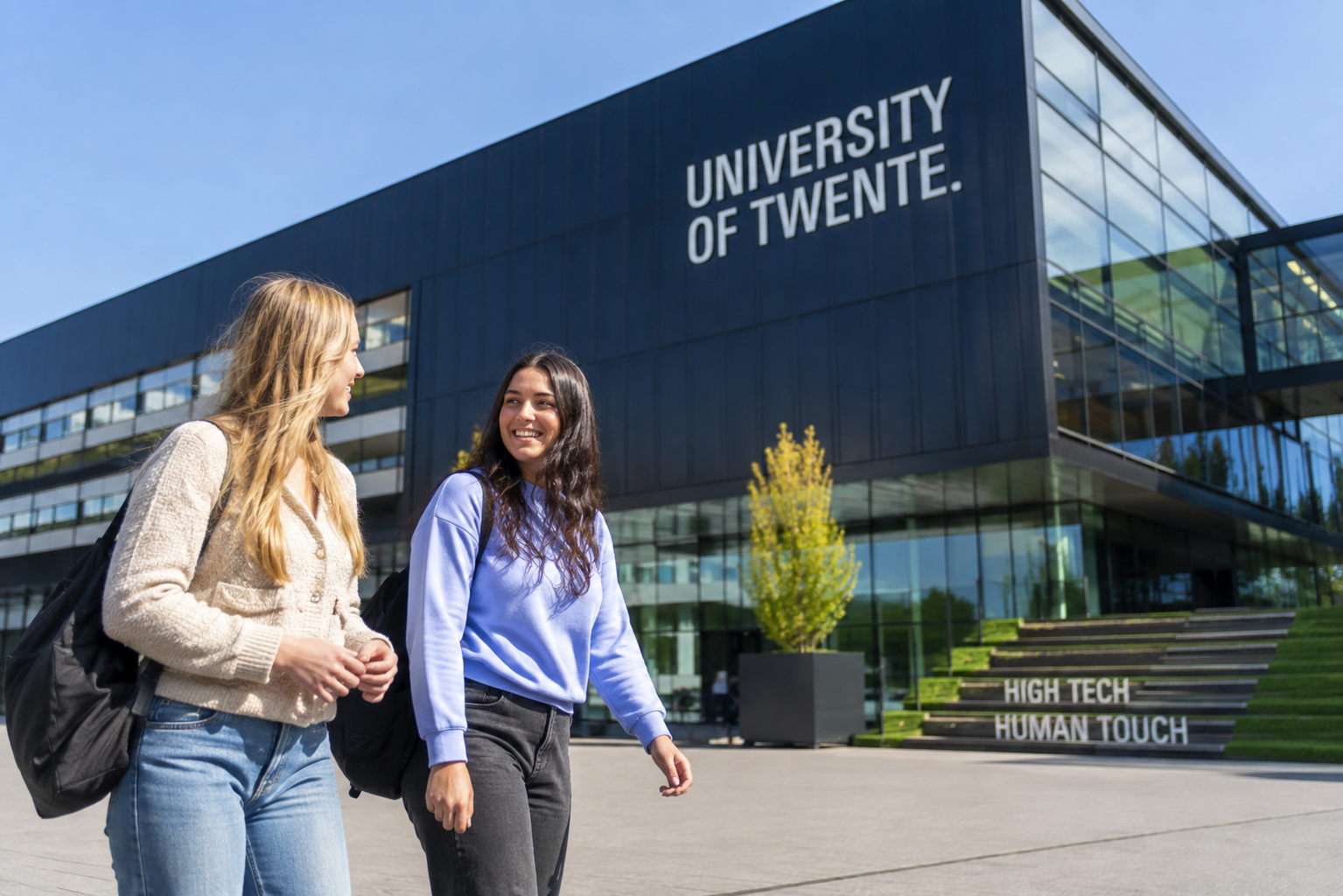
University of Twente – High Tech Human Touch
Can Smaller Universities Become Strategic Assets?
Europe often associates technological leadership with scale. Larger universities, bigger research budgets and more laboratories are frequently presented as the foundations of innovation. Yet innovation does not always follow size. Sometimes it follows focus. Sometimes it follows integration.
The University of Twente illustrates this alternative. Although considerably smaller than TU Delft, it has developed a distinctive position by combining engineering, entrepreneurship and the social sciences within a single institutional culture. Its contribution therefore raises a broader question.
Innovation is not always a function of scale. Sometimes it is a function of integration.
Can smaller universities become strategic assets precisely because they remain agile enough to connect disciplines, people and ideas?
Beyond Scale
Discussions about universities often revolve around measurable indicators such as student enrolment, research funding and international rankings. These indicators matter, but they reveal relatively little about how institutions actually generate innovation. The University of Twente suggests another perspective.
Its strength lies not simply in the amount of knowledge it produces, but in the way different disciplines interact. Engineers collaborate with behavioural scientists, entrepreneurs work alongside researchers and technological development is continuously connected to societal questions. Scale creates capacity. Integration creates agility.
Technology With Society In Mind
The University of Twente has long positioned itself around a simple idea: technology ultimately serves society.
Engineering is therefore rarely separated from questions of governance, entrepreneurship, ethics or public value. Students are encouraged not only to solve technical problems, but also to understand the environments in which technologies will eventually operate.
As artificial intelligence, healthcare technologies and digital infrastructure become increasingly embedded in everyday life, technical performance alone is no longer sufficient.
The most valuable technologies are not only engineered successfully. They are integrated successfully.
Successful innovation also depends upon trust, usability, public acceptance and ethical responsibility. Twente reminds us that technological excellence and societal acceptance develop together rather than separately.
The Entrepreneurial University
Long before university entrepreneurship became a widely recognised policy objective, the University of Twente actively encouraged researchers and students to transform scientific discoveries into companies.
What later became known as the entrepreneurial university has long been embedded in Twente’s institutional culture. Over the years, numerous spin-offs have emerged from its laboratories, particularly in medical technology, nanotechnology, advanced materials and digital innovation.
Innovation is therefore understood not only as scientific discovery. It is equally the ability to translate ideas into organisations capable of creating long-term societal value.
High Tech Human Touch
The phrase High Tech Human Touch represents far more than institutional branding. It expresses a philosophy. As technologies increasingly influence healthcare, education, mobility, energy systems and public administration, purely technical solutions become less effective without understanding the people who ultimately use them.
The university therefore combines technological excellence with human-centred thinking. Rather than asking only whether technology can be built, it also asks how technology should be integrated into society.
That perspective is becoming increasingly important as Europe seeks to develop technologies that are not only competitive, but also trusted.
A University On The Border
Location also shapes institutional identity. Situated close to Germany, the University of Twente naturally operates within a cross-border environment linking the Dutch innovation landscape with the industrial regions of North Rhine-Westphalia.
Europe’s strength may not lie in building identical universities, but in connecting complementary ones.
Research partnerships, technology transfer and industrial collaboration increasingly extend beyond national borders. Rather than existing on the geographical edge of the Netherlands, Twente occupies a strategic position within one of Europe’s emerging innovation corridors. Its perspective is therefore inherently European.
Beyond Twente
Ultimately, this article is not about one university. It is about institutional diversity. Europe has never depended on building identical universities. Its strength lies in developing complementary institutions that contribute different forms of capability to the wider innovation landscape.
TU Delft expands engineering capacity. TU Eindhoven accelerates the circulation of knowledge within industrial ecosystems. The University of Twente demonstrates how technology, entrepreneurship and society can be integrated within a single institutional culture.
Perhaps Europe’s resilience depends precisely upon maintaining this diversity.
A European Pattern
The University of Twente also reflects a broader European characteristic. Europe rarely succeeds through a single dominant innovation hub. Instead, its strength emerges from a network of specialised universities and regional ecosystems, each contributing distinct expertise while reinforcing one another. This diversity is often perceived as fragmentation.
Innovation creates impact only when ideas become organisations.
Increasingly, however, it may represent one of Europe’s greatest competitive advantages. Rather than copying Silicon Valley, Europe continues to develop its own model of distributed excellence.
Reflection
Europe often compares itself with Silicon Valley or China’s technology clusters. Yet its greatest strength may lie elsewhere.
Rather than concentrating excellence within a single institution or region, Europe has gradually developed a portfolio of complementary universities and innovation ecosystems, each contributing a different form of capability.
The University of Twente illustrates that strategic value is not determined by size alone. Smaller universities can become indispensable precisely because they remain agile enough to integrate engineering, entrepreneurship and society.
Europe’s future competitiveness may therefore depend not on creating identical centres of excellence, but on preserving the institutional diversity that together forms its innovation architecture.
This article is part of The Dutch Education System, a Perspective series exploring education, talent and the future capacity of society.
Credit
Altair Media / AI-generated visualisation
Caption
The University of Twente illustrates that strategic value is not determined by size alone. By integrating technology, entrepreneurship and society, it demonstrates how institutional diversity can become one of Europe’s greatest competitive advantages.
