Friday, July 10, 2026

Artificial intelligence is increasingly becoming an infrastructure challenge rather than a software race. Europe’s long-term competitiveness may ultimately depend not only on algorithms, but on its capacity to build, power and sustain the computing ecosystems upon which intelligence itself depends.
Read More
Friday, July 10, 2026
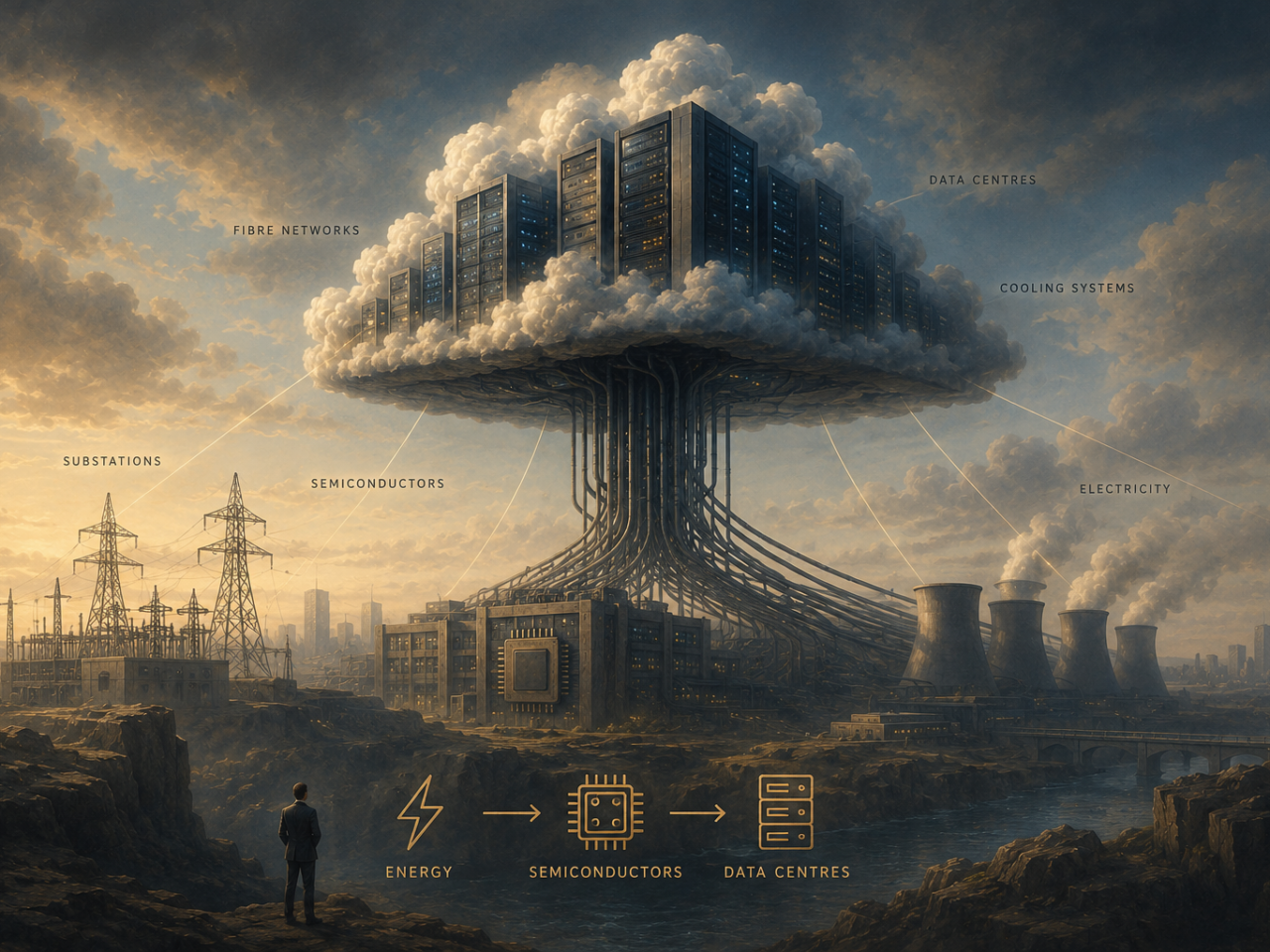
Cloud has long been perceived as a digital abstraction. In reality, it is built upon electricity, semiconductors, fibre networks and datacentres. As artificial intelligence accelerates demand for compute, the cloud is increasingly emerging as one of the defining industrial infrastructures of the twenty-first century.
Read More
Friday, July 10, 2026

Artificial intelligence is often portrayed as a software revolution. Yet every model, every prediction and every breakthrough ultimately depends upon electricity. As Europe invests in AI, the defining challenge may no longer be algorithms alone, but the energy systems capable of sustaining an intelligence economy.
Read More
Thursday, July 9, 2026

Europe’s cloud future may not be defined by replicating hyperscalers, but by orchestrating them. In an era increasingly shaped by compute, resilience, optionality and strategic capacity may prove as important as scale itself. Success, perhaps, is not measured by dominance, but by preserving the freedom to adapt.
Read More
Thursday, July 9, 2026

Digital sovereignty is often discussed after dependence has already emerged. Yet resilient infrastructures are rarely built through correction alone. They are designed from the outset to preserve choice, maintain adaptability and ensure that critical capabilities remain transferable, interoperable and resilient. Sovereignty, in this sense, becomes less an aspiration and more an architectural principle.
Read More
Thursday, July 9, 2026

Governments have long approached cloud infrastructure as a procurement question. Increasingly, it may be becoming a matter of design. As compute capacity emerges as a strategic resource, states may no longer simply consume digital infrastructure, but help shape the environments upon which research, innovation, public services and economic resilience increasingly depend.
Read More
Wednesday, July 8, 2026

For more than a decade, cloud strategy was synonymous with centralisation. Yet as artificial intelligence, data gravity and strategic autonomy reshape the digital landscape, organisations are rediscovering an old idea in a new form: control itself may once again become a competitive advantage. The private cloud returns not as nostalgia, but as infrastructure designed for resilience.
Read More
Wednesday, July 8, 2026
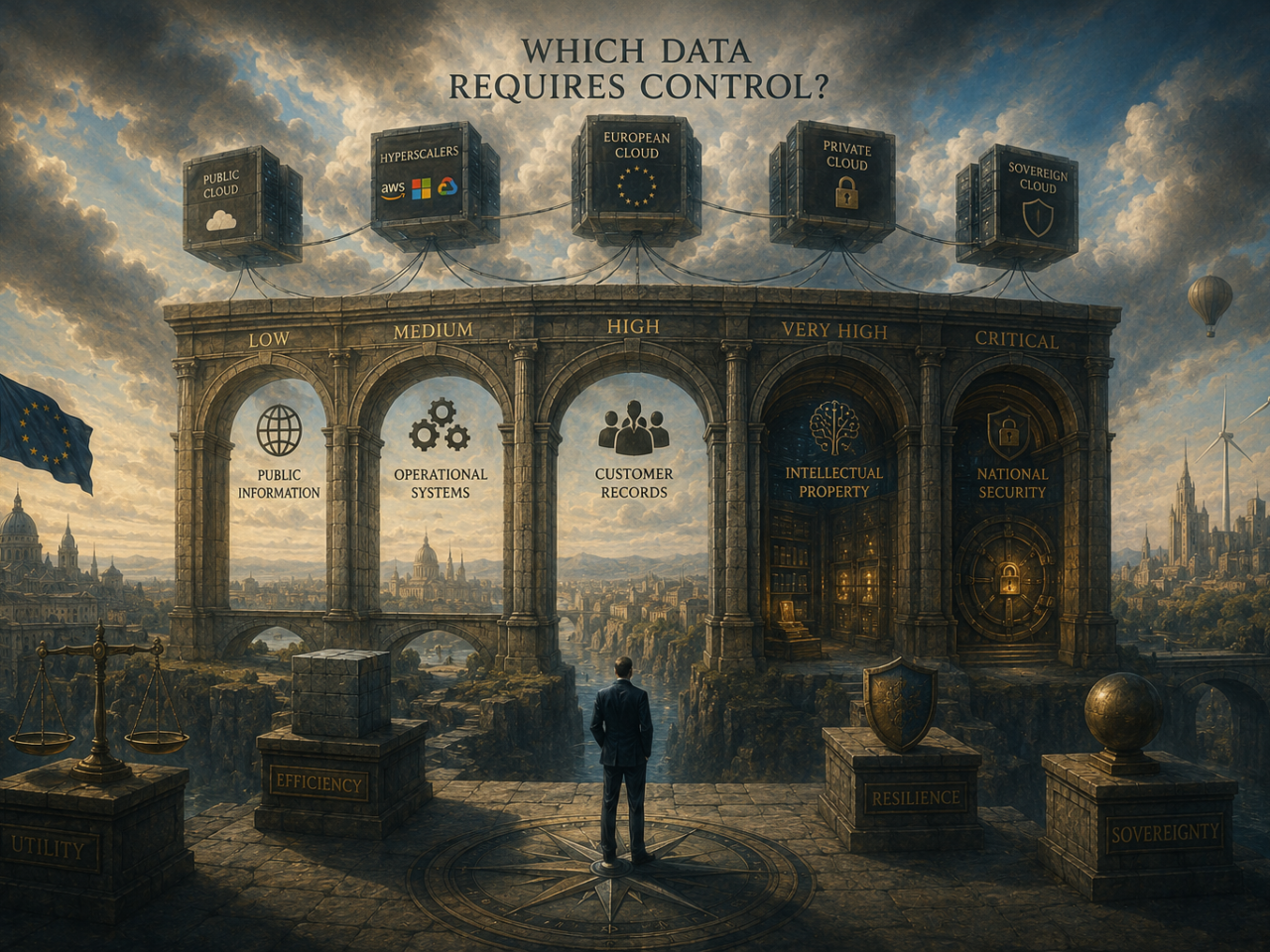
Cloud sovereignty is often discussed through geography, ownership and regulation. Yet the more consequential question may be different: which capabilities can societies, institutions and organisations simply not afford to externalise? In the age of artificial intelligence, control increasingly begins with understanding what truly matters.
Read More
Wednesday, July 8, 2026
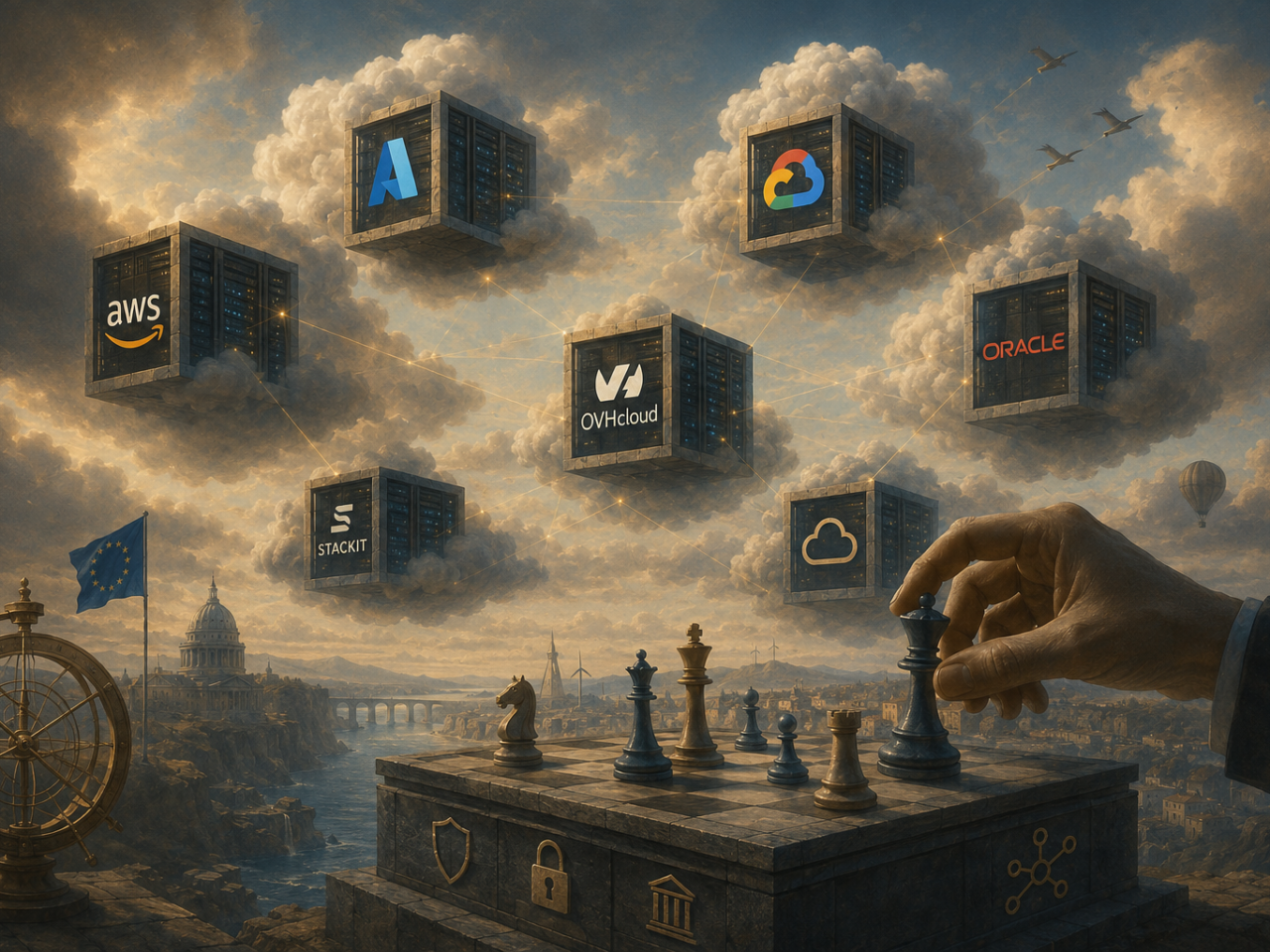
Cloud sovereignty is often framed as a choice between dependence and autonomy. Yet resilience may depend less on ownership alone and more on architecture itself. In an increasingly interconnected world, sovereignty may ultimately be the ability to preserve options, distribute risk and maintain control over what matters most.
Read More
Wednesday, July 8, 2026
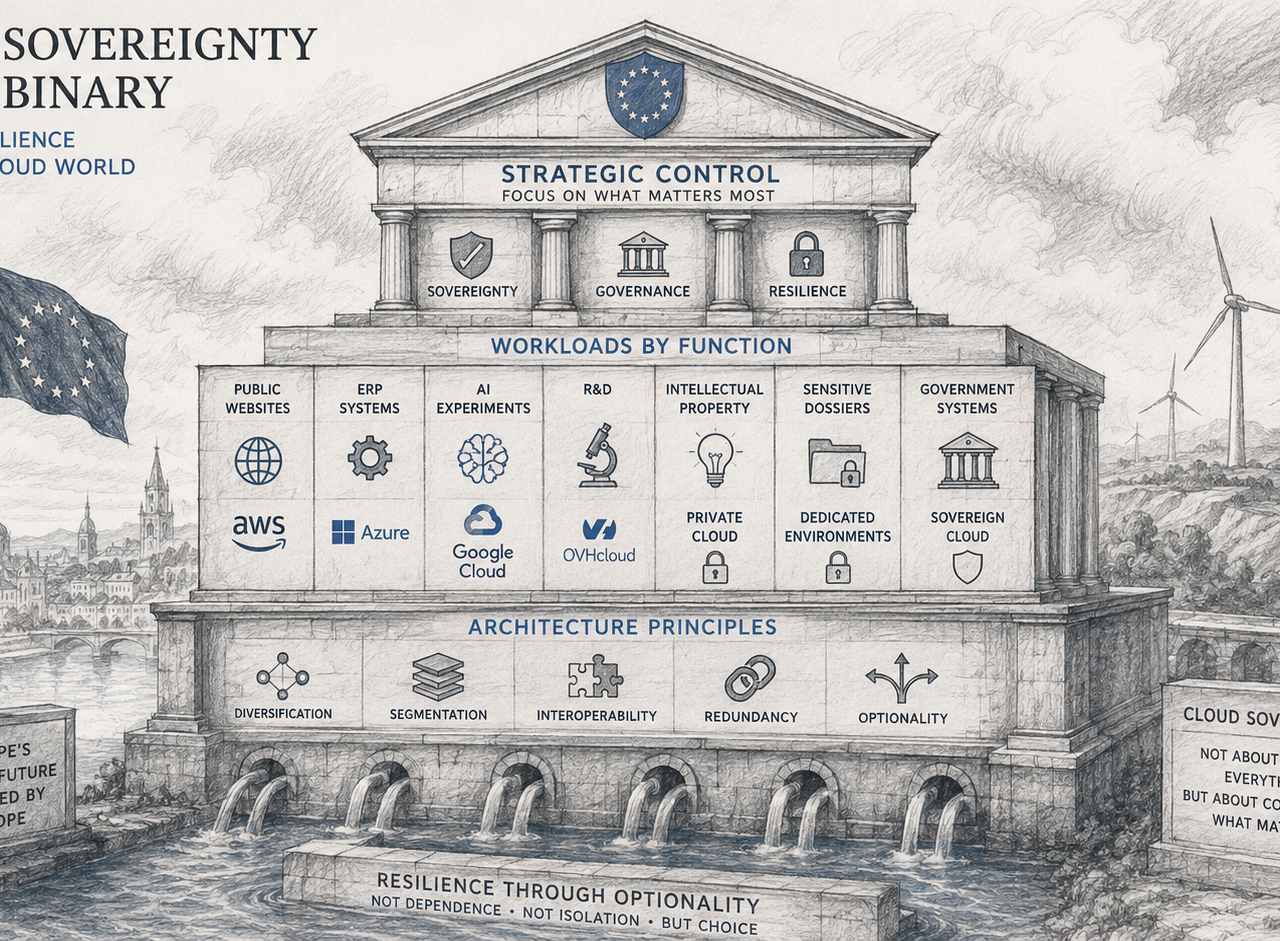
Cloud sovereignty is often presented as a binary choice between dependence and autonomy. Yet resilience may depend less on ownership alone and more on architecture itself: understanding which functions require strategic control, which workloads benefit from scale and which capabilities societies simply cannot afford to lose.
Read More

 Available here: