The Real Store in the Age of Algorithms

Why physical shopping still shapes trust and behaviour
Online retail has become astonishingly efficient. Within seconds, algorithms analyse preferences, compare prices and recommend products tailored to individual consumers. The digital shopping experience is built around optimisation: speed, convenience and relevance.
Yet despite all of that, people continue to shop physically. Not out of habit alone. But because physical shopping fulfils needs that algorithms still struggle to reproduce.
For years, analysts predicted that online commerce would gradually replace large parts of physical retail. In many categories, that prediction appeared entirely reasonable. Why visit a store when a product can arrive at your door tomorrow?
Yet physical retail persists across almost every market segment. Luxury brands continue investing in flagship stores. Food markets remain popular. Shopping streets still attract visitors. Even younger generations raised with smartphones continue spending time in physical retail environments. Something more than convenience is at work.
People do not only buy products. They also seek confidence in their decisions.
The digital economy excels at delivering information. Physical environments excel at creating trust. That distinction may explain far more about consumer behaviour than many discussions surrounding retail disruption acknowledge.
Read MoreWhat Is Europe’s Energy Architecture Becoming?

Why the European Innovation Council’s energy portfolio is about far more than individual technologies
The transition towards a sustainable energy system is often presented as a collection of separate innovations. Better batteries. More efficient solar panels. New hydrogen technologies. Smarter electricity grids. Each breakthrough appears to solve an individual problem. The European Innovation Council’s portfolio tells a different story.
Taken individually, the one hundred companies represent promising technological innovations. Viewed together, however, they reveal something much larger. They are not simply developing new products. They are gradually constructing the foundations of a new European energy architecture.
The question is no longer which technology will succeed. The question is how different technologies begin to reinforce one another.
The energy transition is therefore becoming less about isolated inventions and increasingly about coordination.
Read MoreThe Search for Context
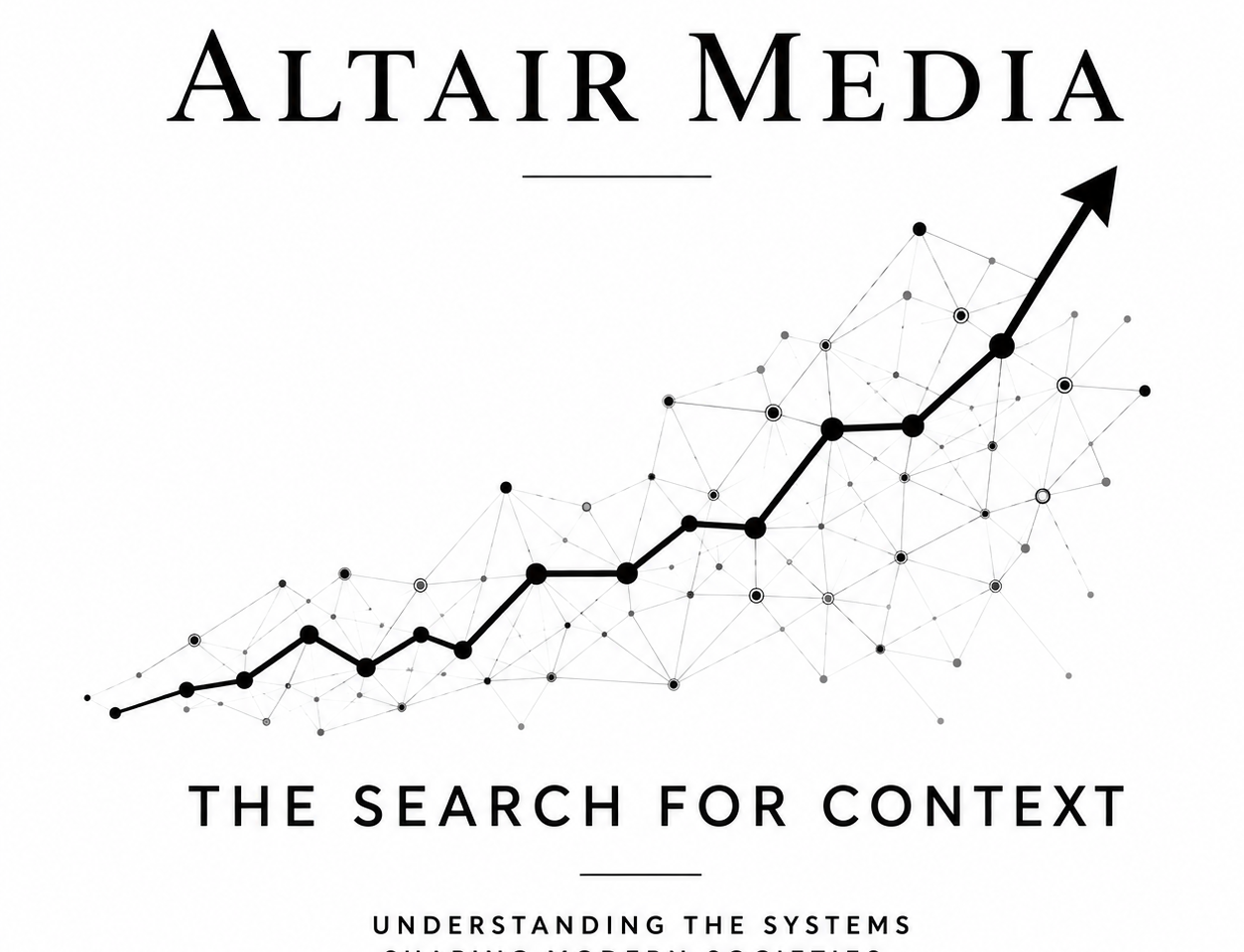
What the Growth of Altair Media Reveals About a Changing Europe
In just six months, Altair Media reached more than 200,000 unique members through LinkedIn and generated more than 700,000 impressions across its European, American and Asian editions. The numbers are encouraging.
Yet the numbers themselves are not the most interesting part of the story. What matters is who is engaging with the work.
Over recent months, Altair Media has attracted readers from technology companies, universities, research institutes, financial institutions, consultancies and European organisations. Professionals from companies such as ASML, Airbus, Intel, Apple, Microsoft, NXP, Ericsson and Rheinmetall have engaged with our articles, alongside readers from the European Commission, ESA, TNO, imec and the European Patent Office.
This audience reflects something larger than the growth of a media platform. It reflects a growing search for context.
The challenge is no longer a lack of information.
The challenge is understanding how systems interact.
Across Europe, artificial intelligence, energy infrastructure, industrial policy, technological sovereignty, financial systems, defence, democratic resilience and economic competitiveness are becoming increasingly interconnected. Information is abundant. Interpretation is not.
Many of the questions shaping Europe’s future cannot be understood through headlines alone. They require a deeper understanding of the architectures beneath them. That has gradually become the central mission of Altair Media. Not simply to report events. But to explore the systems, institutions and infrastructures that shape modern societies.
Read More