Beyond Publishing
Building Context Through Infrastructure Awareness
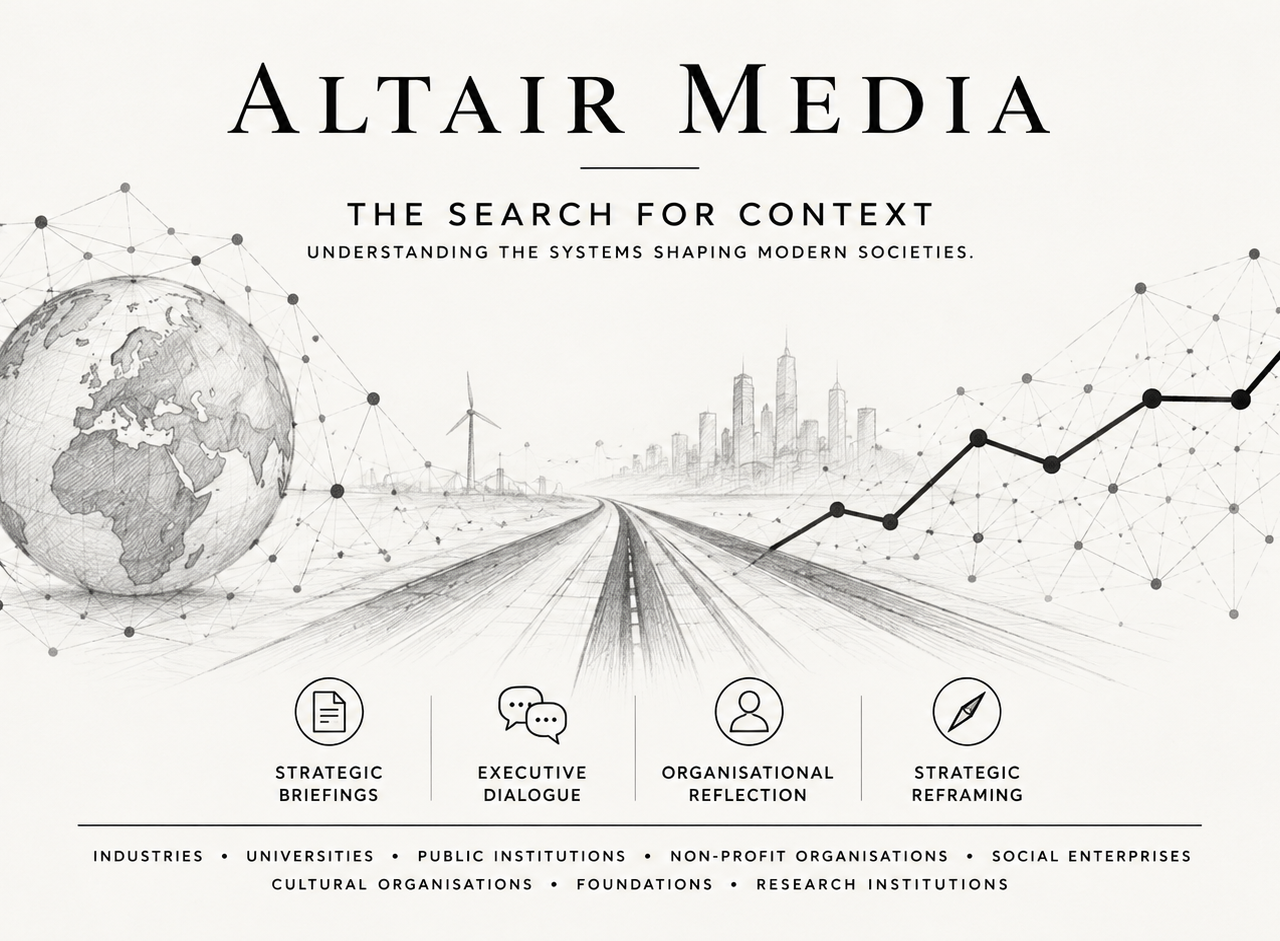
Altair Media is developing a new generation of programmes designed to help organisations understand long-term change, technological transformation and the evolving infrastructure of attention.
In June 2026, Altair Media’s analyses reached more than 125,000 unique readers and generated nearly 300,000 impressions. During the first half of 2026, readership expanded to more than 200,000 professionals, practitioners, researchers and institutional actors across Europe, North America and Asia, accumulating over 800,000 views.
These numbers represent more than audience growth. They have become a live case study.
They offer an opportunity to ask deeper questions about how information travels, how attention is distributed and why some structural insights resonate globally while others remain largely invisible.
At Altair Media, this inquiry forms part of a broader methodology: Infrastructure Awareness.
From the outset, Altair Media has been interested in the infrastructures that shape contemporary societies: energy systems, telecommunications, capital, governance and technological ecosystems. Increasingly, however, this inquiry has led toward a parallel and deeply influential architecture.
Read MoreTrust as a Financial System

Why money ultimately depends on confidence rather than technology
Modern finance is increasingly described through the language of technology. Payments have become digital. Banking increasingly operates through apps. Artificial intelligence influences decisions. Blockchain promises decentralisation. Yet beneath these technological developments lies a much older foundation. Trust.
People rarely think about trust when making a payment. They simply assume that their salary will arrive. Their savings will remain accessible. Their pension will still exist decades from now. Their mortgage provider will continue operating. Their bank card will function tomorrow exactly as it did yesterday.
Financial systems work because millions of people simultaneously believe they will continue to work. That belief is not trivial. It may be one of the most important forms of social infrastructure modern societies possess.
“Money is a matter of functions four, a medium, a measure, a standard, a store.”
John Maynard Keynes, economist
Yet even these functions ultimately depend upon confidence. Without confidence, money becomes paper. Without confidence, deposits become uncertainty. Without confidence, financial systems become fragile.
Read MoreSignal | Europe Is Building Its Own Growth Capital Infrastructure
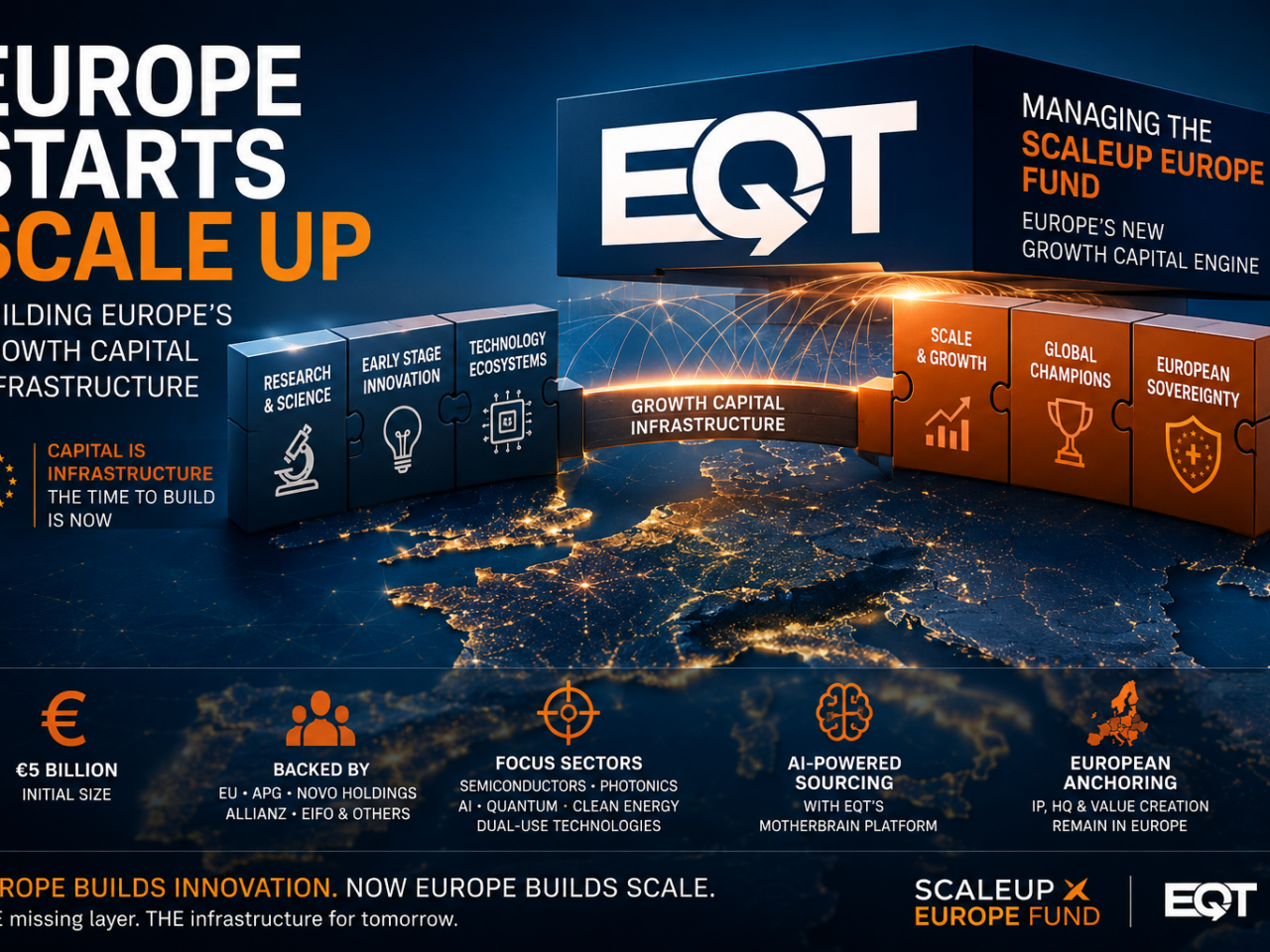
Why Europe may finally be treating capital as a strategic capability
Europe has spent decades building laboratories, innovation programmes and world-class technology ecosystems. Yet many of its most promising companies still encounter the same obstacle once they reach maturity: the absence of sufficient growth capital. The Scaleup Europe Fund suggests Europe may finally be attempting to build the missing infrastructure layer.
🟦 Why does Europe produce innovation but struggle to produce scale?
Europe’s innovation ecosystem is often portrayed as a success story. Horizon Europe, the European Innovation Council, research universities and specialised clusters such as Brainport Eindhoven, imec and the European photonics ecosystem have created an impressive pipeline of technologies. Yet the paradox remains striking.
Europe finances discovery. Others finance expansion.
Many European deep-tech firms rely on American investors once they reach Series B rounds and beyond. Capital therefore becomes more than funding. It increasingly determines where intellectual property, strategic decision-making and long-term value creation ultimately reside.
Innovation was never Europe’s principal bottleneck. Scale may be.
Read More