Altair Media: Building a Framework for Understanding Modern Societies

At the heart of Altair Media lies a simple conviction: understanding modern societies requires understanding the systems that shape them.
Technology no longer develops in isolation. Infrastructure, capital, institutions, universities and public policy increasingly determine how innovation evolves. Understanding these connections has guided Altair Media from the very beginning and continues to shape everything we publish today.
July marked another important milestone. Across our European, Asian and American editions, Altair Media reached more than 310,000 impressions and welcomed 162,500 unique readers. These numbers are encouraging. But they are not our primary objective.
Behind every impression is a professional searching for context rather than headlines. Engineers, academics, policymakers, business leaders, entrepreneurs and students increasingly share one challenge: understanding systems instead of isolated events rather than analysing events in isolation.
That is precisely the conversation Altair Media aims to facilitate.
Read MoreThe Cost of Sovereignty
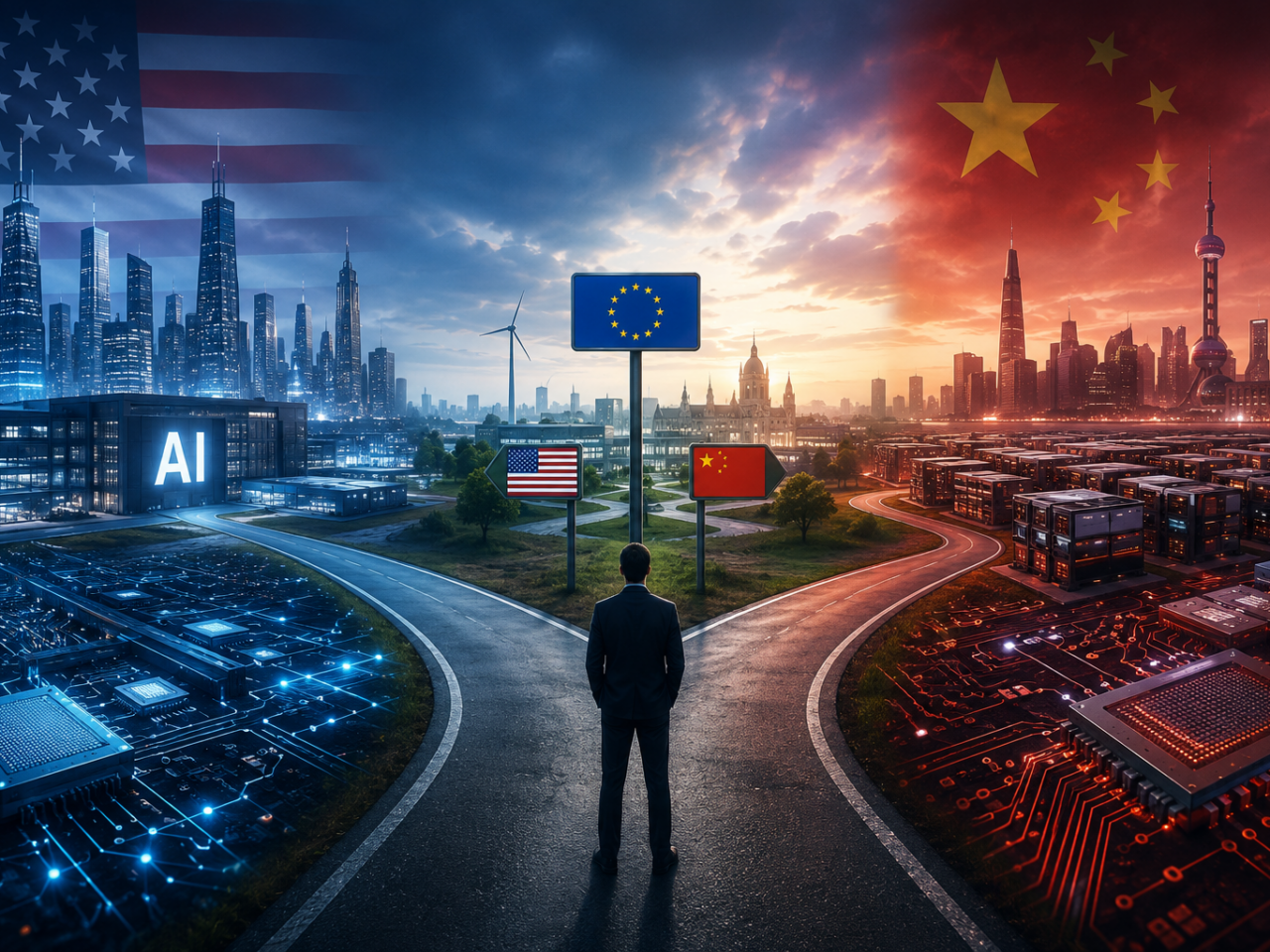
Meta is investing. China is lowering the cost. Can Europe afford sovereignty in the age of AI?
Meta has announced plans to invest hundreds of billions of dollars in artificial intelligence infrastructure over the coming years. At the same time, the OpenAI-led Stargate initiative is mobilising similar levels of investment to build vast AI campuses, semiconductor clusters, data centres and the energy systems required to power them.
Across the Pacific, a different strategy is emerging. Chinese AI companies are demonstrating that advanced artificial intelligence can increasingly be developed and deployed at a fraction of those costs.
Three regions. Three strategies. Three fundamentally different visions of technological leadership.
Europe, meanwhile, continues to speak the language of digital sovereignty. But what happens when those three strategies begin to collide?
Perhaps the defining question is no longer who can build the most powerful artificial intelligence. Perhaps the real question is whether Europe is willing to pay for sovereignty when cheaper alternatives become available.
Read More€5 Billion for AI? First Tell Us What the Public Will Own.

AI Coalition 4 the Netherlands (AIC4NL) has proposed a €5 billion public-private investment agenda to strengthen the country’s AI ecosystem. The proposal reflects a growing recognition that artificial intelligence is becoming part of Europe’s strategic infrastructure. But before another billion euros of public money is committed, one fundamental question deserves a clear answer: what exactly will remain once that investment has been made?
The Netherlands already invests billions every year in universities, scientific research, innovation, digitalisation and economic development. Artificial intelligence has become a strategic priority across government, academia and industry alike.
If additional public investment is now considered necessary, the discussion should extend beyond the size of the budget. It should also explain which structural gaps remain, what new capabilities will be created and which assets the country expects to retain.
The question is therefore not whether AI deserves investment. It is whether public investment creates lasting public value.
Read More