Altair Media: Building a Framework for Understanding Modern Societies
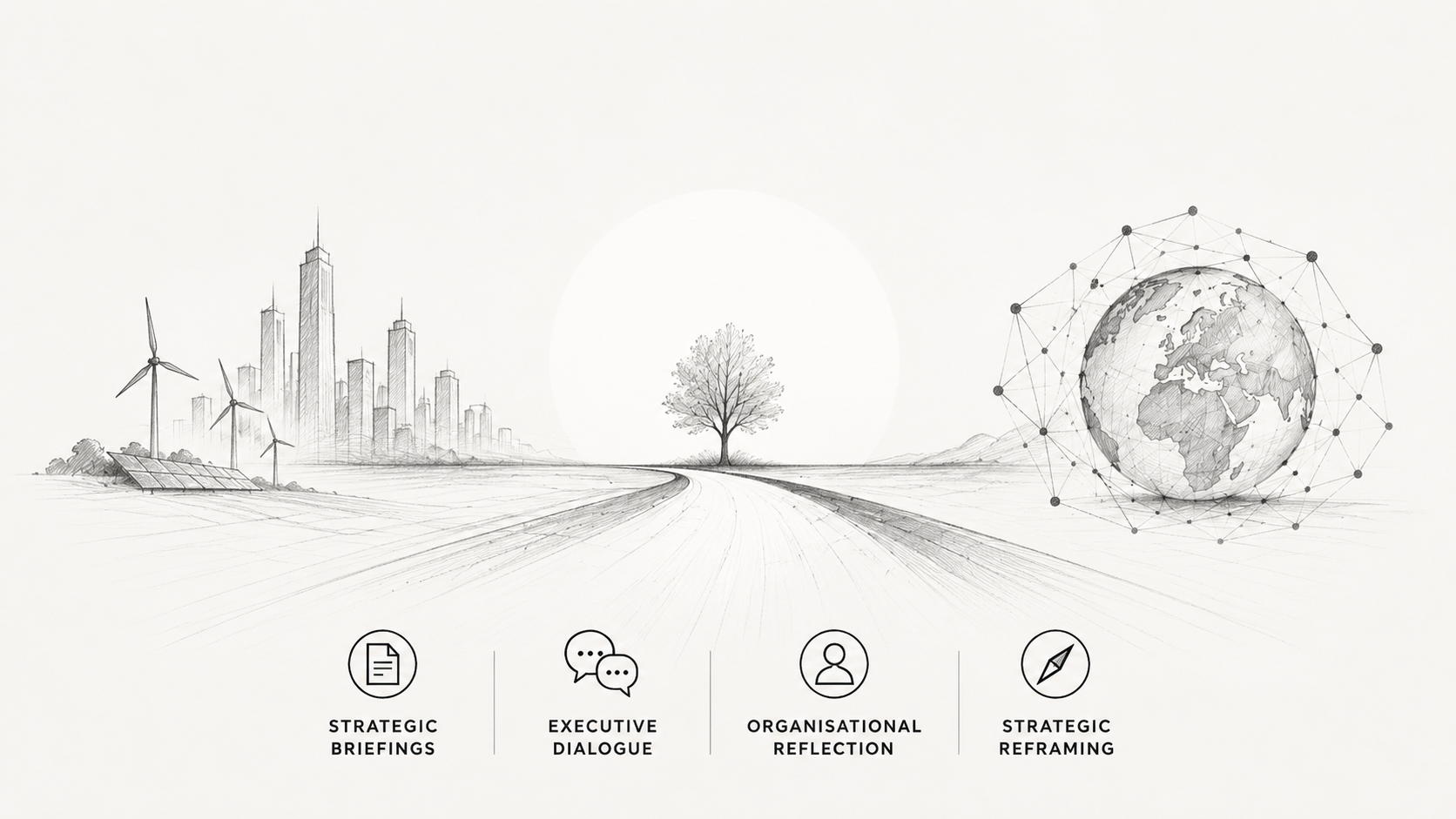
At the heart of Altair Media lies a simple conviction: understanding modern societies requires understanding the systems that shape them.
Technology no longer develops in isolation. Infrastructure, capital, institutions, universities and public policy increasingly determine how innovation evolves. Understanding these connections has guided Altair Media from the very beginning and continues to shape everything we publish today.
July marked another important milestone. Across our European, Asian and American editions, Altair Media reached more than 310,000 impressions and welcomed 162,500 unique readers. These numbers are encouraging. But they are not our primary objective.
Behind every impression is a professional searching for context rather than headlines. Engineers, academics, policymakers, business leaders, entrepreneurs and students increasingly share one challenge: understanding systems instead of isolated events rather than analysing events in isolation.
That is precisely the conversation Altair Media aims to facilitate.
Building an Analytical Framework
Over the past year, Altair Media has gradually developed its own analytical framework for interpreting technological, economic and geopolitical change.
This framework introduces concepts such as the Strategic Seven, The European Architecture, The Operators of Power, Hidden Champions of Asia, Portrait of Asia, Signals, Strategic Briefings and Executive Dialogues. These are not simply editorial series.
Together they form a shared vocabulary for understanding how infrastructure, institutions, technology and society increasingly interact. Our ambition is not merely to describe change, but to make complex systems more understandable.
Europe: Understanding Architecture
Within the European edition, our work increasingly centres on Europe’s strategic architecture.
Europe’s future is shaped by the interaction between infrastructure, capital, governance, universities, industry, energy, telecommunications and technological innovation. Rather than analysing these domains separately, Altair Media examines how they reinforce one another and collectively determine Europe’s long-term competitiveness.
This systems perspective also guides our organisational case studies. Our Editorial Case Study on AskDiana, for example, moved beyond technology itself to explore organisational positioning, governance, institutional design and the broader ecosystem in which innovation develops.
Understanding Europe increasingly means understanding its architecture.
Asia: Discovering Hidden Ecosystems
The Asian edition continues to expand through Hidden Champions of Asia, highlighting companies that quietly enable the global technology ecosystem without often appearing in public debate.
Alongside this series, we recently launched Portrait of Asia, exploring the economic, institutional and cultural characteristics that shape individual countries across the region.
The opening editions on Japan and South Korea have been particularly well received, demonstrating a growing appetite for regional context rather than isolated headlines.
United States: Technology Meets Society
The American edition continues to explore emerging technologies including photonics, semiconductors, artificial intelligence and digital infrastructure. At the same time, the edition deliberately broadens the conversation beyond technology itself.
Innovation is never purely technical. It is also shaped by culture, creativity and human values. This broader perspective is reflected in our coverage of Dutch artist Denise Buisman Pilger in the lead-up to her solo exhibition, illustrating how artistic perspectives can illuminate the human dimension of technological transformation.
An Increasingly International Perspective
Another important milestone this summer has been the establishment of a Strategic Knowledge Partnership with Meridian Exchange.
Although Europe and the Middle East differ in many respects, discussions about artificial intelligence, strategic infrastructure, industrial policy, investment, energy systems and institutional resilience increasingly converge.
Exploring these common questions enriches our understanding of both regions while fully preserving Altair Media’s editorial independence.
Independent journalism remains the foundation of every publication.
Strategic Knowledge Partnerships
As Altair Media continues to grow, we are introducing Strategic Knowledge Partnerships.
These partnerships are intended for organisations that wish to contribute expertise, facilitate access to industries or institutions, or support Strategic Briefings and Executive Dialogues.
They are not sponsorships of editorial content. Editorial independence remains non-negotiable. Every publication continues to be produced according to independent journalistic judgement.
We believe the strongest strategic conversations emerge when expertise, openness and independent analysis come together.
Looking Ahead
The first seven months of 2026 suggest that this approach is resonating with an increasingly international audience.
More importantly, they demonstrate that there is growing demand for journalism that moves beyond headlines towards systems thinking, institutional understanding and long-term perspective.
Altair Media will continue to explore the architectures, infrastructures and ecosystems that shape modern societies—not only to explain technological change, but also to help position the organisations, institutions and ideas that contribute to it.
We are grateful to every reader, contributor, interview partner and Strategic Knowledge Partner who continues to support that mission.
As the world becomes increasingly interconnected, the search for context becomes more important than ever. The search for context has only just begun.
Credit
Illustration by ChatGPT for Altair Media.
Caption
Altair Media examines the technological, economic and institutional systems shaping modern societies. Through independent journalism, Strategic Briefings and Executive Dialogues, the platform connects technology, infrastructure, governance and society in search of long-term strategic context.
