Six Deals In: Is Europe’s Scaleup Fund Starting to Make a Market?

Europe’s flagship scale-up vehicle is moving fast. Six deals in, the harder question is whether it is beginning to change the market around it.
Europe’s Scaleup Europe Fund has crossed an important threshold. It is no longer primarily a policy instrument waiting to prove that it can invest; six deals in — and with three announced within eight days — capital is moving at something approaching market speed. The Exploration Company, Tandem Health and EUCLYD have joined ICEYE, Lovable and Mistral AI.
That changes the test. The question is no longer whether Europe can create a large scale-up vehicle. It is whether that vehicle can address the structural failure it was designed for: European companies reaching technological maturity, only to find that the capital required for industrial scale is deeper elsewhere.
After six deals, the first contours are becoming visible.
Read MoreEurope’s Investment Union Already Exists — In Pieces
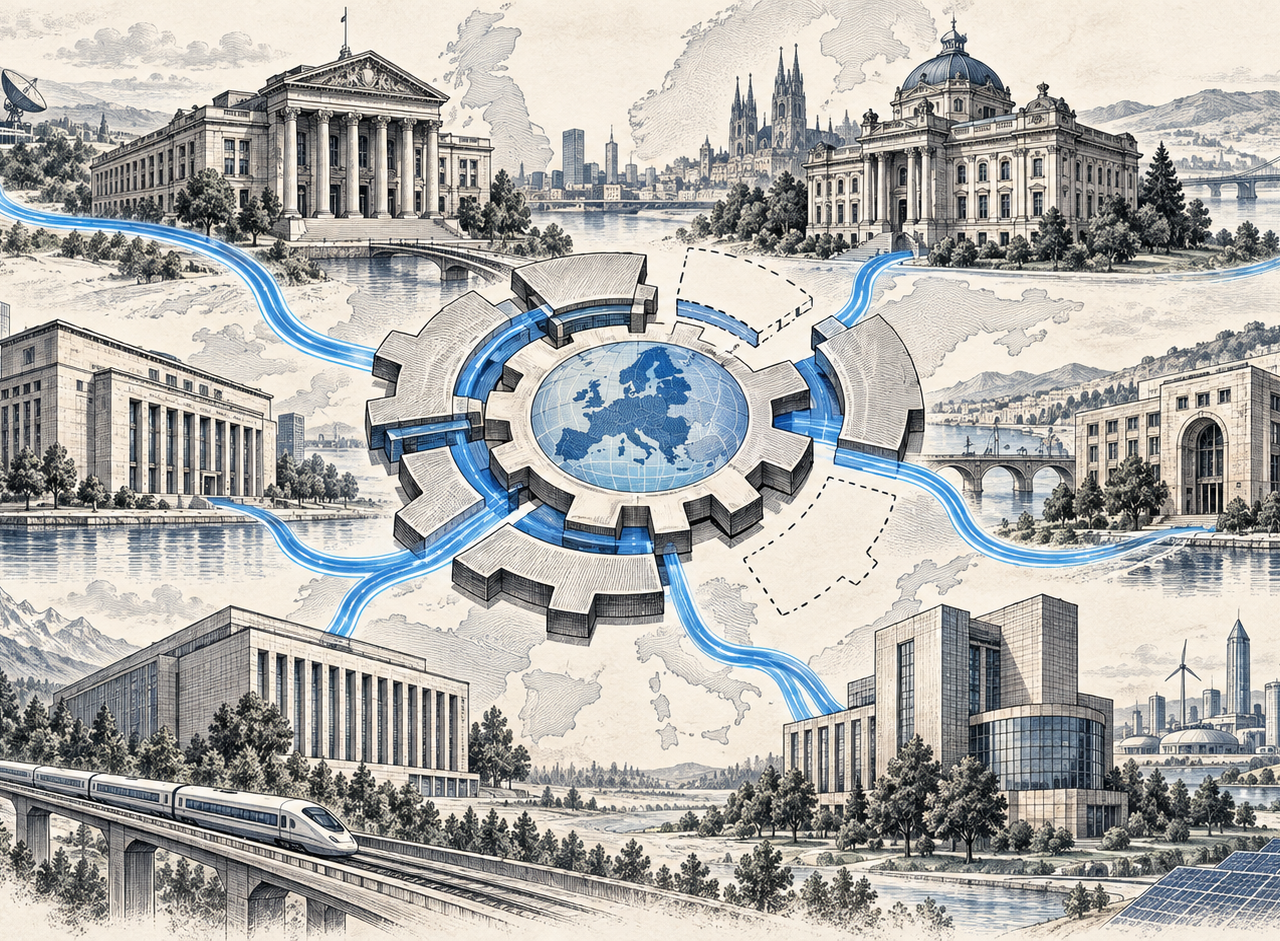
How national promotional banks, the EIB Group and private investors are quietly building a European capital architecture
Europe presents the Savings and Investments Union as a financial system still waiting to be built. Parts of it already exist. In February 2026, five major national promotional institutions — Caisse des Dépôts, KfW, Cassa Depositi e Prestiti, BGK and ICO — met with the European Investment Bank Group in Munich.
Together, they had provided more than €300 billion in financing during the previous year.
Their agreement was not limited to general cooperation. It explicitly covered the Savings and Investments Union, including market-based instruments, securitisation, stronger exit mechanisms and connections between European and national investment programmes.
Five months later, all 27 EU governments, the EIB Group and private institutional investors backed ETCI 2.0. The initiative aims to mobilise up to €80 billion for European technology companies.
Europe may therefore be building its investment union through institutions that already exist. The central question is whether their cooperation can become a European market.
Read MoreItaly Already Has a Savings and Investments Union

What Cassa Depositi e Prestiti reveals about Europe’s attempt to turn savings into strategic investment
Europe is trying to solve a problem Italy has been working on since 1850. The European Commission’s Savings and Investments Union is intended to connect Europe’s vast household savings more effectively with companies, infrastructure and strategic technologies. Italy already has an institution built around remarkably similar logic: Cassa Depositi e Prestiti or CDP.
Drawing heavily on Italian postal savings, CDP uses its balance sheet to finance public infrastructure, enterprises, innovation and strategic assets. As of June 2026, it reported €502 billion in total assets, supported by €301 billion in postal funding. Its balance sheet included €130 billion in loans and €39 billion in equity investments and funds.
This does not make CDP a miniature European Savings and Investments Union. CDP is a national promotional institution operating through a publicly anchored balance sheet. The European project seeks deeper capital markets, broader participation by citizens and more investment across borders.
Yet CDP turns Europe’s abstract debate into a concrete institutional test.
Read MoreSociety & Culture

Designing the Self
Friday, April 17, 2026
In digital environments, identity is increasingly shaped by design. From interfaces and avatars to algorithmic aesthetics, the self is no longer simply expressed but constructed—raising new questions about agency, authenticity and how we see ourselves.

The End of the Assignment
Thursday, April 16, 2026
Artificial intelligence is breaking the link between effort, output and understanding. As essays and exams become less reliable signals, universities must rethink assessment—not as a measure of performance, but as a way to reveal how students actually think.

Curated Lives
Sunday, April 12, 2026
Across Europe, identity is increasingly shaped by visibility. As creators turn the self into content and currency, the boundary between personal expression and economic performance blurs—raising questions about authenticity, autonomy and the cost of being constantly seen.

Building Europe: Design, Power and the New Urban Economy
Friday, April 10, 2026
Europe is quietly redesigning itself. Through the New European Bauhaus, cities become more than places to live—they become instruments of policy, value creation and identity. This series explores how design, technology and governance converge in Europe’s emerging urban economy.
