Europe Can Make Chips. But Can It Build a Market?
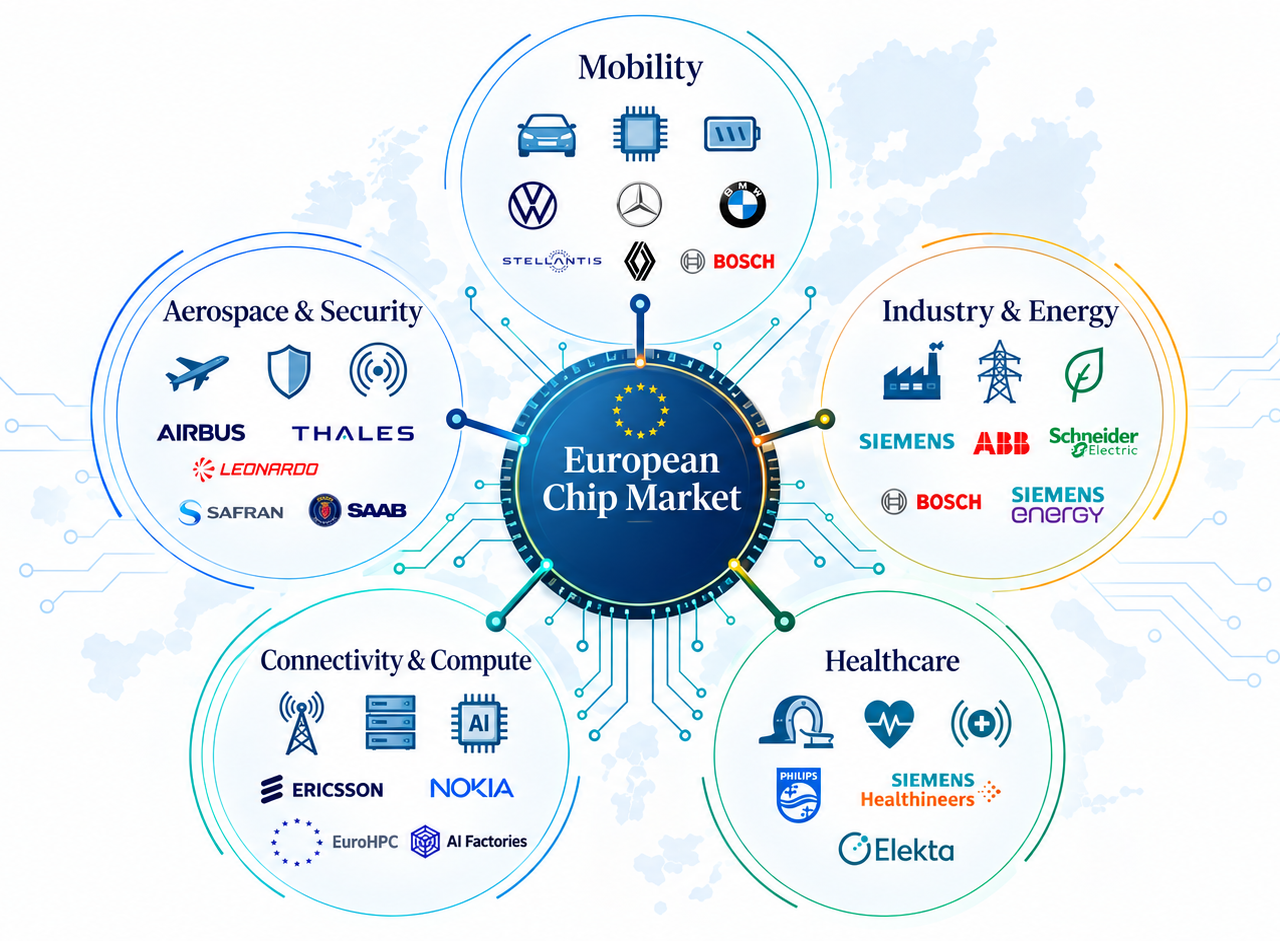
Europe has spent years asking where its next semiconductor fab should be built. Chips Act 2.0 points towards a different question: which European industries will create the demand that makes those fabs worth building?
SIGNAL | ASML may be Europe’s most indispensable technology company. Its machines sit at the centre of advanced semiconductor manufacturing, supported by one of the most sophisticated industrial ecosystems the continent has ever built. Yet almost none of that demand is European.
In 2025, ASML generated €32.7 billion in sales. Around €28 billion came from Asia. EMEA accounted for just €524 million, with another €4.7 million in the Netherlands itself. On ASML’s system-sales measure, only 1% of machines shipped to EMEA.
Europe builds the machines on which much of the global semiconductor industry depends. But the factories using them are overwhelmingly somewhere else. That imbalance is usually described as a production problem. It may be something more fundamental.
Europe has a semiconductor market problem.
Read MoreEurope’s Scaleup Fund Is Beginning to Acquire a Shape

Six investments are visible. More than 100 companies were already in the pipeline when EQT took the mandate. The question is no longer only who comes next — but whether Europe is creating a late-stage capital market of its own.
A month ago, the Scaleup Europe Fund was still mostly an institutional proposition. Today it has a portfolio. ICEYE. Lovable. Mistral AI. The Exploration Company. Tandem Health. EUCLYD. Six companies across satellite intelligence, software, frontier AI, space transportation, healthcare and AI infrastructure. The obvious question is who becomes number seven. The more important number may be 100.
When EQT was selected to manage the fund in May, it said it already had more than 100 companies in its pipeline. The underlying investment framework targets funding rounds of €100 million to €500 million or more, with the fund generally aiming to deploy at least €100 million per company over the life of an investment. That changes the scale of the experiment.
This is no longer simply about whether Europe can create another investment fund. It is about whether a recognisable late-stage capital layer is beginning to form.
Read MoreEurope Is Building the Machinery of Sovereignty
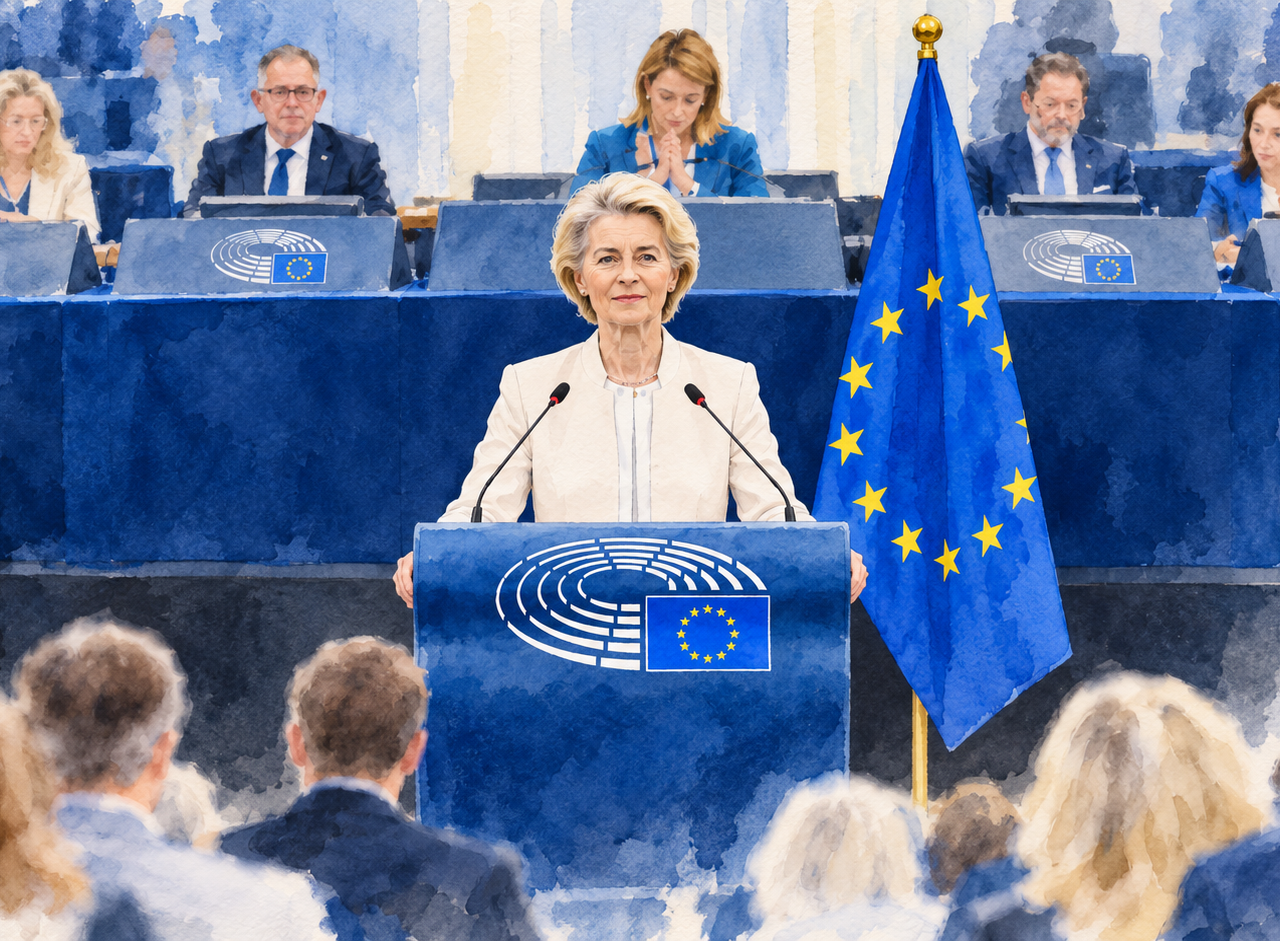
Von der Leyen’s State of the Union suggests a deeper shift: Europe is moving from regulating dependence to building the capacity to reduce it.
Europe has spent years defining what sovereignty should mean. Now comes the harder part: building it. In her 2026 State of the Union, Ursula von der Leyen repeatedly moved beyond the familiar vocabulary of strategic autonomy, resilience and economic security. The emphasis was increasingly physical and institutional: grids, storage, raw-material reserves, computing capacity, banking, defence assets and security structures. That matters.
Europe’s constraint is no longer simply a lack of rules, ambitions or strategies. Political intent repeatedly runs into physical bottlenecks, fragmented capital, supply dependencies and institutions that were built for a slower and more predictable world.
The emerging question is therefore no longer only what Europe should regulate. It is what Europe must actually be able to do.
Read MoreSociety & Culture

Identity and Stability
Friday, April 24, 2026
In Europe, stability is increasingly shaped by perception as much as by policy. How individuals understand themselves and their place in society influences trust in institutions—making identity a critical, yet often overlooked, factor in systemic resilience.

The Human Professions
Sunday, April 19, 2026
As artificial intelligence enters education, care and social work, the nature of these professions becomes clearer. Not efficiency, but presence defines them. This essay explores why human judgment, context and relationships remain essential in an increasingly system-driven world.

Can Language Still Be Taught?
Saturday, April 18, 2026
As artificial intelligence generates fluent text instantly, writing is no longer the same act of thinking it once was. This essay explores how language education must shift from producing sentences to interpreting meaning, authorship and responsibility in an age of generated words.

Law After the Prompt
Saturday, April 18, 2026
Artificial intelligence is transforming legal work, but not legal judgment. As analysis and drafting become automated, the core of law remains human—requiring interpretation, responsibility and the ability to justify decisions under conditions of uncertainty.
