Housing the Knowledge Economy

Why student housing is becoming critical infrastructure for Europe’s innovation regions
Across Europe’s leading technology regions, housing is increasingly emerging as a structural constraint on economic growth. As innovation clusters expand and universities attract international talent, the availability of affordable housing is becoming a decisive factor in the sustainability of regional knowledge ecosystems.
In the traditional policy debate, housing has largely been framed as a social or urban planning issue — an important aspect of city development, but rarely considered part of the economic infrastructure that enables innovation and growth. That perception is now beginning to change. In knowledge-driven economies, the physical availability of housing increasingly determines whether talent can enter and remain within an ecosystem.
Universities, research institutions and technology companies rely on the continuous inflow of students, researchers and skilled professionals. Yet without sufficient housing capacity, that inflow can quickly slow down. Cities that succeed in attracting global talent may simultaneously find themselves constrained by the inability of their urban infrastructure to accommodate it.
Read MoreThe Economic Frontline: Rebuilding Ukraine’s Critical Infrastructure
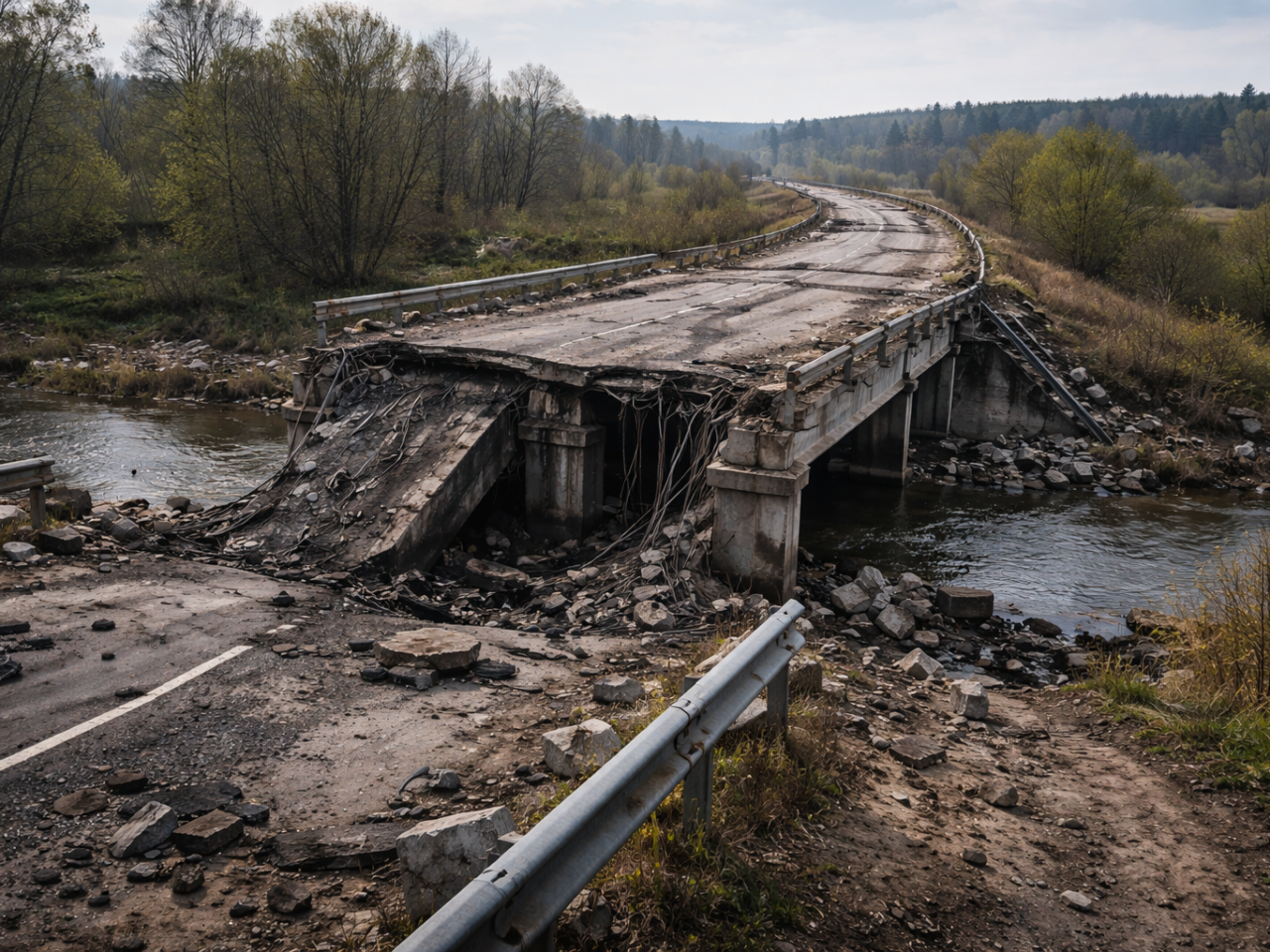
How roads, power grids and digital networks are being rebuilt during war — and why Europe is closely watching
The war in Ukraine has destroyed cities, displaced millions and redrawn the geopolitical landscape of Europe. Yet beyond the battlefield, another struggle is unfolding — one fought with power cables, railway lines and digital networks rather than artillery. Ukraine’s infrastructure has become both a target and a strategic instrument in the country’s survival.
What makes the situation unprecedented is that reconstruction is not waiting for peace. Repairs to power grids, transport corridors and communications networks are being carried out while the war continues. For policymakers and investors across Europe, the rebuilding of Ukraine has already begun to resemble the largest infrastructure project of the twenty-first century.
Recent assessments by the World Bank, the European Commission and the United Nations estimate that the cost of recovery and reconstruction could reach nearly $588 billion over the next decade. The scale is staggering: almost three times the country’s projected annual economic output. Direct physical damage to infrastructure alone is already estimated to exceed $150 billion, a figure that continues to rise as the war grinds on.
Read More“The needs for recovery and reconstruction in Ukraine are enormous and the costs continue to grow. Damage to infrastructure is not only an economic loss, but a direct attack on the lifeline of the civilian population.”
Anna Bjerde
Managing Director of Operations, World Bank
Why Brussels Is Reopening the Nuclear Option

How climate targets, energy security and grid stability are reshaping Europe’s energy strategy
The dream of a Europe powered entirely by wind, sun and water has been abruptly confronted by geopolitical reality. Since Russia’s invasion of Ukraine, energy policy in Brussels is no longer simply a climate issue — it has become a matter of strategic security. The sudden loss of Russian gas supplies exposed just how vulnerable Europe’s energy system remained, even after years of investment in renewable energy.
At the same time, the continent’s electricity infrastructure is under growing pressure. The rapid electrification of transport, heating and heavy industry — central pillars of the European Green Deal — is dramatically increasing demand for reliable electricity. Electric vehicles, heat pumps and hydrogen production all require vast amounts of power and Europe’s ageing grids were not designed for such a transformation.
This convergence of climate ambition, geopolitical pressure and technical reality has forced policymakers to reconsider a technology that, until recently, was politically radioactive: nuclear power. In Brussels, the question is no longer whether nuclear energy belongs to the past, but whether Europe can realistically achieve its climate goals without it.
“Nuclear energy is available around the clock, providing electricity all year. The nuclear tech race is on. Europe has been a pioneer in nuclear technology. And it can lead again.”
Ursula von der Leyen
President of the European Commission
Source: Nuclear Energy Summit, Brussels (2024)
Von der Leyen’s remarks reflect a broader shift inside the European policy establishment. For decades, nuclear power existed in an uneasy limbo within EU climate policy — tolerated by some member states, rejected by others and rarely promoted at the European level. Today, however, the technology is quietly returning to the center of the energy debate.
Read MoreSociety & Culture

The Meaning Crisis
Thursday, February 19, 2026
As artificial intelligence reshapes how information is produced and perceived, literacy can no longer mean simply reading and verifying facts. It must address who constructs meaning, how algorithms frame reality and whether citizens retain agency in an increasingly synthetic information environment.

The Battle for Visibility
Saturday, February 14, 2026
As algorithms and artificial intelligence increasingly determine what citizens see, media literacy can no longer focus solely on identifying misinformation. Understanding the infrastructures that shape visibility has become essential for democratic resilience and cognitive autonomy in Europe’s evolving digital public sphere.

From Accessibility to Agency
Monday, February 9, 2026
Inclusive design is often reduced to accessibility and compliance. Yet in an age of AI-mediated systems, design determines whether citizens retain agency or are silently processed. Inclusion is no longer ethical decoration — it is Europe’s social infrastructure.

The Architect of Meaning
Tuesday, February 3, 2026
For decades, the logic of telecommunications was almost uncontested. Faster was better. More bandwidth meant progress. Shannon’s Law framed intelligence as an engineering problem: how efficiently can information be transmitted from point A to point B?
