PhotonDelta Backs EpoQ’s Plan for a Smaller Atomic Clock

The Amsterdam research venture will receive photonics development support to make precision timekeeping equipment smaller and suitable for use beyond the laboratory.
EpoQ, a quantum technology venture emerging from the University of Amsterdam, has won PhotonDelta’s Global Photonics Engineering Contest for its plan to develop a compact atomic clock. The team wants to shrink precision timekeeping equipment for applications including satellites, naval vessels and scientific instruments.
Announced on 21 October, the award provides up to €100,000 in technological services from companies within PhotonDelta’s ecosystem. EpoQ will also have an opportunity to seek up to €2 million in pre-seed investment, subject to a separate assessment and applicable conditions. That potential investment has not been awarded.
The venture builds on research in Rene Gerritsma’s group at UvA’s Institute of Physics. Its team includes Louis Gallagher, a postdoctoral researcher at UvA, and Matteo Mazzanti, a postdoctoral researcher at ETH Zürich. The university described EpoQ as preparing for incorporation when it announced the competition result.
Read MoreHow Much Fraud Does Europe Actually See?

What Europe’s payment statistics reveal about fraud, and what they leave out.
Imagine a customer taking a call from someone claiming to work for her bank. The caller tells her that her savings are at risk and urges her to move them to a secure account. She opens the genuine banking app, enters the details and confirms the transfer herself. The bank can verify that she used the app to approve the payment. The caller’s instructions are invisible to it.
Payment service providers in the European Economic Area reported €4.2 billion in fraudulent transactions in 2024, up from €3.5 billion in 2023. Fraud represented about 0.002% of the total value of payments covered by the report. For credit transfers, the distribution of losses tells a different story. Payment service users bore about 85% of the reported fraud losses, according to the joint EBA–ECB report on payment fraud.
A small share of the payment system can represent a large share of someone’s savings. To understand where protection works, we need to follow a case from the initial deception to the receiving account and the eventual loss.
Read MoreSMART Photonics Plans Joint Production Service with GlobalFoundries
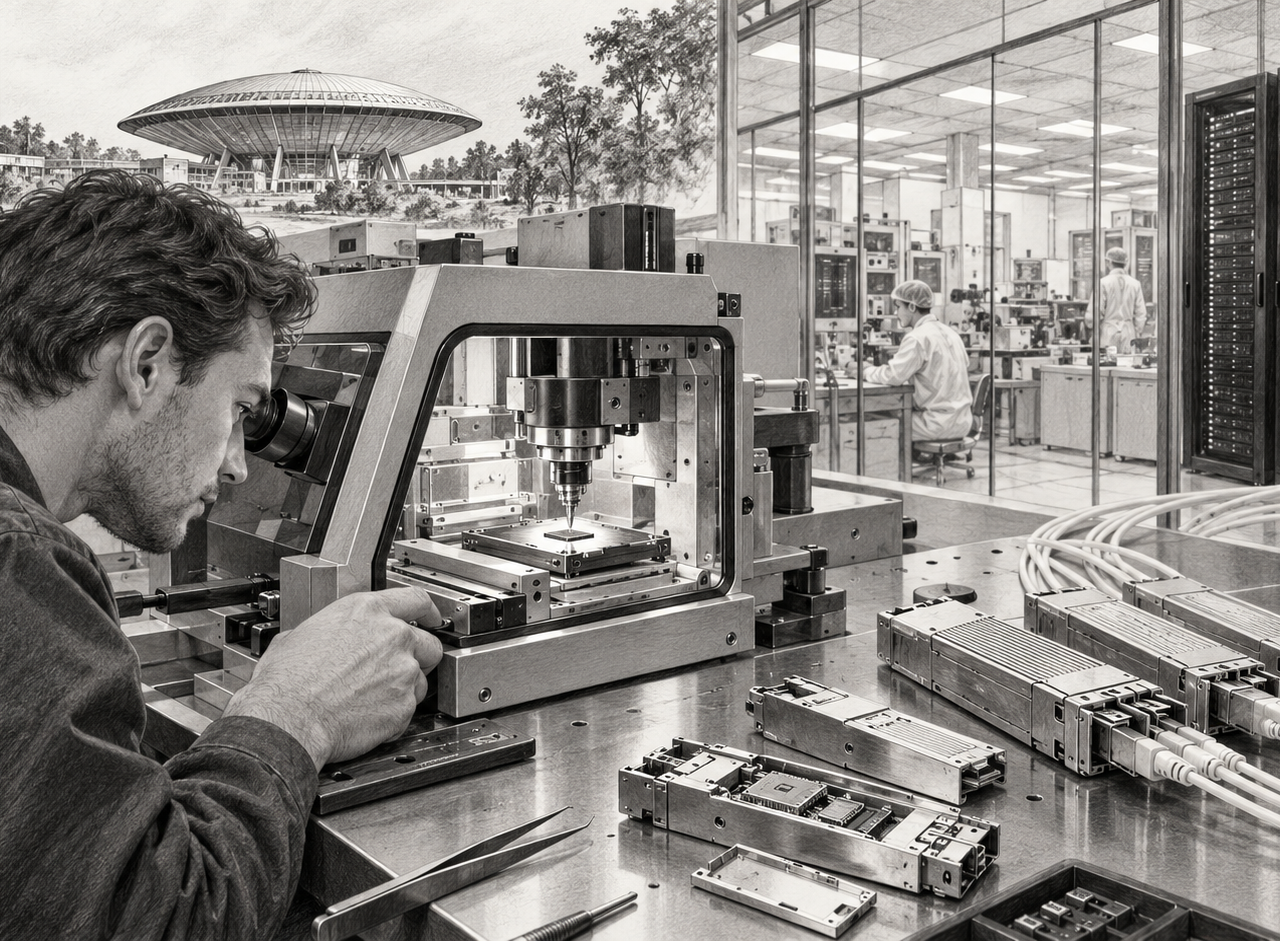
The Eindhoven company is connecting its light-producing chips with an international manufacturing platform, targeting commercial availability in the second half of 2027.
SMART Photonics has partnered with GlobalFoundries to offer chip designers a joint manufacturing service for optical devices used in applications including data-centre communications. Announced on 21 September, the collaboration combines Eindhoven’s specialist photonics technology with GlobalFoundries’ silicon platform. General availability is targeted for the second half of 2027.
The agreement creates a potential route to a wider market for SMART Photonics. Designers would be able to use components from both manufacturers through a jointly engineered production process, rather than developing the connection between them independently.
For Brainport, the commercial question is concrete: can that combined offer make it easier for chip designers to turn specialised technology into products they can order repeatedly?
Read MoreSociety & Culture

Sweden and the Innovation Society
Sunday, June 21, 2026
Sweden is often recognised for companies such as IKEA, Ericsson, Spotify, Klarna and Saab. Yet the country’s deeper strength lies in something broader: an innovation ecosystem built upon education, research, trust and long-term investment in human capital. Sweden demonstrates that innovation is not simply an economic activity—it is a societal capability.

Tactical Tech and the Challenge of Understanding Digital Life
Saturday, June 20, 2026
Most people use digital technologies every day, yet few fully understand the systems operating behind the screen. Through exhibitions, educational programmes and public engagement initiatives, Tactical Tech helps people explore how algorithms, data and artificial intelligence increasingly shape everyday life.

fABULEUS and the Power of Youth Expression
Saturday, June 20, 2026
Across Europe, organisations are using theatre, dance and creative expression to help young people develop confidence, communication skills and a stronger sense of self. Through the example of fABULEUS, this article explores why creativity remains an important part of youth development in a rapidly changing world.

Mental Health Europe and the Fight Against Loneliness
Saturday, June 20, 2026
Most people think of loneliness as a personal problem. Yet organisations such as Mental Health Europe and the European Public Health Alliance increasingly see it as a broader societal challenge. As Europe becomes more digital and interconnected, questions about social connection, wellbeing and community are moving higher on the policy agenda.
