CEA-Leti: Europe’s Hidden Deep-Tech Laboratory
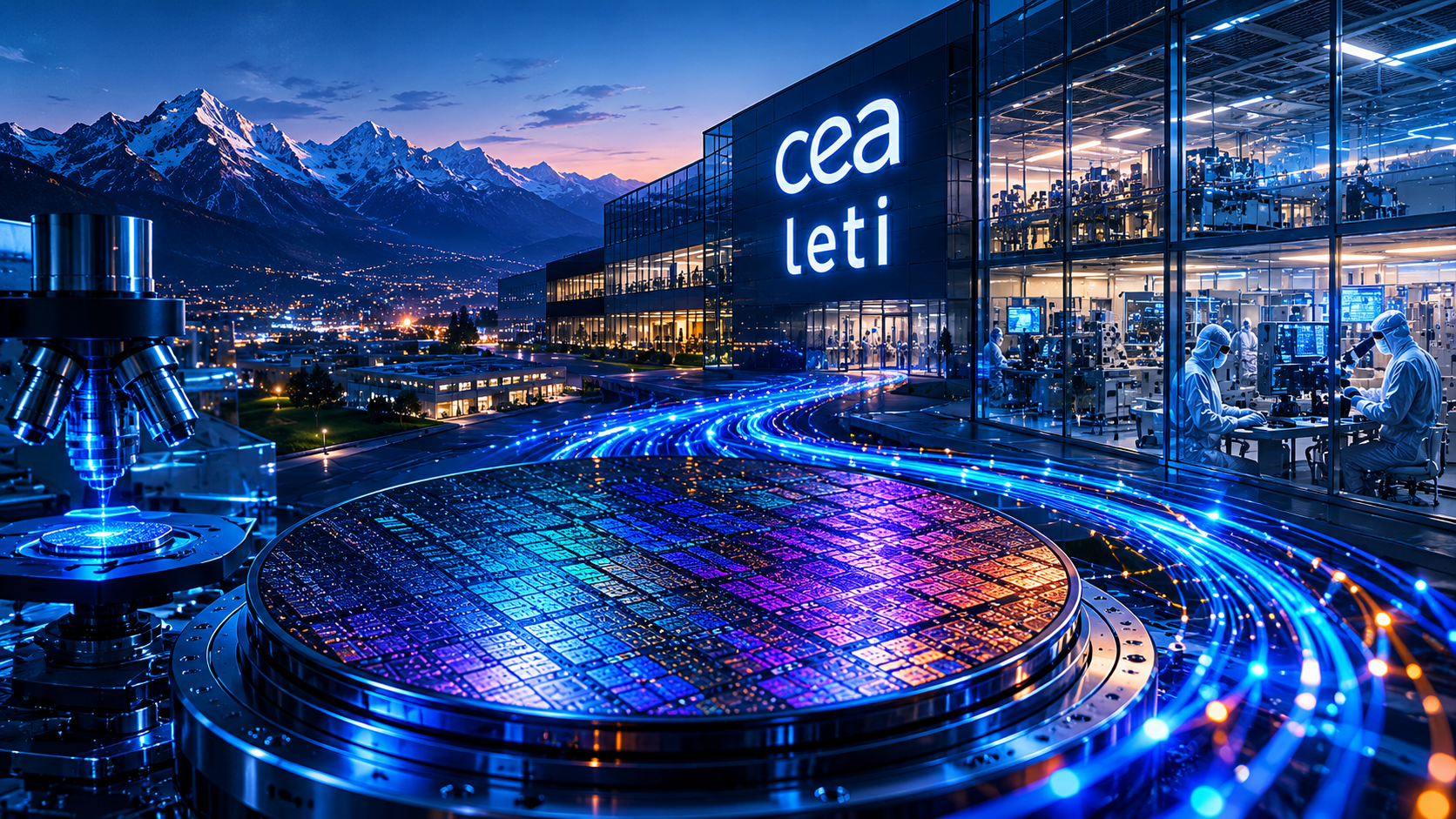
Why some of Europe’s most important technologies begin in places few people have ever heard of
Strategic Briefing
When discussions turn to European technology, companies such as ASML, Airbus and Siemens often dominate the conversation. Yet behind many of the technologies shaping the future of semiconductors, photonics, sensing, artificial intelligence and quantum systems stands a less visible institution. CEA-Leti.
Based in Grenoble, the organisation operates at the frontier of deep-tech research, where advances in physics, materials science and engineering are transformed into technological possibilities. Its influence extends far beyond France. This is the story of one of Europe’s most important deep-tech laboratories.
🔹 What Makes CEA-Leti Different?
Most research organisations focus on scientific discovery. Most technology companies focus on commercial products. CEA-Leti operates between the two. Its mission is not simply to understand new technologies. Its mission is to make them possible.
The organisation works on technologies that may remain years away from large-scale commercial deployment, helping bridge the gap between fundamental science and industrial application.
In this sense, CEA-Leti functions as a laboratory for future industries.
🔹 Why Does Deep Tech Matter?
Many of the technologies shaping the modern economy did not emerge from software alone. They emerged from advances in materials, physics, microelectronics, sensing and engineering.
These technologies often require long development cycles, specialised facilities and sustained investment. This is the world of deep tech. The barriers are high. The timelines are long. The strategic implications can be enormous.
🔹 Why Grenoble Matters
Deep-tech innovation rarely emerges in isolation. It tends to concentrate around places where talent, infrastructure and long-term investment accumulate over decades.
Grenoble is one of those places. The region has developed world-class capabilities spanning semiconductors, photonics, advanced materials, sensing technologies, quantum research and microelectronics.
What emerged is more than a technology cluster. It is an innovation ecosystem built around scientific depth.
🔹 Beyond Semiconductors
Although CEA-Leti is often associated with microelectronics, its activities extend far beyond traditional chip technologies. The organisation is active in:
• Integrated photonics
• Artificial intelligence hardware
• Advanced sensors
• Quantum technologies
• Medical technologies
• Robotics and edge intelligence
• Sustainable computing
This breadth reflects an important reality. Many future technologies will emerge through the convergence of disciplines rather than advances within a single field.
🔹 Why Sensors Matter
Artificial intelligence depends upon data. Data depends upon sensors. As industries become increasingly automated and connected, sensors are becoming the interface between the physical and digital worlds.
From healthcare and mobility to industrial systems and robotics, sensing technologies are quietly becoming part of the infrastructure of intelligence. This is one reason why CEA-Leti’s work extends far beyond computing alone.
🔹 Why Prototyping Is Strategic
Innovation is not only about discovery. It is also about validation. Many promising technologies fail to reach industrial deployment because the gap between laboratory research and commercial production remains too large.
CEA-Leti helps bridge this gap through pilot lines, prototypes and industrial partnerships. In doing so, it helps transform scientific possibilities into technological realities.
🔹 What Does This Mean For Europe?
Europe is often portrayed as competing directly with hyperscale cloud providers and consumer technology platforms. Yet its strengths may lie elsewhere.
The continent possesses world-class capabilities in deep-tech research, semiconductor equipment, photonics, advanced manufacturing and applied science.
Institutions such as CEA-Leti help sustain these capabilities. This creates a different form of technological influence. Not dominance through platforms. Influence through foundational technologies.
🔹 The Strategic Outlook: Asymmetric Sovereignty
Europe does not need to dominate every technology market to remain strategically relevant. The more important question may be whether it controls critical layers of the innovation infrastructure upon which future markets depend.
Deep-tech institutions help create those layers. The technologies emerging from laboratories such as CEA-Leti may eventually shape industries that do not yet fully exist.
This creates a form of influence that is often less visible than market leadership, but no less important.
🔹 Strategic Observation
Some technologies become successful because companies commercialise them. Others become possible because institutions create the conditions for their existence.
In the infrastructure stack of intelligence, deep-tech laboratories may be where the future begins.
Strategic Theme
Deep-Tech Innovation
Caption
Many technologies become visible only when they reach the market. CEA-Leti operates much earlier in the process, helping transform scientific possibilities into technological realities long before industries fully emerge.
Credit
AI-generated illustration for Altair Media Europe — Strategic Briefings: The Companies Behind The Physics of Intelligence.
