Can the EIC Build a Continuous Investment Journey?
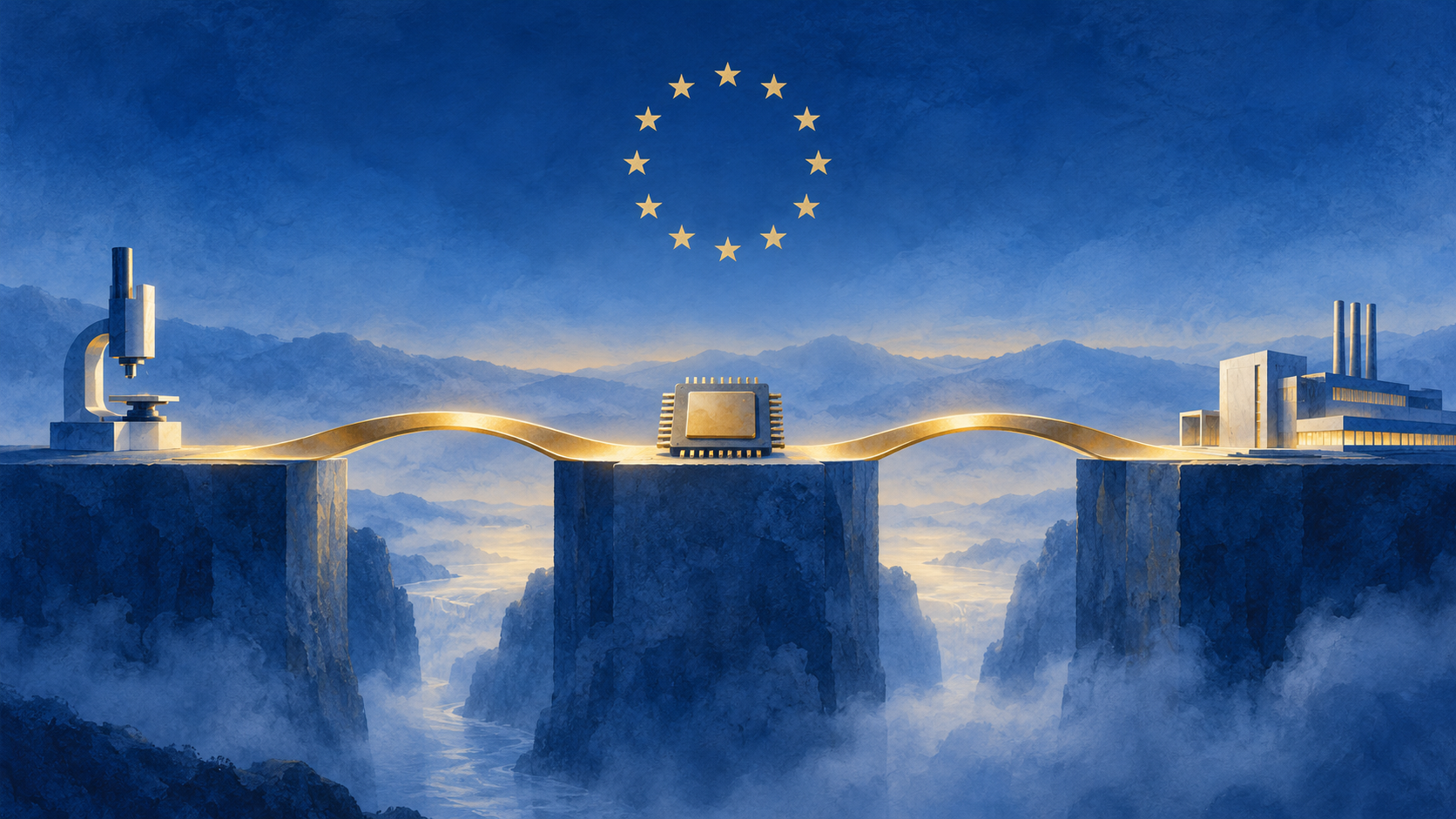
From research grants to growth capital — and the gaps between them
Europe can support a breakthrough with a research grant, help turn it into a product, take an ownership stake in the company and connect it with larger investors. Yet those forms of support do not automatically join up. The European Innovation Council’s (EIC) challenge is to make each funding decision prepare a credible route to the next.
Three questions clarify the journey: who carries the risk, what does the financier receive in return and what must the company already demonstrate? A grant, an investment and a loan provide different answers.
🟦 What changes when funding becomes investment?
A grant supports agreed activities without buying shares. The recipient must meet its conditions, but does not normally repay the money as a loan.
An equity investment buys an ownership stake. The investor shares the risk and seeks a return as the company grows; existing shareholders usually own a smaller proportion after new shares are issued.
The EIC Accelerator can combine grants with equity or quasi-equity, including convertible loans that can later become shares under agreed terms. This is called blended finance.
The distinction matters because demonstrating a technology and building an investable company are different tasks. One award does not automatically complete both.
🟦 Which instruments address which part of the journey?
The 2026 EIC framework offers several routes, alongside the separately managed Scaleup Europe Fund:
| Instrument | Main purpose | Form of finance |
|---|---|---|
| Pathfinder | Breakthrough research and proof of principle | Grants up to €4 million |
| Transition | Validate research results and develop a business case | Grants up to €2.5 million |
| Accelerator | Develop innovations and support market entry and growth | Standard grant below €2.5 million, and/or investment up to €10 million |
| STEP Scale Up | Help finance major strategic-technology rounds | Equity investments of €10–30 million |
| Scaleup Europe Fund | Finance substantial growth in strategic technology businesses | Growth equity, with independent investment decisions by EQT |
These are different financing routes, rather than successive instalments of one award. Pathfinder can support a research team before a company exists. Later investment requires a business, ownership arrangements and a commercial proposition that investors can assess.
🟦 Why can a successful project still struggle to move forward?
Each instrument has its own eligibility and selection process. Under the 2026 rules, Transition must build on results from specified eligible research programmes. A promising technology developed elsewhere does not automatically qualify.
Within Accelerator blended finance, the investment component undergoes due diligence and assessment of investment readiness. A positive grant decision does not settle the investment terms.
Fast Track can shorten an application route for eligible projects, but it does not guarantee funding.
A research team may consequently need to secure intellectual-property rights, establish a company and finance further validation while the next decision is pending.
Technical progress can continue while financial runway disappears.
🟦 Why does STEP Scale Up require other investors?
STEP Scale Up provides equity investment intended to support larger financing rounds. Its 2026 application rules require a pre-commitment from a single qualified investor covering at least 20% of the target round.
The EIC investment therefore forms part of a wider financing package. Companies must demonstrate private market interest while seeking public participation to help finance the scale and risk involved.
That creates a demanding threshold. A business can have progressed beyond research funding while still struggling to secure the investor commitment needed for its next route.
The Scaleup Europe Fund operates under an independent EQT manager. Previous EIC support brings no preferential treatment and there is no mandatory link to the EIC portfolio.
The practical implication is that EIC-backed companies must make a fresh investment case. The fund combines commercial returns with strategic European value. Strategic relevance must therefore survive a new commercial assessment.
🟦 Where do loans and guarantees enter?
Beyond these EIC routes, debt can finance growth while requiring repayment, usually with interest. It creates a different cash-flow obligation from equity.
The European Investment Bank’s venture debt complements equity financing for innovative growth companies. Its structure includes repayment of the loan amount at the end of the loan term, which can provide breathing space during growth.
That flexibility changes the timing of repayment; the liability remains. For a photonics manufacturer, delayed customer qualification can leave debt commitments in place while anticipated revenue moves further away.
A guarantee can cover part of a lender’s potential losses and help unlock lending. It does not remove the borrower’s repayment obligation.
The financing test is whether the company can meet its obligations through a slower production ramp-up, as well as under its preferred forecast.
🟦 What would make the journey more continuous?
The EIC Board, chaired by Michiel Scheffer, advises on strategy, the work programme and improvements to the innovation ecosystem. In its September 2026 statement, the Board called for the integrity of the innovators’ journey to be reinforced in the next Horizon Europe programme.
A useful strategic test is how effectively the instruments connect: the time between grant support and investment, the reasons promising projects cannot progress, and whether companies can access the next appropriate source of capital.
The EIC already provides Business Acceleration Services, including investor connections and expertise. Their value should also be assessed through the financing and commercial milestones they help companies reach.
Continuity should preserve independent scrutiny while reducing avoidable interruptions. A company needs a credible next financing route before its current support runs out.
Signal
Grants, equity, convertible instruments, loans and guarantees solve different problems. Their value depends on matching obligations and risk to the company’s stage of development.
The EIC cannot guarantee every company’s next investment. Its Board can advise on clearer transitions, better preparation and fewer avoidable interruptions between instruments.
The value of an instrument depends on what comes before and after it — and whether the company can finance the interval between them.
Part of Altair Media Europe’s series, From European Science to European Industry, examining who finances the journey from breakthrough research to industrial scale and practical use.
Credit
AI-generated illustration created with OpenAI for Altair Media.
Caption
A golden bridge connects research, technology and industrial production — illustrating the financing needed to sustain Europe’s innovations through each stage of development.
