
The future of Europe’s semiconductor strategy may depend less on producing everything at home and more on controlling critical technologies. Chips Act 2.0 signals a shift towards technological indispensability, infrastructure resilience and long-term strategic competitiveness.
Europe’s Sovereignty Moment
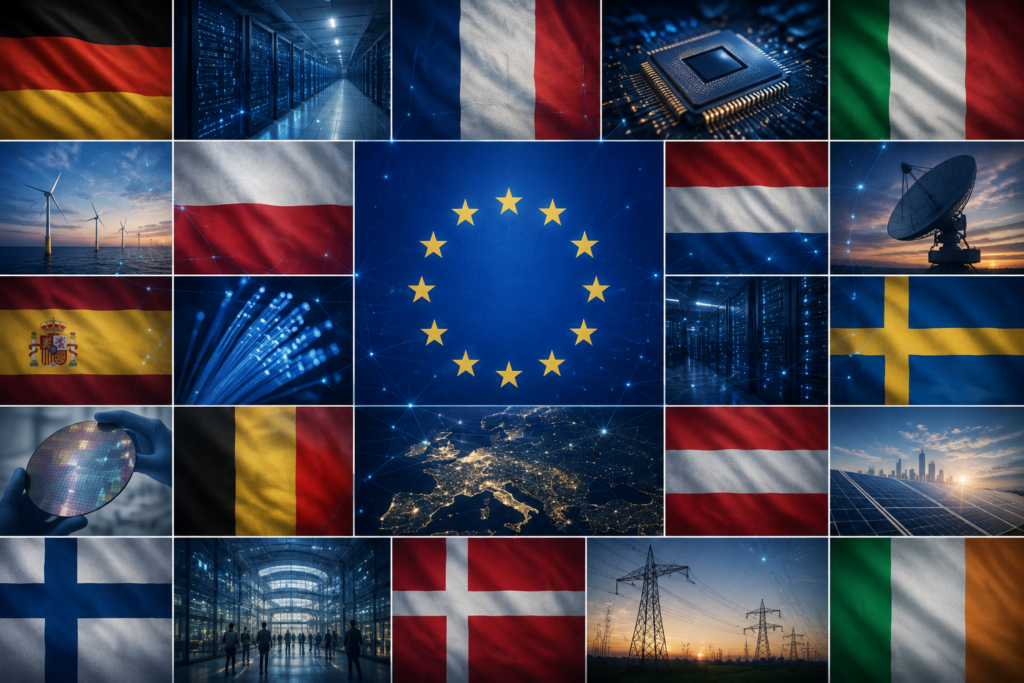
Chips, Cloud, AI and the Infrastructure of Independence
For years, European policymakers spoke about digital sovereignty, strategic autonomy and technological independence. Yet much of that discussion remained largely conceptual. The presentation of the Tech Sovereignty Package on 3 June 2026 may mark the moment when those ambitions began to take concrete form.
At the heart of the package are the renewed Chips Act 2.0, new cloud and AI initiatives, support for advanced technologies such as photonics and quantum computing, and a growing recognition that digital infrastructure has become a strategic asset. The objective is not to isolate Europe from the global economy, but to reduce critical dependencies in an increasingly uncertain geopolitical environment.
What makes this shift particularly significant is that Europe appears to be moving beyond the traditional idea that competitiveness is primarily a matter of scale. Instead, the focus is increasingly on resilience, control over key technologies, and the development of specialised ecosystems that can secure Europe’s position in critical sectors.
This series explores the strategic logic behind that transformation. From semiconductors and cloud infrastructure to energy systems and innovation clusters, the articles examine how Europe is attempting to build the foundations of technological sovereignty — and what that may mean for the continent’s economic future.

Cloud computing is increasingly becoming more than a commercial service. As Europe expands its ambitions in artificial intelligence and technological sovereignty, cloud infrastructure is emerging as a critical foundation for economic resilience, digital competitiveness and strategic autonomy.
Artificial intelligence may be built with software, but it runs on electricity. As Europe expands its ambitions in AI, cloud computing and technological sovereignty, energy infrastructure is emerging as one of the most critical foundations of future competitiveness and resilience.
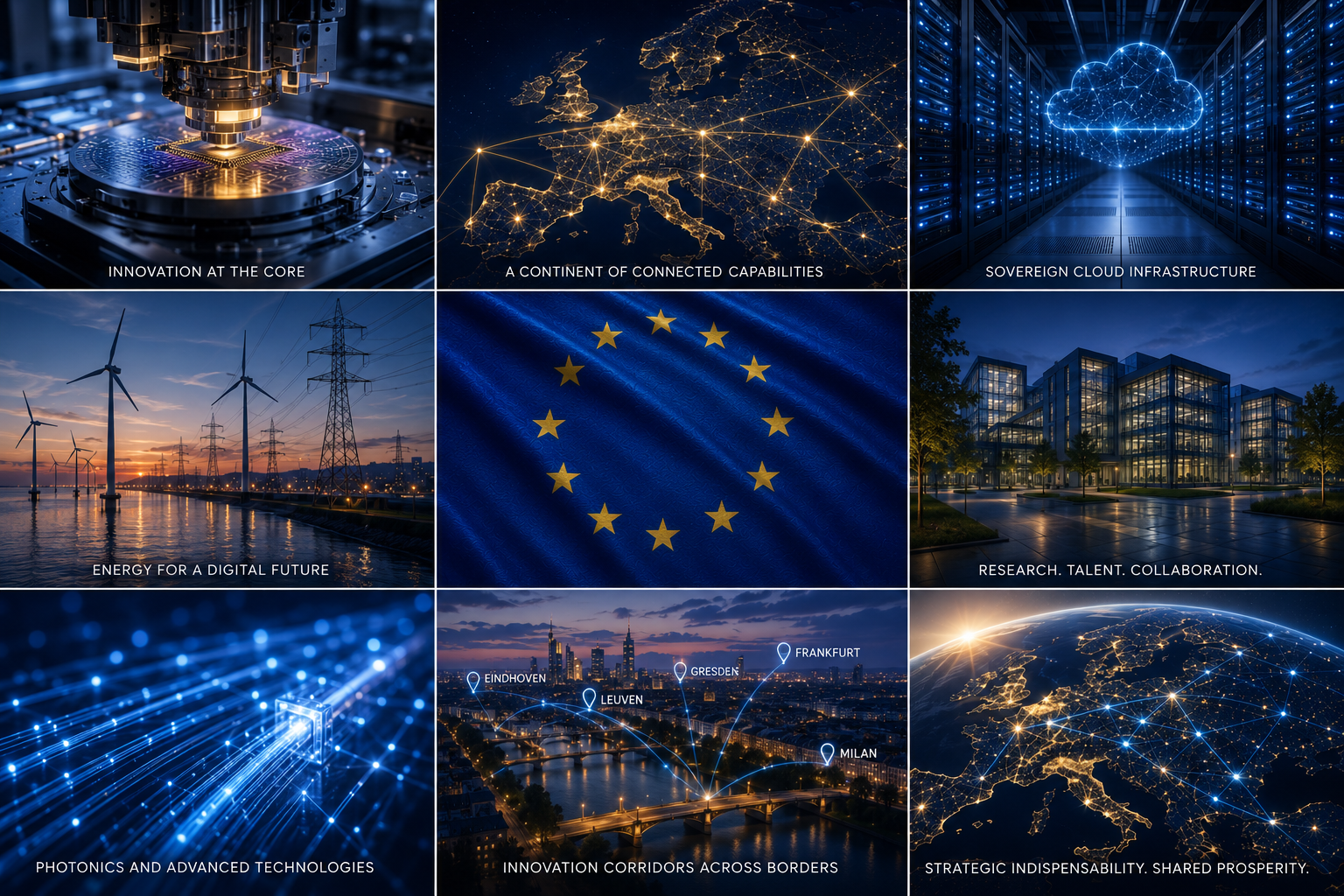
Europe’s technological future may depend less on national champions and more on networks of specialised ecosystems. From semiconductors and cloud infrastructure to energy systems and research clusters, competitiveness increasingly emerges from the connections between Europe’s most important capabilities.
