When the Digital Layer Stops
Albert Heijn and the boardroom cost of digital dependence
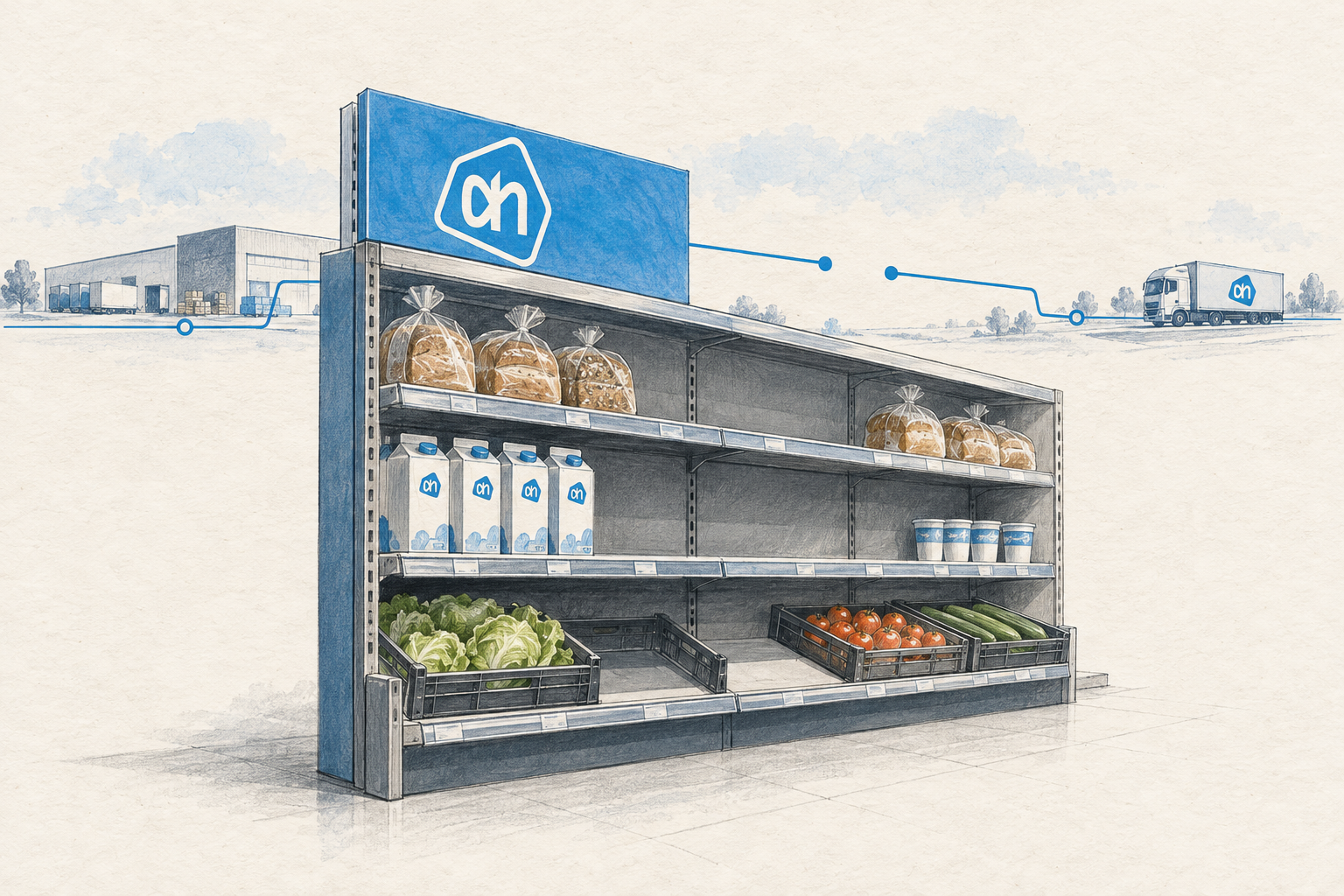
A supermarket can keep its doors open while losing the ability to replenish its shelves. Albert Heijn’s cybersecurity incident exposed the gap between physical availability and operational control. For boards overseeing essential services, the challenge is immediate: preserve a safe minimum of service while the systems coordinating normal operations are isolated, investigated and gradually restored.
Six questions put the tension between digital protection and physical continuity on the boardroom agenda.
🟦 What must stop so the business can be protected?
Precautionary shutdowns following the incident disrupted Albert Heijn’s logistics and digital services from 11 October. Shops remained open and checkout systems worked. The company’s response itself affected its ability to serve customers.
Disconnecting systems can be the correct security decision. The strategic test is whether containment can preserve essential operations. A board needs to understand the service consequences of its shutdown decisions before an incident forces them.
🟦 What can physical assets deliver without trusted instructions?
Warehouses, trucks and staff provide capacity. Reliable stock records, allocation decisions and delivery instructions make that capacity usable.
Digital coordination can improve efficiency while increasing dependence on continuous system availability. The practical question is how much distribution can continue without it: which facilities can operate independently, which products receive priority, and which decisions remain safe? Physical readiness alone cannot answer those questions.
🟦 Who funds resilience when it looks like overhead?
Reserve capacity, inventory buffers and independent recovery systems carry visible costs. Their avoided losses remain hypothetical until disruption arrives.
Boards determine that trade-off through budgets. If minimum service commitments are not backed by funded capacity, they remain aspirations. The task is to specify an acceptable interruption, identify the resources needed to stay within it and test whether those resources work.
🟦 Has the fallback been tested at the scale required?
A manual procedure that handles exceptional orders may struggle with regional volumes, short shelf lives and traceability requirements.
Its value depends on demonstrated capacity: how many shops, which products, for how long, and under what communications constraints? Albert Heijn’s publicly available updates do not establish how its fallback arrangements performed. For any operator, an untested procedure leaves the central continuity assumption unresolved.
🟦 Are competing retailers independent where it matters?
Customers switching supermarkets can soften disruption at one chain. That protection depends on alternatives remaining operational.
Separate brands may share logistics, software or technology providers. The incident does not establish a common vulnerability across retailers, but it raises a wider governance question: who assesses dependencies that sit beyond an individual company’s continuity plan? Market diversity needs to be examined beneath the shopfront.
🟦 When does technical recovery become restored service?
By 15 October, Albert Heijn reported that regular store deliveries had fully resumed, while online ordering and home delivery remained unavailable. Recovery had different milestones for different customers.
Reconnection must support trustworthy stock records, valid orders and safe execution. Boards need evidence that essential services work again, including the reconciliation of backlogs and outstanding obligations. System availability alone is an incomplete recovery measure.
Signal
The boardroom test of digital resilience is concrete: what essential minimum can the business safely deliver while normal coordination is unavailable?
That capability requires funding, operational independence and rehearsal. Its value becomes visible when protecting the system requires interrupting the service.
Image credit
AI-generated illustration created with OpenAI for Altair Media.
Caption
The shelves, warehouse and truck remain; the digital connection breaks. A conceptual illustration of the dependence of everyday food distribution on trusted digital coordination.
