Europe’s AI Experiment

Between speed, control and the search for sovereignty
A different starting point
Europe is running an experiment. Not in laboratories or startups, but across its institutions, infrastructure and regulatory frameworks. An experiment in how artificial intelligence can be developed, deployed and governed under a different set of assumptions. While other regions optimise for scale and speed, Europe is asking a more fundamental question: What does it mean to remain in control?
The global AI landscape is often framed as a race—faster models, larger datasets, more compute. In that framing, Europe appears to lag behind. But that perspective is incomplete.
Europe is not simply competing on the same terms. It is attempting to redefine them, shifting the focus from capability alone to the conditions under which capability can be applied.
Read MoreCan Europe Tax the Cloud?
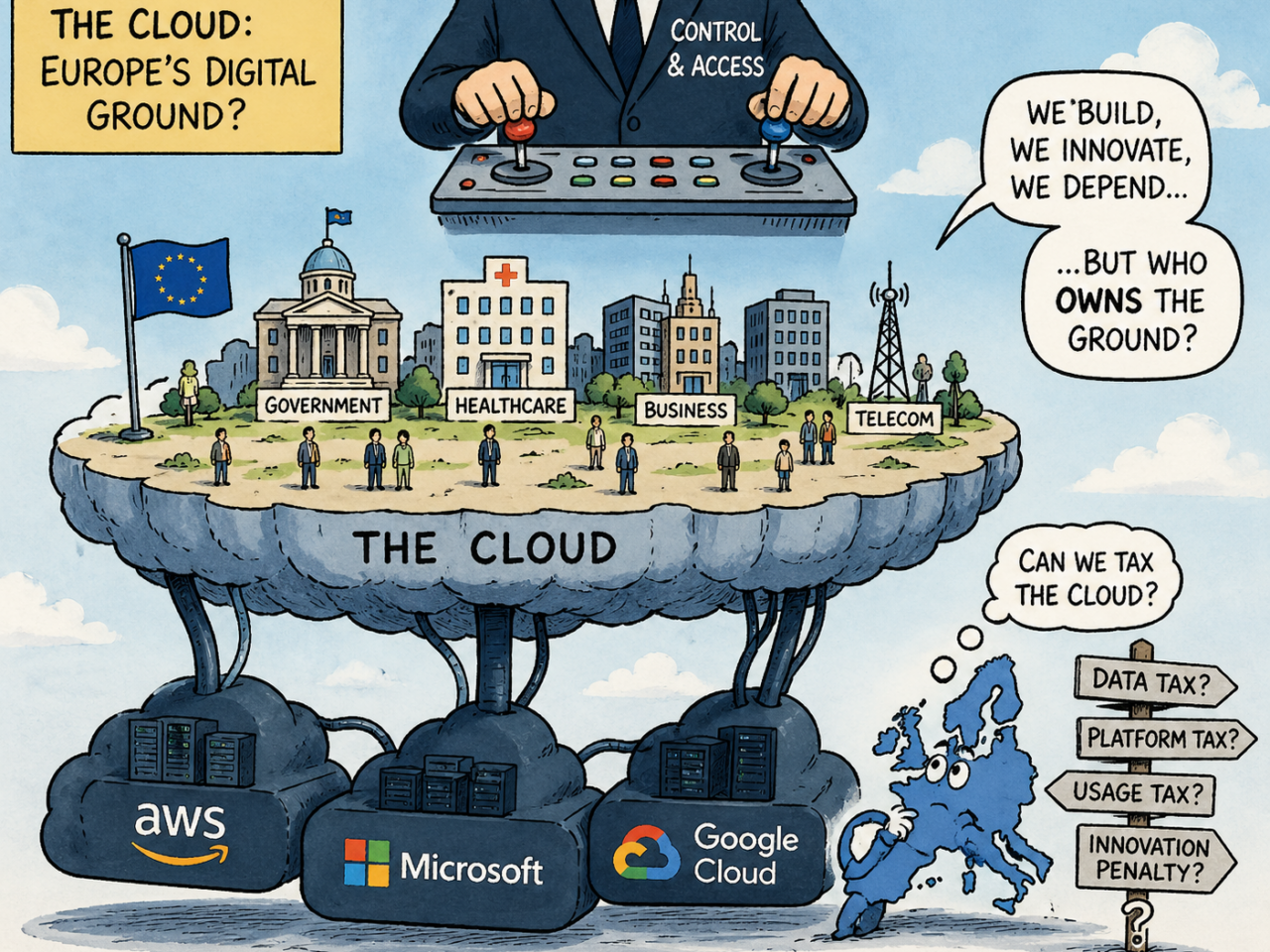
Power, sovereignty and the limits of infrastructure thinking
In Brussels, the debate on digital infrastructure still often begins at ground level. It revolves around cables, spectrum, data traffic and the operators that carry it. The questions seem familiar: who builds the networks, who pays for them and how should the costs be distributed across the system?
Yet while the discussion remains anchored in the physical layer, the structure it seeks to regulate has already shifted.
The cloud is no longer a sector alongside others. It is becoming the environment in which those sectors operate. Finance, healthcare, public administration and increasingly telecom itself are no longer merely connected by networks; they are executed within cloud-based systems that determine how data is processed, interpreted and transformed into value.
This is not a marginal shift. It is a redefinition of where economic reality takes shape.
Read MoreMicrosoft — Owning the Cloud Beneath the Network
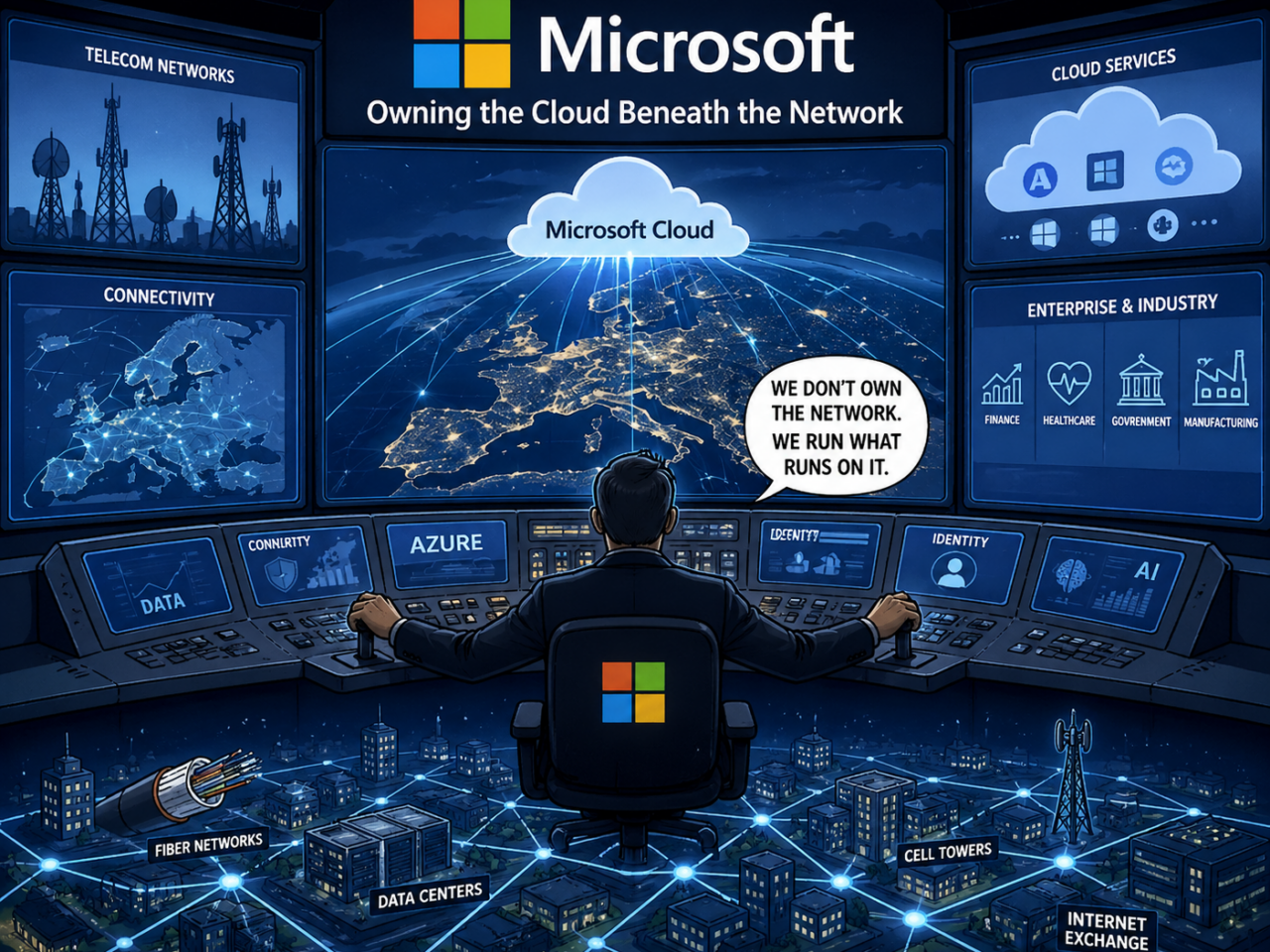
Across Europe, telecom infrastructure is still largely understood in physical terms. Networks are measured in coverage, capacity and scale. Operators build and maintain the backbone that connects economies, institutions and societies. But the system those networks support is changing.
Connectivity is no longer defined solely by hardware. As telecom infrastructure evolves, more of its functionality is moving into software—reshaping how networks operate, how data is processed and where control ultimately resides.
This shift introduces a different kind of player.
Microsoft does not operate telecom networks in the traditional sense. It does not own spectrum, nor does it build the physical backbone of connectivity.
Yet it is becoming increasingly central to how that backbone functions.
Read More