Building Europe’s Energy Architecture

How energy, infrastructure and coordination are reshaping Europe’s future energy system
Europe’s energy transition is no longer simply about replacing fossil fuels. It is redesigning the systems that produce, distribute, store and coordinate energy, turning technological innovation into the strategic infrastructure of Europe’s future economy.
Europe’s energy transition is entering a new phase. Individual technologies still matter, but the larger challenge is how they connect into one coherent energy system.
Electricity generation, storage, transmission, industrial demand and digital coordination are becoming increasingly interdependent. Together, they form the foundations of Europe’s future competitiveness.
Europe’s Energy Architecture explores that transformation. Rather than focusing on individual innovations, the series examines how technologies, infrastructure, markets and governance interact to build Europe’s next energy system.
Read MoreDubai to Host Strategic Summit on Digital Sovereignty and Infrastructure Resilience
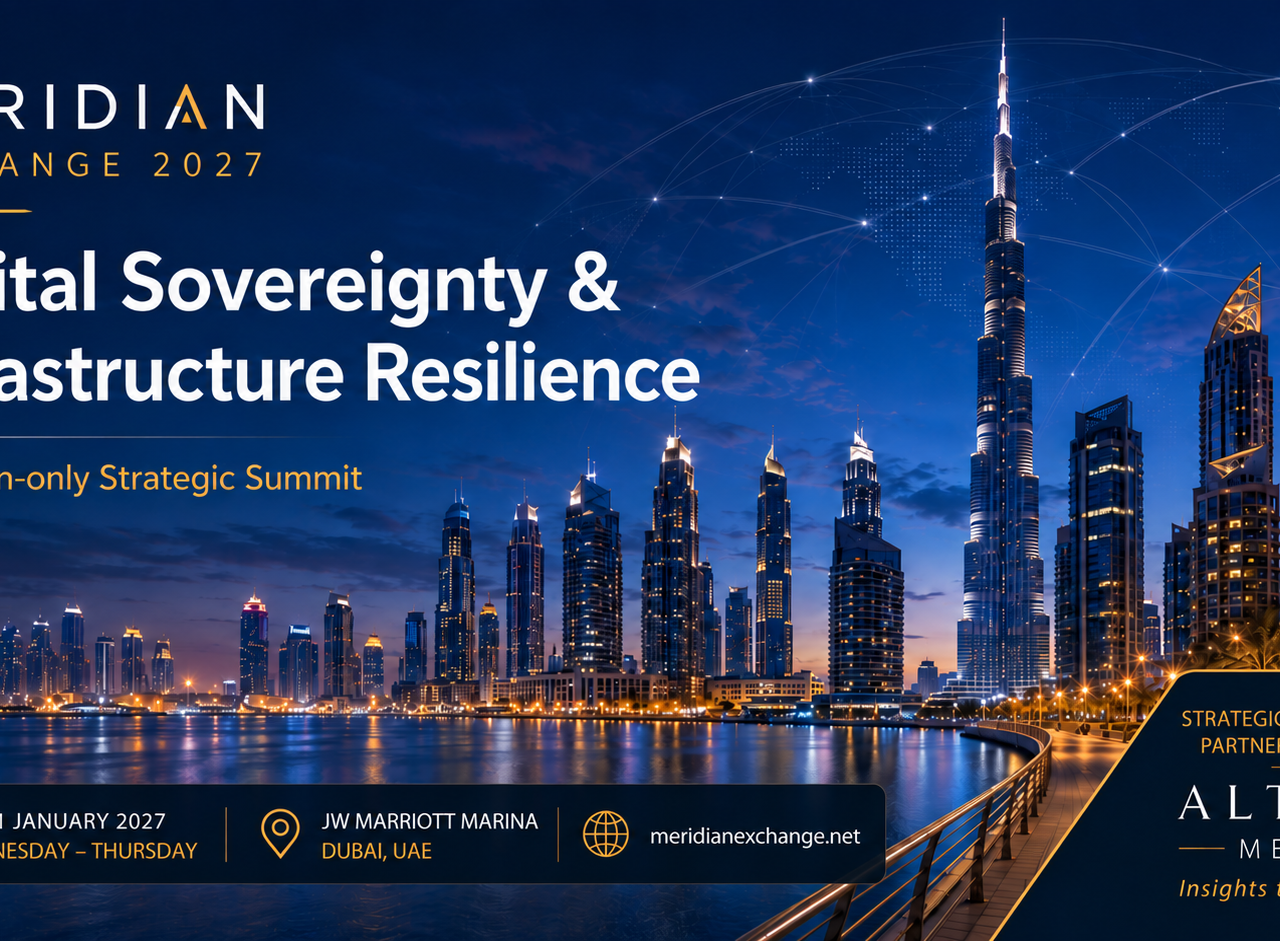
Invitation-only summit in Dubai brings together government leaders, infrastructure operators and technology experts to examine the future of sovereign digital ecosystems
DUBAI — On 20 and 21 January 2027, Meridian Exchange will host an invitation-only strategic summit in Dubai, bringing together government officials, policymakers, infrastructure operators, technology leaders, cybersecurity specialists and strategic advisers to explore one of the defining questions of the digital age: how can nations maintain control over the critical digital infrastructure upon which modern societies increasingly depend?
Designed around four closed-door Strategic Roundtables operating under the Chatham House Rule, Meridian Exchange is now being expanded with a focused one-day workshop aimed at making the platform more interactive and implementation-oriented. Together, the programme will examine how governments, industry and critical infrastructure operators can strengthen digital sovereignty, infrastructure resilience and national continuity in an increasingly interconnected world.
Rather than focusing on technology alone, Meridian Exchange begins from a broader observation. As governments become increasingly dependent on cloud infrastructure, communications networks, energy systems and trusted digital identities, digital resilience is becoming inseparable from national resilience.
Read MoreMunich–Berlin — Where Connectivity Becomes Industrial Intelligence
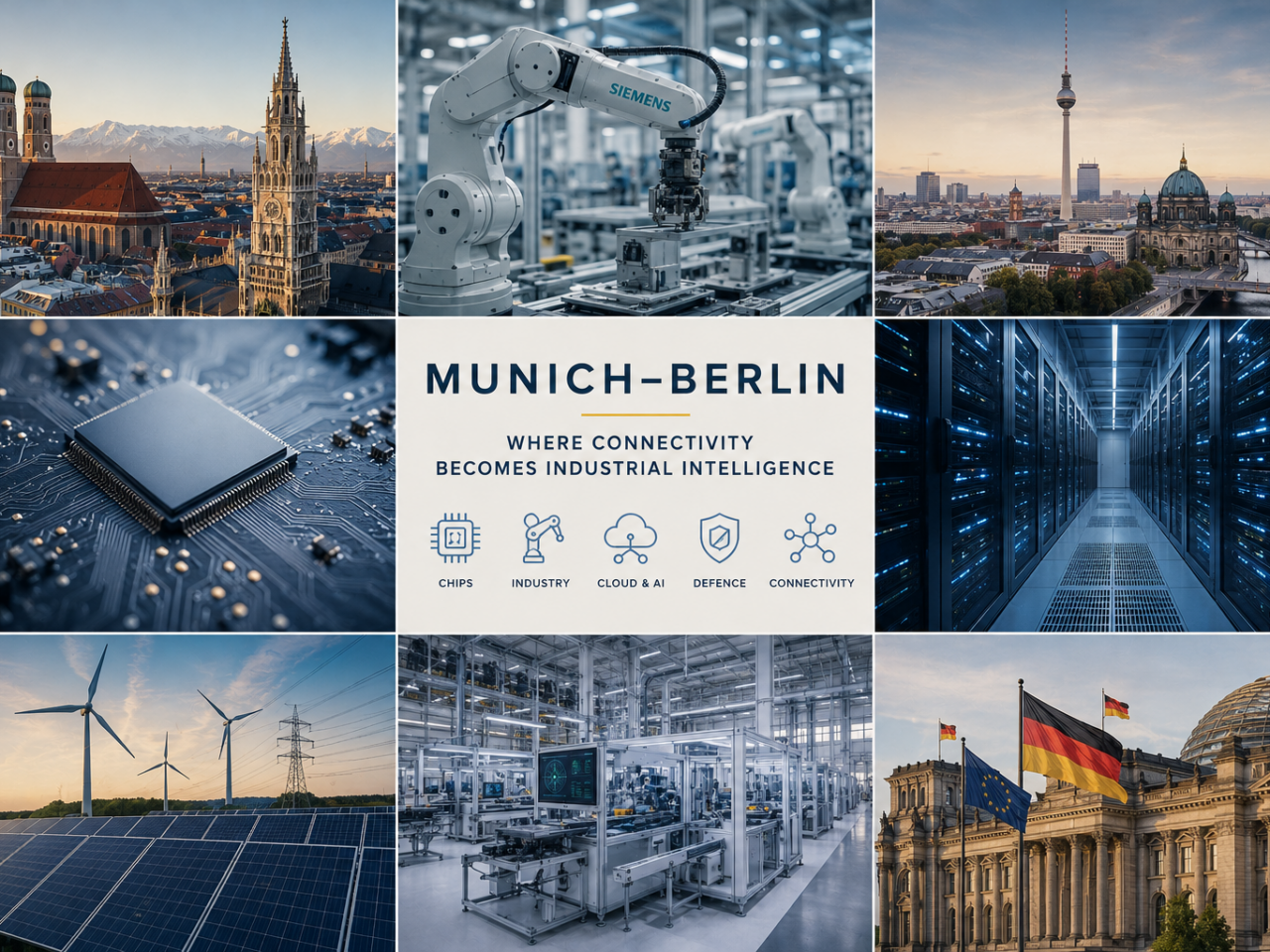
Why Europe’s future industries will be built on intelligent infrastructure
Munich and Berlin are often seen as two very different faces of Germany. Munich is recognised for engineering, advanced manufacturing and industrial technology. Berlin is known for software, research, digital innovation and government.
Together, however, they illustrate one of the most important transformations taking place within Europe’s economy.
The future of industrial competitiveness will depend not simply on better factories or faster communications networks, but on the convergence of engineering, artificial intelligence, cloud computing and secure digital infrastructure into one intelligent industrial ecosystem.
The future of industrial competitiveness will be built on intelligent infrastructure.
Few European regions demonstrate this transformation more clearly than the innovation corridor linking Munich and Berlin.
Read More