ABN AMRO: Who Holds the Bank Accountable?
As the Dutch state reduces its stake, commercial ambition and automated banking put public responsibility to the test.
The Dutch state plans to almost halve its remaining stake in ABN AMRO. For investors, the move advances privatisation after a strong share-price recovery. For customers and businesses, it raises a different question: as ownership becomes more private and banking more automated, who ensures that commercial efficiency remains compatible with care, accountability and effective protection?
The sale changes the ownership balance. The harder test lies inside the bank: whether its decisions can be explained, challenged and corrected when they affect people’s money and access to financial services.
Read MoreThe European Veto: Protection or Paralysis?
How national safeguards shape Europe’s capacity to act
In December 2023, Hungary blocked agreement on a revision of the European Union’s long-term budget that included €50 billion in support for Ukraine. On 1 February 2024, EU leaders reached an agreement, with Hungary joining the other member states. Europe eventually acted, but only after another summit and weeks of uncertainty.
The episode captures the tension behind Ursula von der Leyen’s call to extend qualified majority voting to certain policy areas. A national veto can force governments to negotiate and accommodate objections. It can also leave a collective commitment dependent on a single capital.
A national veto can force governments to negotiate and accommodate objections.
For Europe, the question is how much protection individual governments need, and what happens when that protection limits the security, resources or choices of everyone else.
Read MoreEurope’s €560 Billion Question
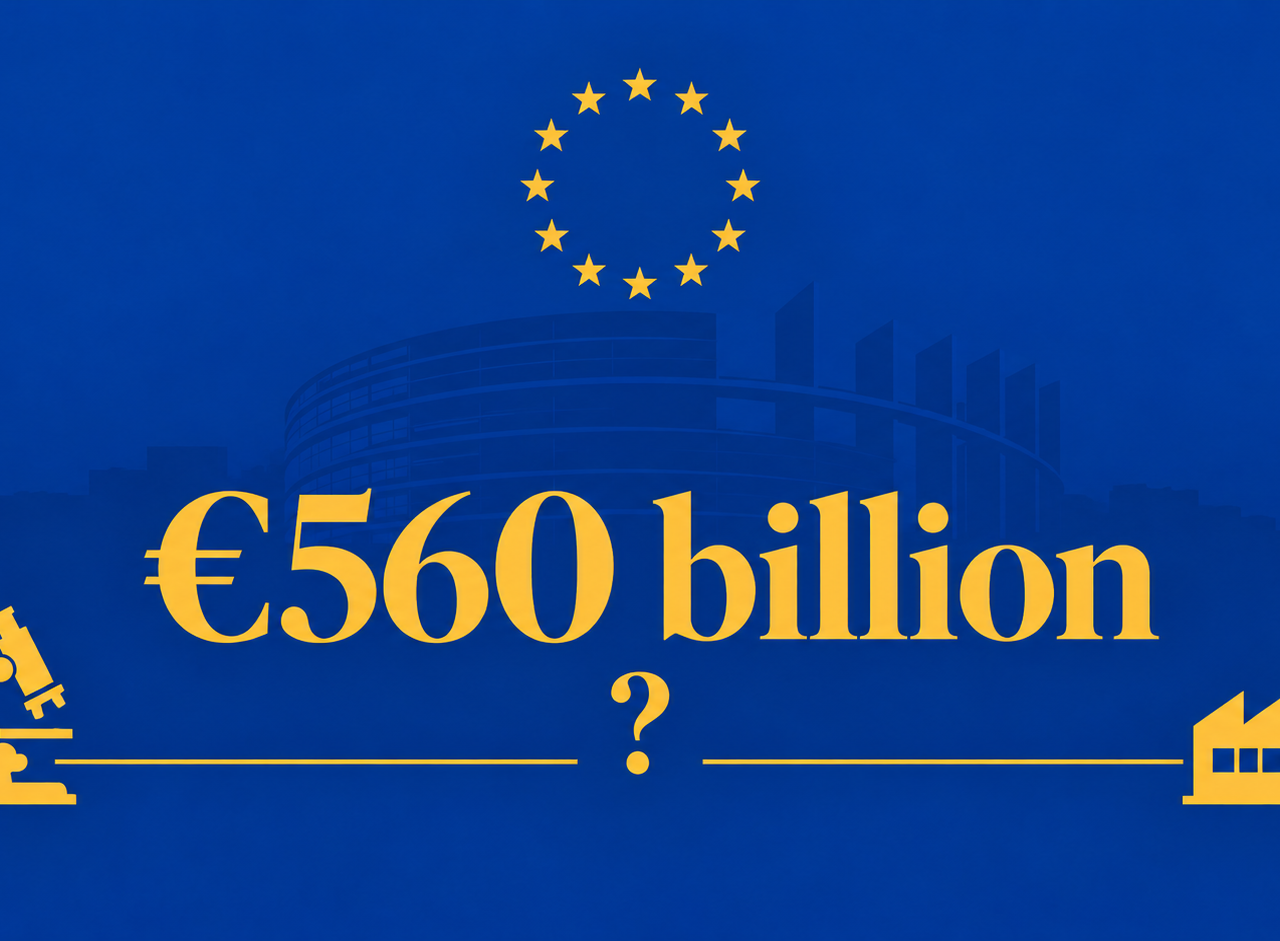
What more research spending can — and cannot — deliver
Europe needs roughly €560 billion in additional research and development investment to reach its 2030 spending target, according to a new European Commission report. The figure captures the scale of financial effort. It leaves a harder question open: how will greater research spending translate into stronger European industry, wider technological adoption and lasting economic value?
Published on 1 October 2026, the Science, Research and Innovation Performance of the EU report places investment, fragmentation and scale at the centre of Europe’s innovation challenge. It reinforces a concern raised by the Draghi report: promising innovation still faces barriers to commercialisation and growth.
Read MoreSociety & Culture

🇲🇹 Portrait of a European — Malta
Saturday, May 16, 2026
Malta occupies a unique position between Europe, North Africa and the Mediterranean. This portrait explores how migration, logistics and economic openness shape everyday life, revealing a microstate where globalisation, sovereignty and infrastructure become visible at human scale.

🇨🇭 Portrait of a European — Switzerland
Saturday, May 16, 2026
Switzerland occupies a unique position at the centre of Europe while remaining outside the European Union. This portrait explores how neutrality, autonomy and economic integration shape everyday life, revealing a society balancing sovereignty with deep dependence on interconnected European systems.

🇹🇷 Portrait of a European — Turkey
Saturday, May 16, 2026
Turkey occupies a unique position between Europe, Asia and the Middle East. This portrait explores how identity, sovereignty and geopolitical ambition shape everyday life, revealing a society balancing secularism, religion, strategic autonomy and an unresolved relationship with Europe itself.

🇺🇦 Portrait of a European — Ukraine
Saturday, May 16, 2026
Ukraine has become one of Europe’s defining frontline societies. This portrait explores how war, digital resilience and national consciousness reshape everyday life, revealing a country where European identity is no longer abstract, but increasingly connected to survival, sovereignty and collective future.
