Can Europe Build a Common Industrial Balance Sheet?
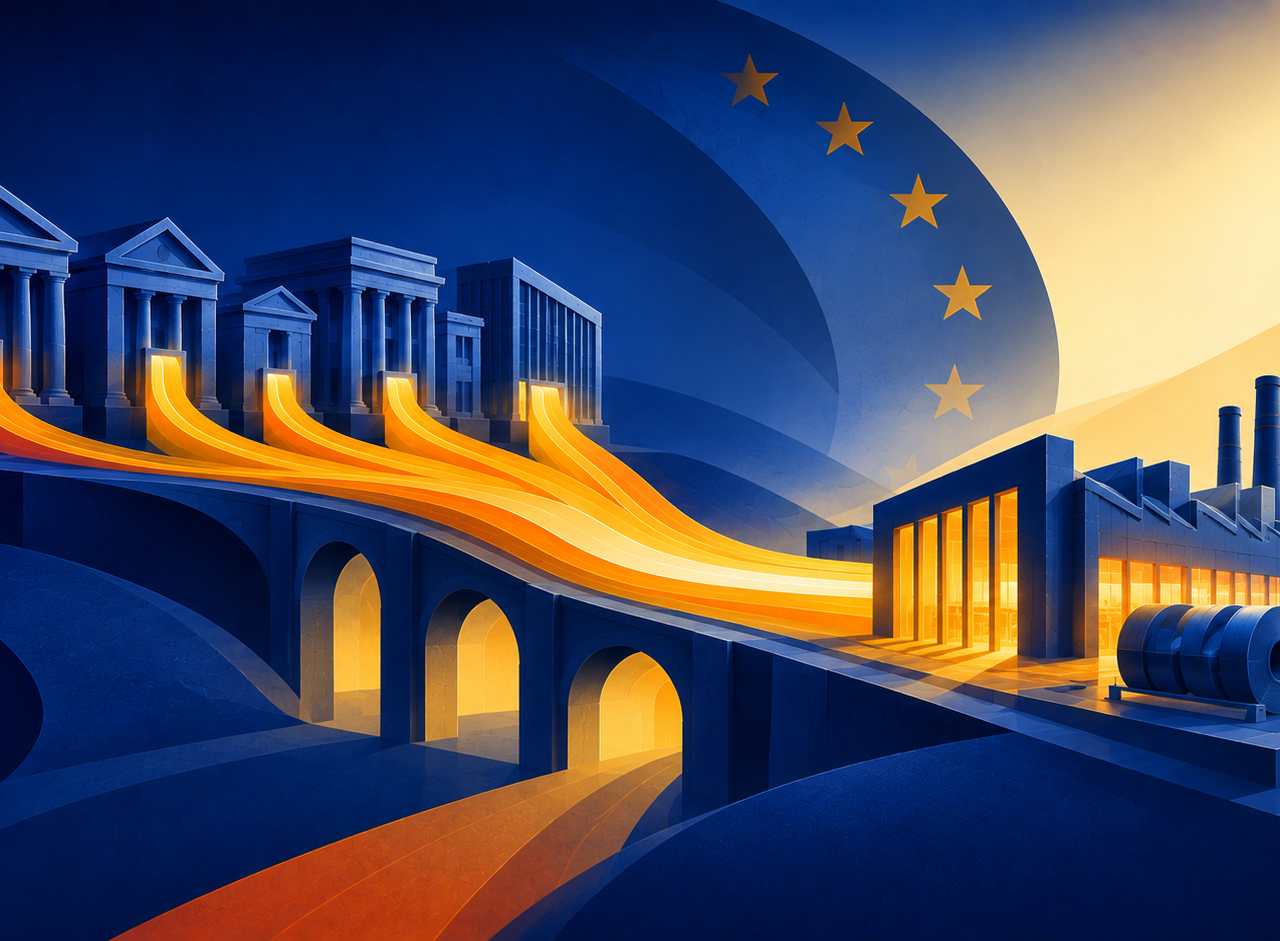
Connecting banks, pension capital, public lenders and equity markets where industrial finance breaks down
Europe’s financing gap becomes most visible when technological progress must become industrial scale. Capital requirements rise before production generates reliable cash flow. Equity investors must commit larger sums; lenders need a credible route to repayment.
ECB analysis published in 2026 identifies precisely this weakness: insufficient later-stage funding, a narrow institutional investor base and limited cross-border investment within the EU.[1]
Euronext’s IPOready programme shows the businesses seeking a route forward. Its 2026 cohort included more than 160 companies with €29 billion in combined annual revenue.[2] Preparing them for public markets addresses one part of the problem. Financing them on workable terms addresses another.
The issue is whether Europe’s separate financial institutions can share the work—and the risks—of industrial expansion.
Read MoreEurope’s Operators Need a Better Business Model
Europe wants stronger networks. Operators need a better way to earn from the capacity and certainty they deliver.
Europe wants faster networks, stronger digital infrastructure and less dependence on foreign technology. Operators are expected to build the foundations. But carrying more traffic does not automatically mean earning more money. The question is whether the business model can finance what comes next—and how operators can capture more value from the infrastructure they provide.
Six questions expose the gap between Europe’s network ambitions and the business case behind them.
Read MoreWhere Should Europe Build AI Gigafactories?
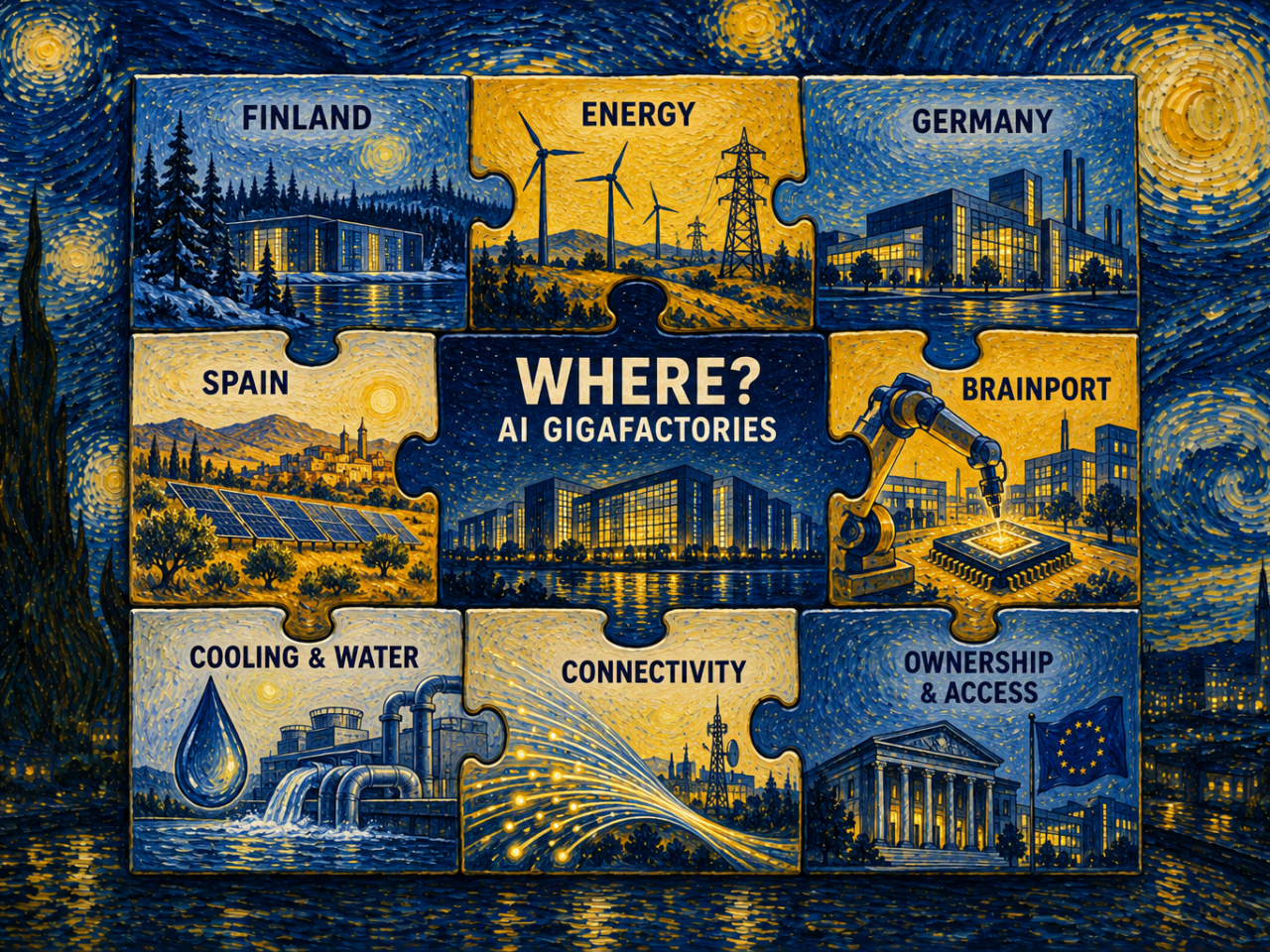
The strongest industrial cluster may not be the best place to plug in Europe’s next computing giant.
Europe’s AI Gigafactories — Signal III
Europe’s AI Gigafactories will need more than land and political support. They will need dependable electricity, cooling, connectivity, skilled operators and customers willing to pay. Finland, Spain and Germany offer different combinations of these assets. Brainport raises another question: should Europe place its largest computing facilities where intelligence is applied, or where infrastructure can sustain it?
The location contest is therefore a test of what Europe wants these facilities to do. The EuroHPC call allows single-site, multisite and cross-border projects. That creates room for a European architecture, provided geography follows function.
Read MoreSociety & Culture

🇬🇧 Portrait of a European — United Kingdom
Saturday, May 16, 2026
The United Kingdom left the European Union politically, yet Europe remains deeply present economically, culturally and psychologically. This portrait explores how Brexit exposed regional identities, internal fragmentation and new questions about sovereignty, revealing a country still negotiating its relationship with Europe.

🇧🇦 Portrait of a European — Bosnia and Herzegovina
Saturday, May 16, 2026
Bosnia and Herzegovina remains deeply shaped by history, fragmentation and unresolved memory. This portrait explores how post-war governance, ethnic complexity and stalled European integration influence everyday life, revealing a society where peace exists, yet reconciliation still feels incomplete.

🇭🇷 Portrait of a European — Croatia
Saturday, May 16, 2026
Croatia lives between multiple Europes at once. This portrait explores how tourism, regional identity and Adriatic geography shape everyday life, revealing a country balancing Mediterranean openness, Balkan memory and European integration within a rapidly changing continent.
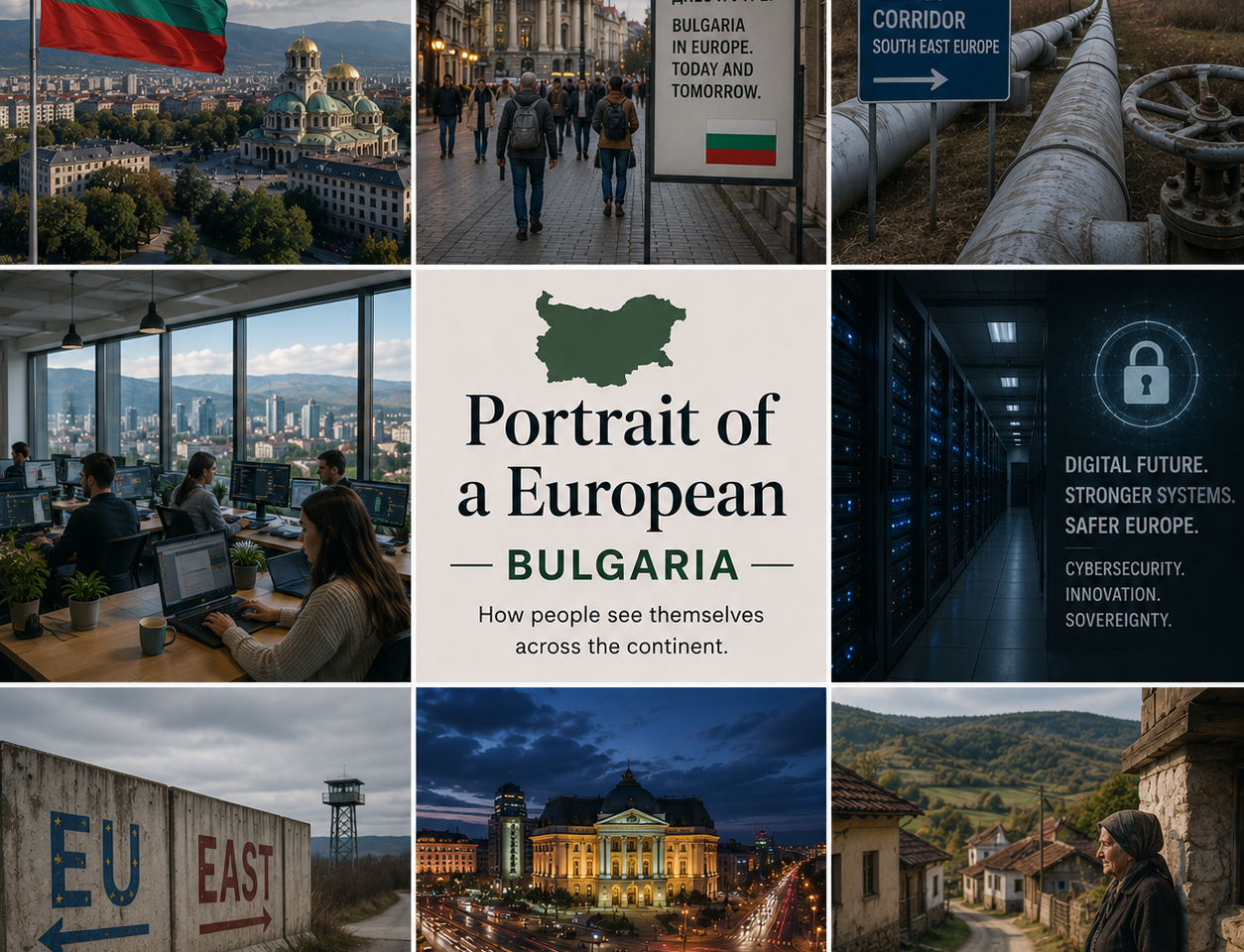
🇧🇬 Portrait of a European — Bulgaria
Friday, May 15, 2026
Bulgaria stands at the intersection of Europe, energy politics and regional history. This portrait explores how infrastructure, demographic decline and institutional tension shape everyday life, revealing a Europe where belonging, modernisation and geopolitical positioning remain deeply interconnected.
