Silicon Box: Europe’s €1.3 Billion Packaging Bet

Italy is funding a critical chip capability. Europe’s return depends on industrial depth and technological relevance.
On 1 October, Italy approved €1.3 billion in public support for Silicon Box’s planned €3.2 billion advanced semiconductor packaging facility in Novara. The Singapore-based company could strengthen a vulnerable part of Europe’s chip supply chain. The strategic test is whether the investment builds lasting capabilities that remain commercially competitive and technologically relevant when production reaches scale.
The significance begins inside the package — and extends to the knowledge, customers and decisions surrounding it.
Read MoreA First Roadmap for Europe’s Industrial AI
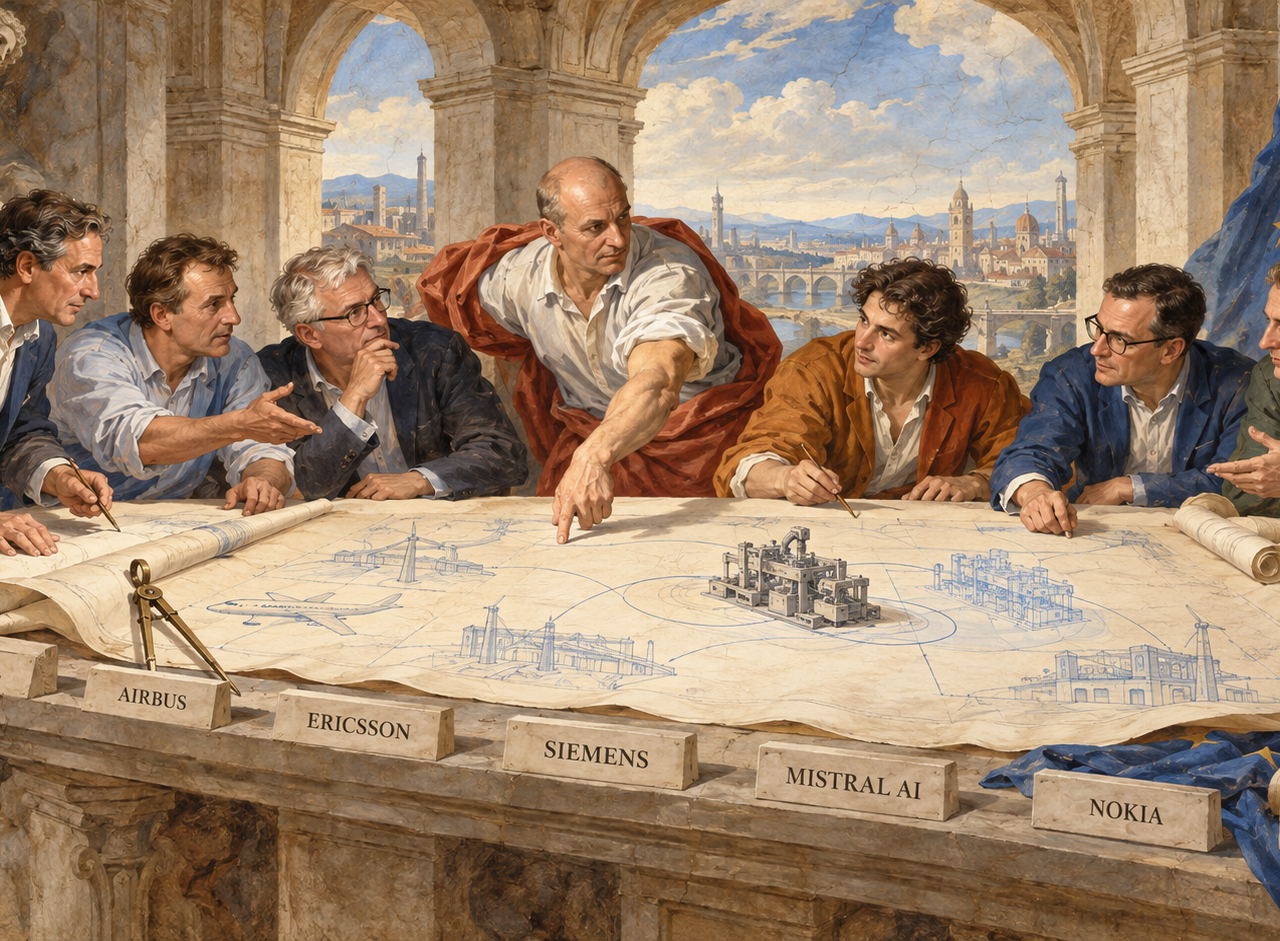
An invitation to the Strategic Seven, the European Commission and industry to turn complementary capabilities into shared, repeatable delivery.
Europe’s technology leaders have called for the conditions to compete at scale. The operational question is what they can build together. Altair Media proposes a starting framework: two industrial applications, defined contributions and measurable commitments. We invite companies, policymakers, researchers and customers to challenge its assumptions, identify missing capabilities and help turn it into an executable roadmap.
Read MoreBNP Paribas: Does European AI Mean Greater Control?
Choosing Mistral and Google Cloud broadens the bank’s options. Operational autonomy depends on whether it can investigate failures, challenge conclusions and change course.
BNP Paribas is expanding its Mistral AI partnership while adding Google Cloud capabilities to its technology mix. The strategy offers choice, efficiency and a European technology anchor. But autonomy faces a harder test when something goes wrong: can the bank reconstruct a flawed recommendation, establish responsibility and change the system without losing control of essential operations?
The distinction is practical: knowing where a model comes from does not establish whether its conclusions can be checked.
Read MoreSociety & Culture

Europe and the Slow Society
Wednesday, May 20, 2026
Across Europe, societies are increasingly shaped by speed, stimulation and continuous availability. But as digital systems compete for attention and reaction time, a deeper question emerges: should Europe accelerate endlessly — or learn how to protect cognitive space, social rhythm and the human capacity for reflection?

🇲🇨 Portrait of a European — Monaco
Tuesday, May 19, 2026
Monaco functions as one of Europe’s most extreme concentrations of wealth, finance and symbolic prestige. This portrait explores how capital, geography and micro-sovereignty shape everyday life, revealing a society where territory increasingly operates as financial infrastructure.

🇱🇺 Portrait of a European — Luxembourg
Tuesday, May 19, 2026
Luxembourg functions less like a traditional nation-state and more like a European infrastructure hub. This portrait explores how finance, cross-border labour and supranational governance shape everyday life, revealing a society where connectivity and systems increasingly define national importance.

Portrait of a European
Sunday, May 17, 2026
Does something like a European truly exist? In this series, we explore how people across the continent see themselves—through work, income, identity and place—and what these portraits reveal about a Europe that is shared, yet never the same.
