Muzisch Centrum Antwerpen and the Art of Learning
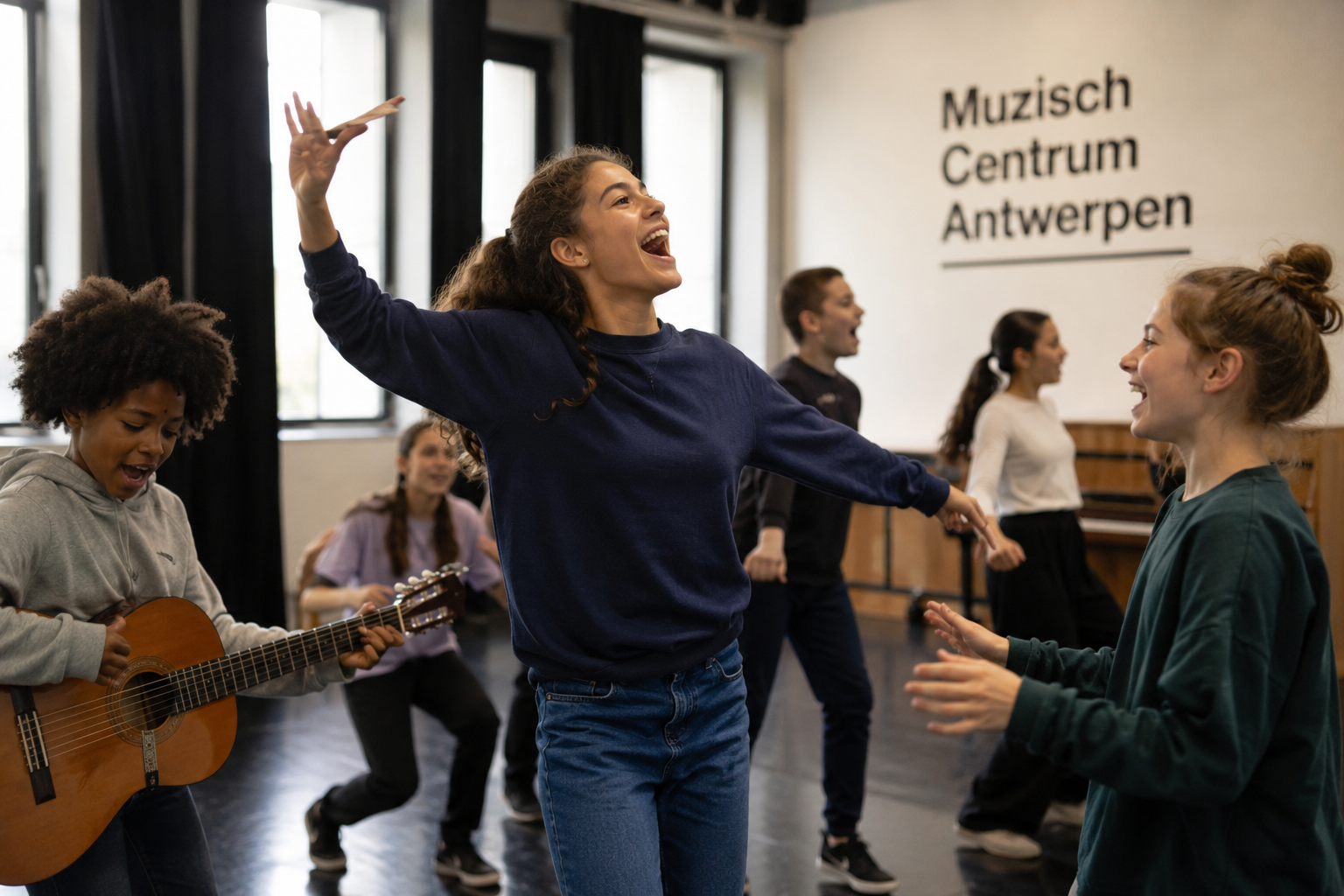
How creativity helps children understand the world through more than knowledge
Children rarely experience the world in separate subjects. They do not divide their curiosity into music, movement, language or imagination. They sing before they analyse. They move before they explain. They draw before they describe. Learning begins as a whole. Only later do education systems separate that experience into individual disciplines.
Across Europe, a growing number of educators are asking an important question.
What if some of our most valuable ways of learning emerge precisely before knowledge is organised into subjects?
In Belgium, Muzisch Centrum Antwerpen offers an inspiring example of this philosophy. By bringing together theatre, music, movement and artistic practice, it creates learning environments where creativity is not treated as an addition to education, but as one of its foundations.
More Than Creativity
Creative education is often presented as an enrichment of the curriculum—something valuable, but ultimately optional. Yet this assumes that creativity exists outside learning itself. What if the opposite is true? What if creativity is one of the ways learning begins?
Rather than adding something extra to education, artistic practice may help children connect ideas, experiences and emotions into meaningful understanding.
Learning With the Whole Person
Children do not learn only through explanation. They learn through rhythm, movement, sound, touch and play. Long before ideas become concepts, they are experienced through the body and the senses.
Children do not begin by learning subjects. They begin by exploring the world.
Understanding is not built by the mind alone. It also emerges through observation, interaction and experience. Learning is therefore more than an intellectual process. It is embodied.
Where Disciplines Meet
The word muzisch carries a richer meaning than arts education alone. It reflects the idea that music, theatre, movement, language and visual imagination are not isolated disciplines, but interconnected ways of exploring reality.
A story can inspire movement. Movement changes perception. Music shapes emotion, while theatre creates dialogue. Together these different forms of expression strengthen one another and create a richer understanding than any single discipline could offer on its own.
Perhaps this is why interdisciplinary creativity feels so natural to children. The world itself is not divided into subjects.
Education Beyond Information
Modern education increasingly prepares young people for a society shaped by artificial intelligence, technological change and continuous information.
Knowledge remains essential. But in an age of almost unlimited information, knowledge alone no longer guarantees understanding, nor does information automatically create wisdom.
Knowledge explains the world. Creativity helps us experience it.
Creative education asks something different. It invites children to remain curious, to explore uncertainty and to discover rather than simply reproduce. A textbook can explain the world. Creative practice allows children to experience it.
Learning to Become
Perhaps education has never been solely about acquiring knowledge. Perhaps it has always also been about becoming. Becoming curious, confident and imaginative. Learning to be resilient. Discovering what it means to belong to a community.
Organisations such as Muzisch Centrum Antwerpen remind us that education is not simply about preparing children for examinations or employment. It is about helping them discover how they learn, how they express themselves and how they understand the world around them.
Imagination as Infrastructure
Europe’s future will undoubtedly depend upon scientific knowledge, technological innovation and economic resilience. But innovation begins long before technology. It begins with imagination.
Technology expands what societies can build. Imagination shapes what they choose to become.
Technology allows societies to build new possibilities. Imagination helps them decide which possibilities are worth pursuing—and why they matter.
Perhaps this is the deeper lesson offered by Muzisch Centrum Antwerpen. Creativity is not simply a talent. It is a way of learning. Learning is more than acquiring knowledge.
It is one of the ways people gradually discover who they are—and the kind of society they hope to create.
About This Article
This article is part of Europe’s Creative Spaces, an ongoing Altair Media series exploring how cultural institutions across Europe contribute to identity, participation, confidence and human development.
Rather than examining culture solely through the lens of artistic production, the series investigates how creative environments help shape the social foundations of contemporary European societies.
The article is based on publicly available information and is intended as an independent analysis of broader developments and trends.
Image Credit
Altair Media (AI-generated)
Caption
Muzisch Centrum Antwerpen demonstrates how theatre, music and movement create learning environments where children explore the world through creativity, collaboration and experience. Here, artistic practice becomes more than education—it becomes a way of understanding, growing and imagining the future.
