When the Opposition Helps Write the Budget
The Dutch minority cabinet is giving other parties a voice in its plans. Can it turn their influence into a governing majority?
The Netherlands’ 2027 budget is being shaped beyond the three governing parties. Progressief Nederland (PRO) and Volt have welcomed changes to social security, employers and unions have resumed talks with the cabinet, and discussions with JA21 continue. These are signs of movement. None yet amounts to an agreement on the full budget and Tax Plan.
That makes the current negotiations a test of how a minority government works. Five questions reveal what the parties are building, and where the process could still come apart.
🟦 Does an invitation give the opposition a real say?
On social security, the answer is beginning to be yes. The cabinet removed proposed cuts from the Social Affairs budget, making it possible for PRO and Volt to support it. Employers and unions have since met the government to discuss a wider social agreement. Their negotiations have only begun, and the expected savings remain unresolved. Opposition influence has changed the immediate proposal; the longer-term outcome still has to be made and paid for.
🟦 What happens when Parliament proposes its own solution?
The dispute over box 3 offers a harder test. After resistance to a plan that would bring more small savers into the tax system, the cabinet sought another way to fund its reform. ChristenUnie, the Christian Union party, proposed changing the tax treatment of family gifts recorded as debts, which can reduce inheritance tax. D66 and CDA saw merit in the idea; the VVD opposed it. Parliament can produce a potential majority for an alternative that divides the governing parties. Taking opposition proposals seriously requires the coalition to negotiate among itself as well.
🟦 How far can a budget negotiation reach?
JA21 and the cabinet are also talking about asylum policy. Yeşilgöz said on Friday that prospects for its support had become more concrete, while making no claim that a budget deal had been reached. During the health budget debate, the SGP filed a motion challenging the government’s position on late abortion. Parties are entitled to raise issues their voters care about. The cabinet must make clear which changes belong in a budget agreement and which require their own parliamentary decision.
🟦 Who will defend the agreement in both chambers?
The Senate asked the question directly during its debate on the Miljoenennota: would the cabinet seek support on the left or the right? Jetten and the coalition declined to commit to either route. That preserves room to find support issue by issue. It also means that a deal in the House of Representatives offers no assurance of support in the Senate. Opposition parties can help shape one measure while rejecting another, and the government must keep the whole programme viable.
🟦 Can voters see what the negotiations achieve?
Some bargaining needs private space. A minority cabinet also needs a public account of what each party changed, what it cost and what remains unsettled. That clarity matters beyond the 2027 budget. Jetten was negotiating in Brussels this week over Europe’s next long-term budget. Those talks will shape future Dutch contributions and opportunities for joint investment. Parties making deals in The Hague should explain how their national choices fit with the commitments they seek in Europe.
The Signal
The minority cabinet has shown it can negotiate, and opposition parties have begun to change its plans. The test is whether those separate contributions become a coherent budget that can hold in both chambers. Voters should be able to see whose priorities shaped the result, what each compromise costs and who is prepared to defend it.
Image credit
Illustration: Altair Media / AI-generated
Caption
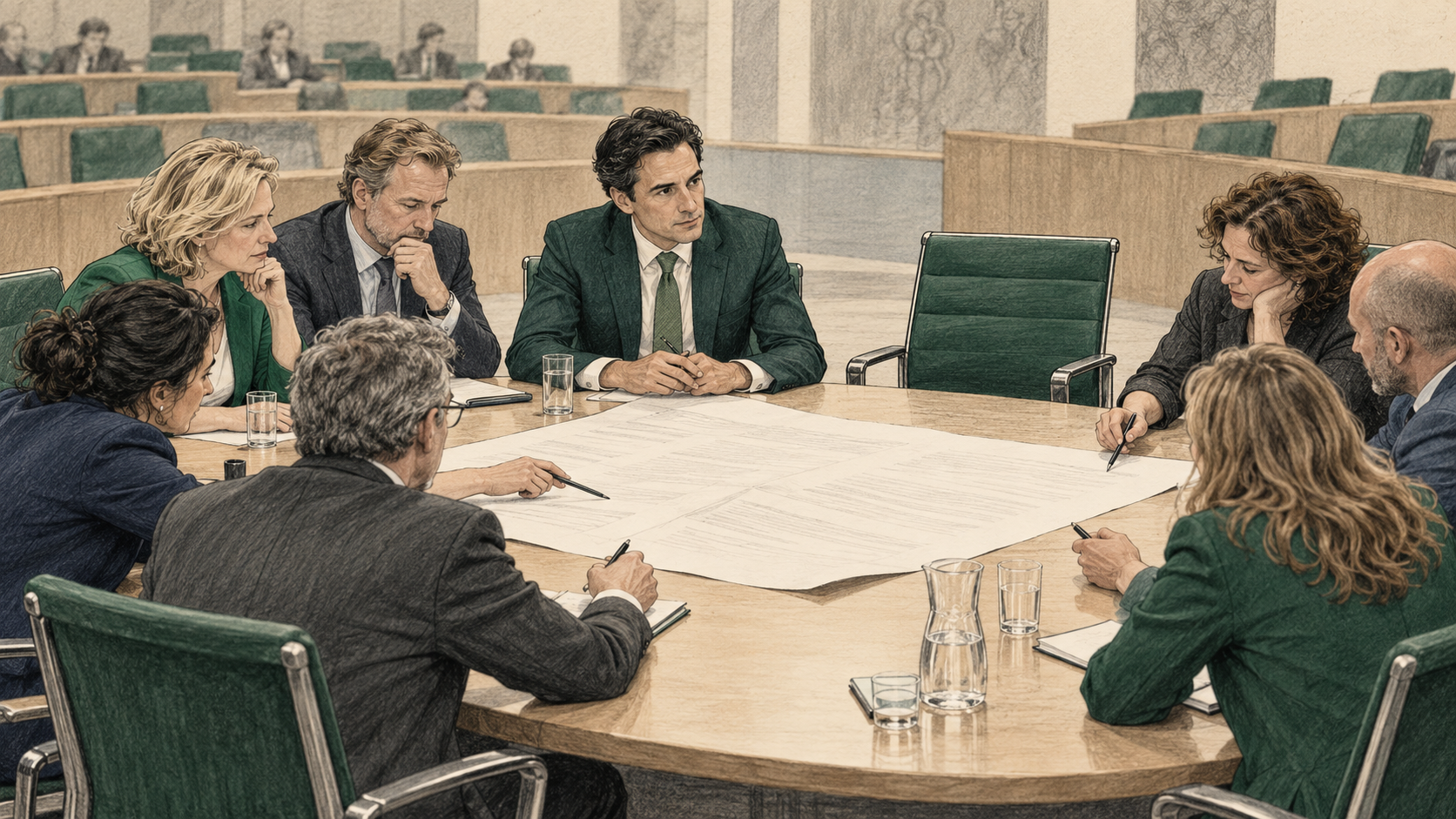
Around an imagined parliamentary table, coalition and opposition examine the same budget. The empty chair leaves the central question open: who will help carry the final agreement?
