Thursday, March 26, 2026

Photonics is often framed as the next breakthrough in chips, but according to Professor Martijn Heck, the reality is more nuanced: real progress depends on hybrid integration, production scale and reliability—not technological promise alone.
Read More
Sunday, March 8, 2026

AI chips are hitting physical limits, forcing the semiconductor industry to rethink how processors are built. As architectures shift from single chips to stacked “silicon skyscrapers” advanced packaging is emerging as the next critical frontier in the race for AI computing power.
Read More
Thursday, January 8, 2026

Quantum computing is often presented as a race between exotic physics concepts and dazzling promises of exponential speed-ups. In practice, however, the decisive question is far more down to earth: which technologies can actually be engineered, manufactured and maintained at scale?
Read More
Wednesday, January 7, 2026
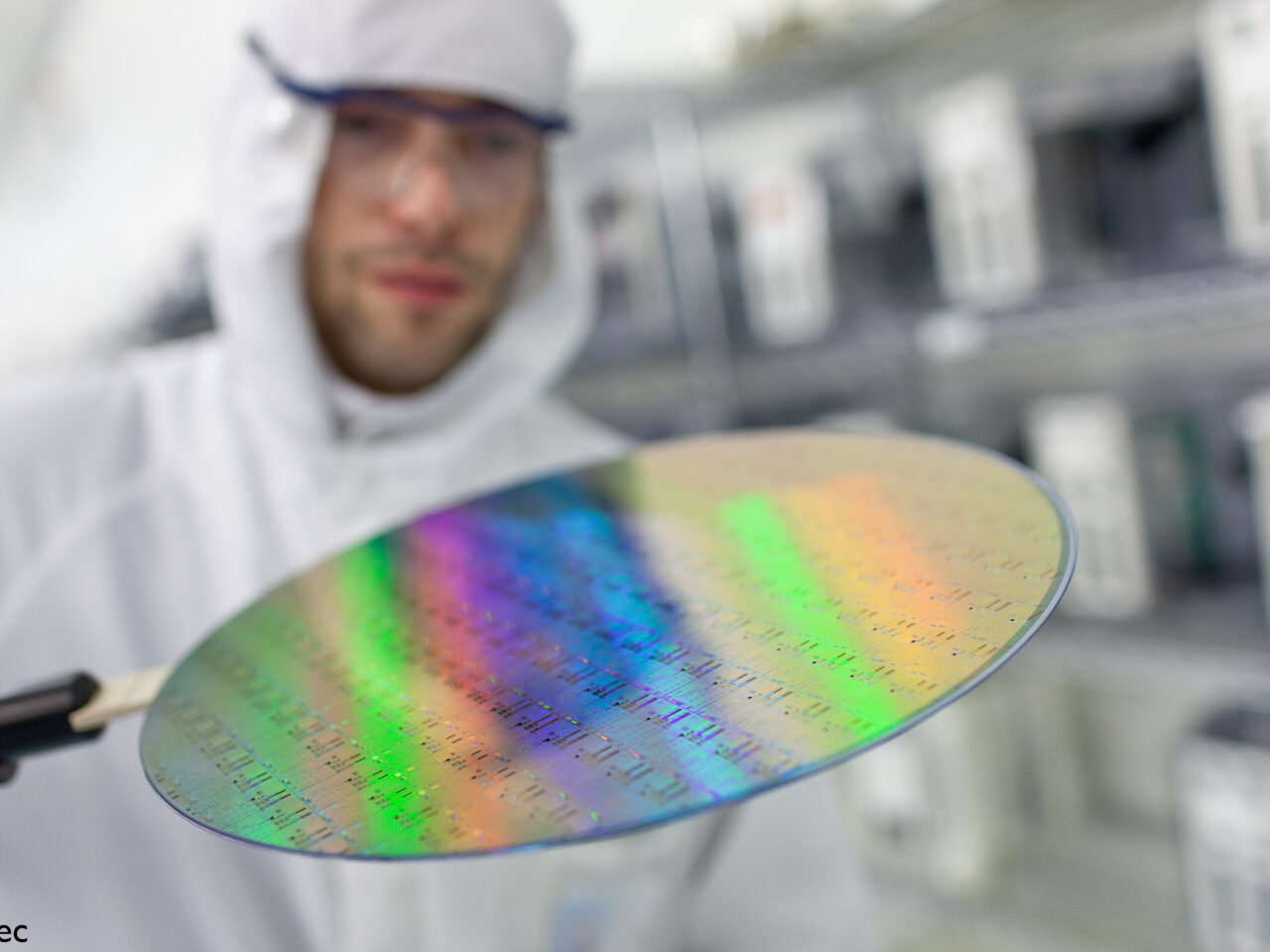
In global discussions about semiconductors, the focus tends to drift toward factories, supply chains and geopolitical leverage. Attention goes to where chips are manufactured, who controls production capacity and how nations secure access to critical technologies. Yet these debates often overlook a more fundamental question: where do future chip technologies actually originate?
Read More
Sunday, December 28, 2025

Semiconductors have become the fault line of modern geopolitics. The United States and China are investing aggressively in domestic chip production, treating semiconductors not as consumer goods but as strategic infrastructure. Europe, by contrast, spent decades optimising research while outsourcing large-scale manufacturing — until recent crises exposed how fragile that model had become.
Read More
Sunday, December 28, 2025

For decades, Silicon Valley defined the global technology narrative. Startups, venture capital and rapid software innovation drew the world’s attention. Today, a quieter but far more consequential shift is underway. A new configuration is emerging — a triangle connecting the Netherlands, Dallas–Fort Worth in Texas and Bengaluru in India — that is quietly defining the future of deep technology.
Read More
Friday, November 28, 2025

The Netherlands is not a numerical AI superpower — but it is an influential one. While other countries talk big, the Dutch build the components that keep the global system running. No hype cycles, no billion-dollar theatrics: the strength of the Netherlands lies in precision, infrastructure and reliability.
Read More
Sunday, November 23, 2025

When people talk about cutting-edge technology, they often think of the giants that dominate software and AI — Google, Apple, Meta, Nvidia, OpenAI. But the foundations of global innovation increasingly rely on something far more complex, far more fragile and far harder to replicate: deep hardware ecosystems.
Read More
Sunday, November 23, 2025

Silicon Valley is often treated as the ultimate template for innovation — the place where software giants were born, where venture capital became a cultural force and where new technologies could move from idea to global impact within a single product cycle. So when Europe looks for its own hubs of innovation, the comparison is inevitable: Is there a European Silicon Valley?
Read More
Saturday, November 8, 2025

In the sprawling global chip race, the world tends to focus on the big names: Taiwan’s foundries, American fabless chip-firms, Chinese challengers. But tucked away in the Dutch city of Veldhoven sits a company quietly rewriting the rules: ASML. While many talk about Europe’s lag in semiconductor manufacturing, ASML is living proof that Europe still holds world-beating innovation — not by chasing the same paths as others, but by building the tools that everyone else needs.
Read More

 Available here: