Sala Beckett and the Language of Human Experience
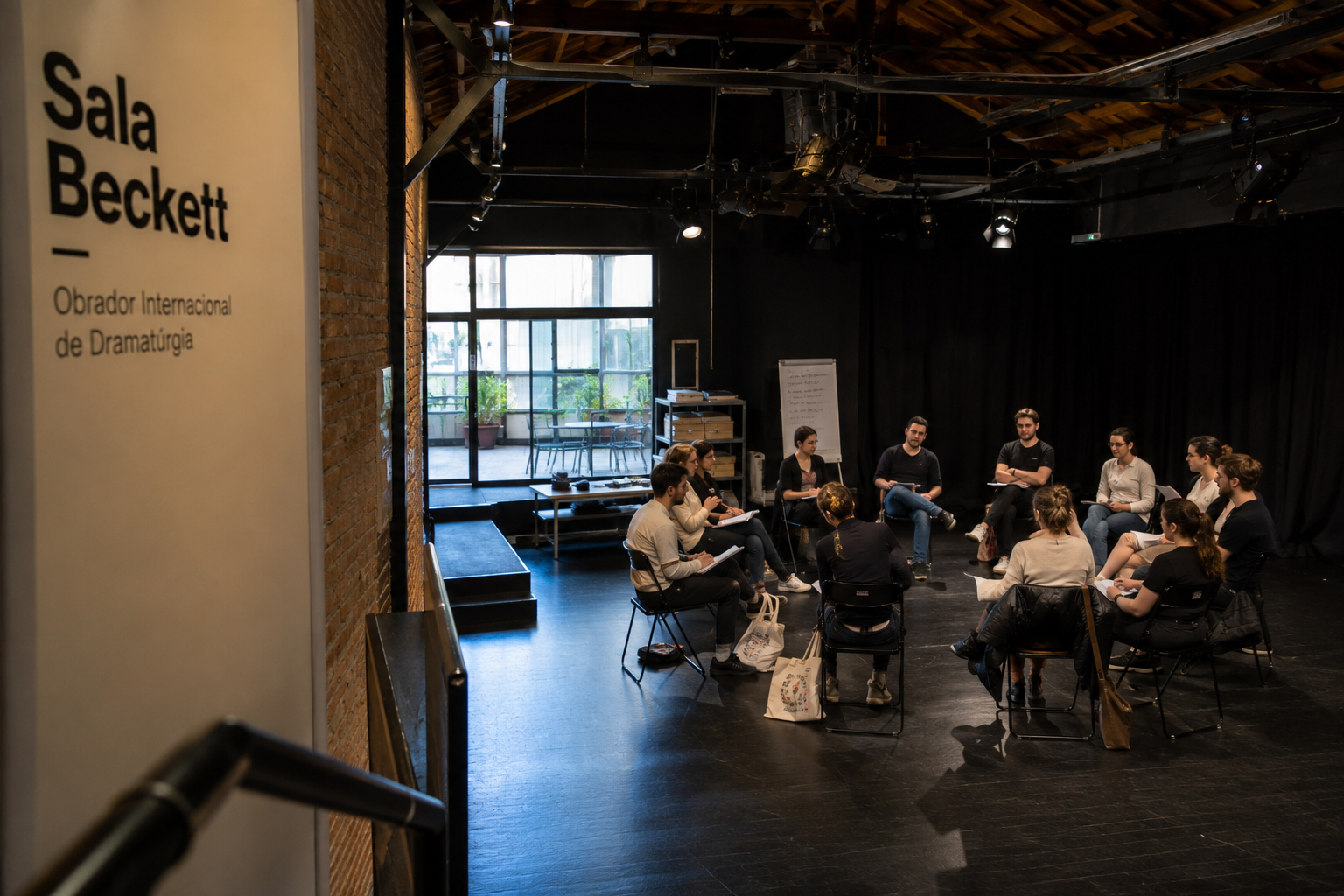
How theatre helps people give words to what they feel
Some experiences arrive long before we understand them. A conversation that lingers. A silence that feels different. A loss that remains difficult to explain. A feeling that something has changed, even when nothing appears different on the surface.
Human beings do not simply experience the world. They continually search for words that allow those experiences to make sense. Language does more than describe emotions. It helps organise them.
Across Europe, theatre has long created spaces where people explore not only stories, but also the language through which human experience becomes understandable.
In Barcelona, Sala Beckett has become one of Europe’s leading centres for contemporary playwriting, dramaturgy and theatrical education. Here, writing is not viewed merely as artistic production. It becomes a way of observing society, shaping dialogue and transforming personal experience into shared understanding.
Beyond Storytelling
Stories have always been one of humanity’s oldest technologies. Long before psychology, sociology or neuroscience, people used stories to understand conflict, relationships and change. Theatre continues that tradition. Not by providing answers. But by helping us ask better questions.
Every play begins with observation. Someone notices a conversation. A tension. A contradiction. Something that many people feel but few have yet expressed.
The playwright gives structure to that experience. Chaos gradually becomes narrative. Narrative becomes dialogue. Dialogue becomes something an audience can recognise together.
When Feelings Become Language
Many emotions begin as something difficult to define. A vague discomfort. A growing tension. A quiet uncertainty. Before we can explain what we feel, we often need to discover what those feelings actually are.
Writing creates distance. Reflection creates perspective. Theatre creates recognition. Experiences that once belonged only to one individual become visible to others. The personal becomes collective. Emotion becomes language.
Learning to Listen
Writing is often associated with speaking. In reality, it begins with listening. Listening to conversations. To different generations. To changing communities. To what remains unsaid.
Perhaps this is the quiet role of the playwright. Not simply to invent stories. But to notice the questions already emerging within society before society has fully recognised them itself.
Good theatre rarely tells audiences what to think. It helps them recognise something they have already experienced, but never quite managed to express.
A Space for Reflection
Modern societies have become remarkably efficient at producing information. They are often less successful at creating space for reflection.
News cycles accelerate. Algorithms prioritise attention. Artificial intelligence increasingly generates answers in seconds.
Yet understanding remains something different. It cannot always be accelerated.
Some questions require time. Some experiences require conversation. Some emotions require language before they can become understanding.
Organisations such as Sala Beckett protect precisely these kinds of spaces. Places where uncertainty is not a weakness. But the beginning of insight.
The Architecture of Meaning
Europe’s future will depend upon innovation, education and technological progress. It will also depend upon something less measurable. The ability to understand ourselves. To understand one another. And to find language for experiences that shape our lives.
Perhaps this is the deeper lesson offered by Sala Beckett. Stories do more than entertain. They help societies understand what they are becoming.
Language is more than communication. It is one of the ways society learns to understand itself.
About This Article
This article is part of Europe’s Creative Spaces, an ongoing Altair Media series exploring how cultural institutions across Europe contribute to identity, participation, confidence and human development.
Rather than examining culture solely through the lens of artistic production, the series investigates how creative environments help shape the social foundations of contemporary European societies.
The article is based on publicly available information and is intended as an independent analysis of broader developments and trends.
Image Credit
Altair Media (AI-generated)
Caption
Sala Beckett demonstrates how theatre extends beyond performance. Through writing, dialogue and creative reflection, it creates space for individuals and communities to give meaning to human experience and the changing world around them.
