Can Sovereignty Be Outsourced?
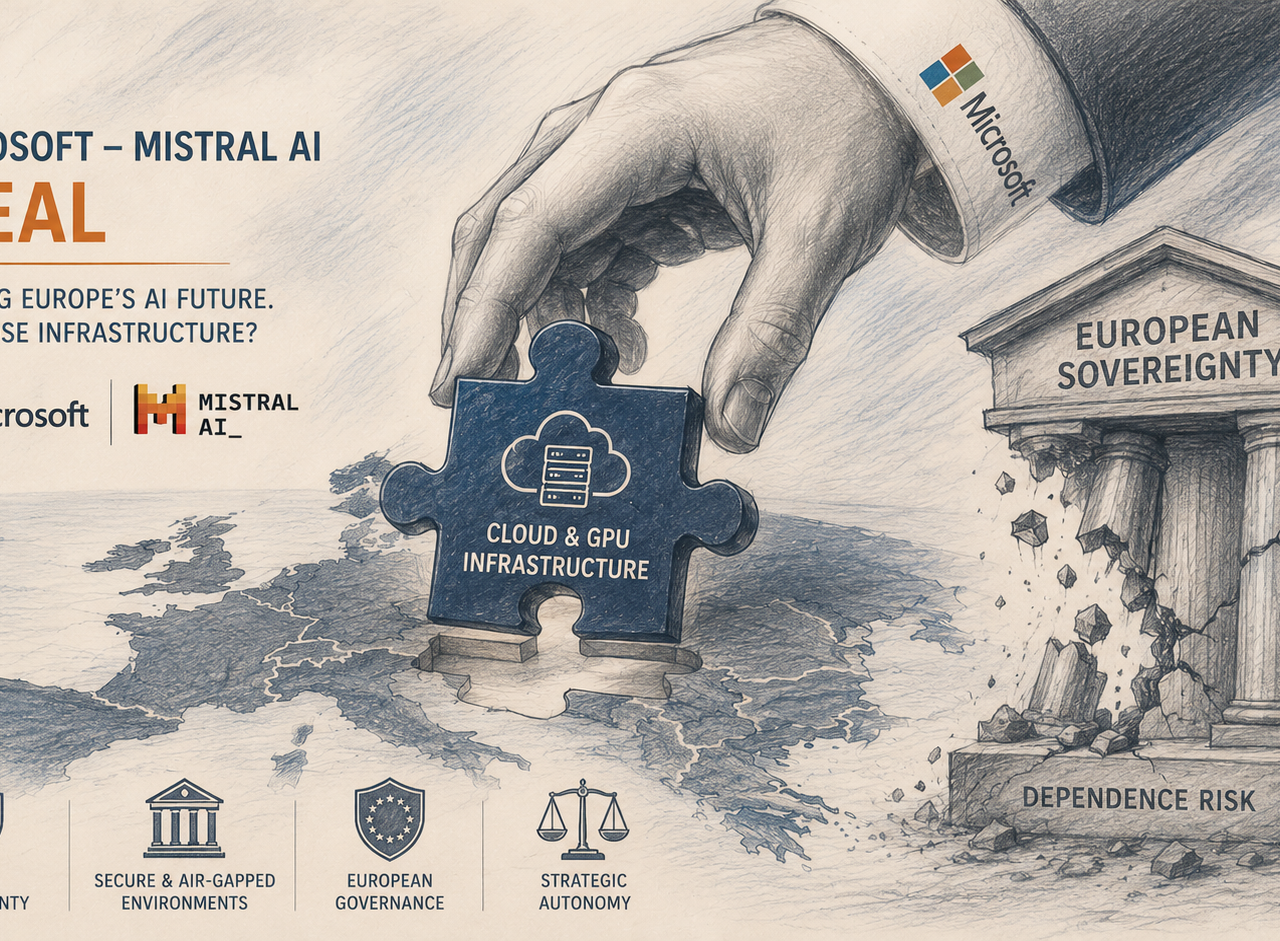
The Microsoft–Mistral Deal and the Compute Paradox
Europe has invested heavily in developing its own artificial intelligence ecosystem. Companies such as Mistral AI increasingly demonstrate that Europe is capable of building globally competitive AI models.
The expanded strategic partnership between Microsoft and Mistral therefore raises a broader question than the investment itself.
If Europe’s AI models increasingly rely on American hyperscale infrastructure to train, deploy and scale, what does technological sovereignty actually mean?
The agreement may represent more than another commercial partnership. It may reveal the next stage of Europe’s AI architecture.
Read MoreEQT and the Rise of European Growth Capital

Can Europe Finally Finance Its Own Champions?
For decades, Europe’s greatest innovation challenge was never a lack of ideas. It was the absence of sufficient long-term capital to help successful companies grow while remaining anchored in Europe. The emergence of new European growth initiatives suggests that this long-standing gap may finally be beginning to close.
Europe has spent decades asking how to generate more innovation. Today, a different question is beginning to emerge. How can Europe ensure that its most successful companies remain European as they grow? That question reaches far beyond any individual investment fund. It concerns the architecture of European capital itself.
For many years, Europe built an innovation ecosystem capable of generating world-class research, successful start-ups and internationally competitive technologies. Yet when companies entered the scale-up phase, the financial landscape often became far less certain. This is where Europe’s next economic challenge begins.
This is not the story of one fund. It is the story of why Europe may suddenly need funds like it.
Read More
The Legal Lacuna

Why Law May Become the Weakest Link in Digital Sovereignty
Meridian Exchange 2027 – Round Table I: Strategic Questions
Digital sovereignty is often discussed through the lenses of cloud infrastructure, cybersecurity, artificial intelligence and data governance. Increasingly, governments must also prepare critical infrastructure for emerging security challenges associated with the quantum era. Yet one critical layer continues to receive far less attention: the legal frameworks responsible for assigning accountability when borderless digital infrastructure fails.
As governments become increasingly dependent upon interconnected digital ecosystems, legal preparedness is becoming an essential component of infrastructure resilience. The challenge is no longer simply to build secure digital systems. It is to ensure that legal frameworks can respond effectively when those systems fail, are disrupted or operate across multiple jurisdictions.
Can governments remain sovereign if the digital infrastructure they depend upon operates beyond the reach of their own legal systems?
Technology has become increasingly international. Law remains largely national. This growing disconnect is emerging as one of the defining governance challenges of the digital age.
Read More