Europe Is Funding Innovation. But Who Is Buying It?
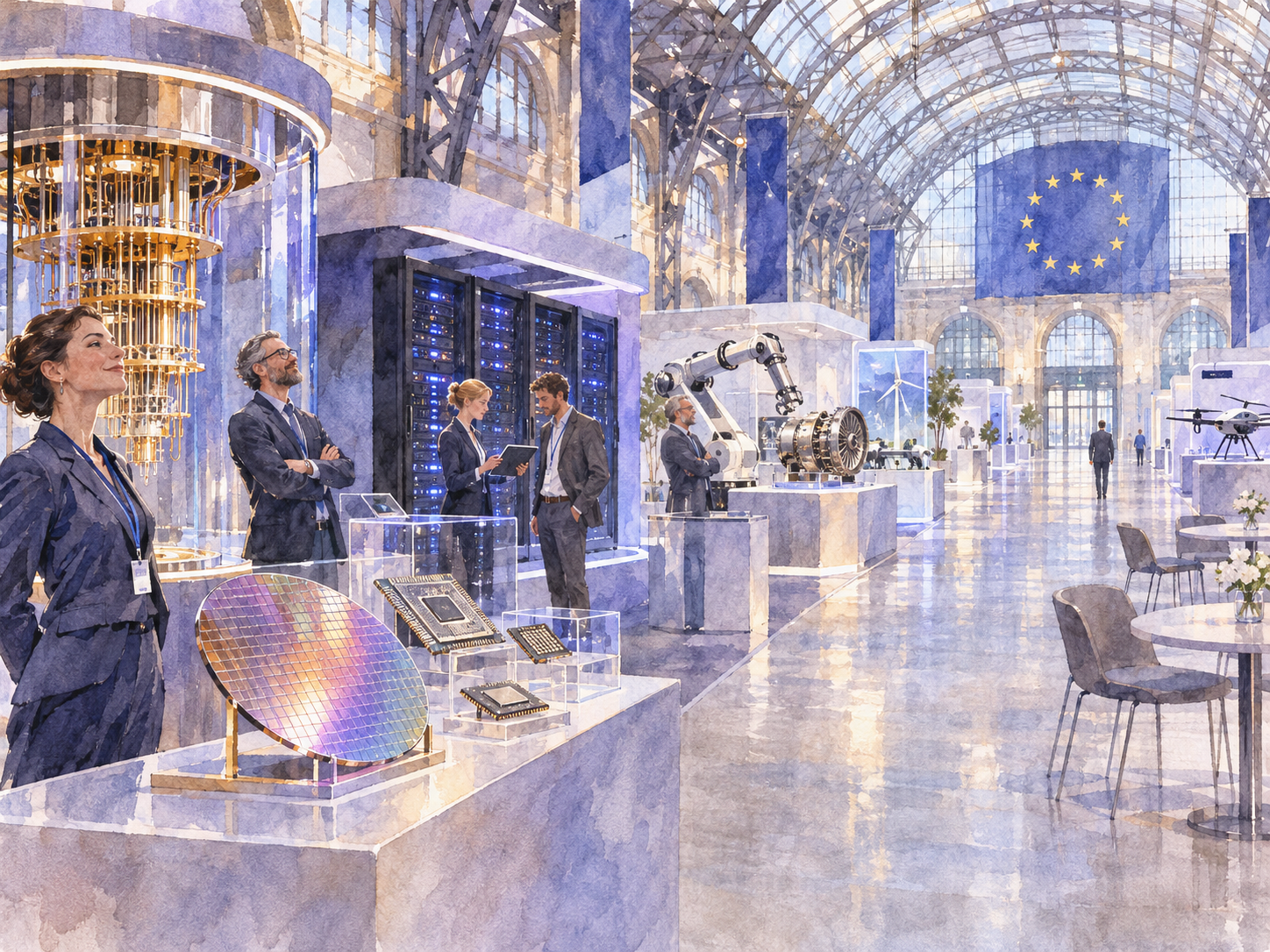
Europe is mobilising billions for strategic technologies. Yet the missing link between scientific excellence and industrial scale may not only be capital — it may be customers.
With its proposed Quantum Act and €50 billion Sovereign Tech Equity Fund, the European Commission is reinforcing its ambition to build a technologically sovereign Europe. Industry representatives are calling for additional funding, accessible procurement frameworks and greater involvement in policymaking.
These are legitimate concerns. But another question deserves equal attention: who will actually buy Europe’s emerging technologies?
🟦 1 | Is Europe investing in technology or building a market?
The Quantum Act does not exist in isolation. Through the European Chips Act, AI Factories, supercomputing infrastructure and research programmes, Europe is investing substantially in its technological foundations.
Combined European and national investment in supercomputing infrastructure and AI Factories through the EuroHPC Joint Undertaking is expected to reach €10 billion over the 2021–2027 period.
But financing technological development does not automatically generate commercial demand.
The tension: Europe is building the infrastructure for tomorrow’s economy. Who is building the customer base?
🟦 2 | Can Europe’s technology companies grow without European customers?
In its Quantum Europe Strategy of July 2025, the European Commission identified a structural weakness: insufficient early adoption of quantum technologies by major European industrial companies.
Without large initial customers, emerging technology companies struggle to demonstrate commercial viability, generate predictable revenues and attract private investment.
The customer gap and the capital gap are therefore closely connected.
The tension: investors seek evidence of commercial demand, while emerging companies need capital to develop the products that generate it.
🟦 3 | Who is willing to take the industrial risk?
Europe is home to industrial leaders such as Siemens, Bosch, Airbus, BASF, Volkswagen and Deutsche Telekom.
Yet for corporate procurement teams, selecting an established international supplier may appear less risky than working with an emerging European technology company.
Could Europe’s industrial leaders become more active as first customers, co-development partners and strategic investors?
Technology developers also bear responsibility: understanding customer needs, demonstrating measurable value and delivering internationally competitive products.
The tension: Europe wants technological independence, but individual companies may have sound commercial reasons to reinforce existing dependencies.
🟦 4 | Can protection create competitiveness?
European procurement preferences may help create initial markets and strengthen strategic supply chains.
But preferential access cannot substitute for technological performance, customer satisfaction or commercial viability.
A research grant is not a customer. A successful funding round is not a sustainable revenue stream.
The tension: European companies need room to grow, but protection without competitive pressure risks creating dependence on public support.
🟦 5 | Who actually owns Europe’s technological ambition?
Technological sovereignty requires three interconnected commitments:
- Public institutions: capital, infrastructure and regulatory frameworks.
- Technology developers: innovation, competitive products and commercial execution.
- Industrial customers: early adoption, strategic partnerships and commercial contracts.
Success should be measured not only in capital raised, patents registered or factories announced, but also in industrial adoption and recurring revenues.
The tension: Europe has made technological sovereignty a political priority. Has it become an industrial priority?
🟦 THE SIGNAL
Europe’s technological future will not be determined by public investment alone. It will depend on whether European industry is willing to translate scientific excellence into commercial relationships and share the risks of innovation.
Europe must not only become better at financing its own technology. It must also become better at buying it.
Credit
Illustration: Altair Media / OpenAI (AI-generated watercolour)
Caption
Europe’s technological ambitions on display: advanced computing, semiconductors and industrial innovation await their next customers. A conceptual watercolour illustrating the tension between technological investment and commercial demand.
