Europe is changing its monetary leadership. But what will change for Europe?
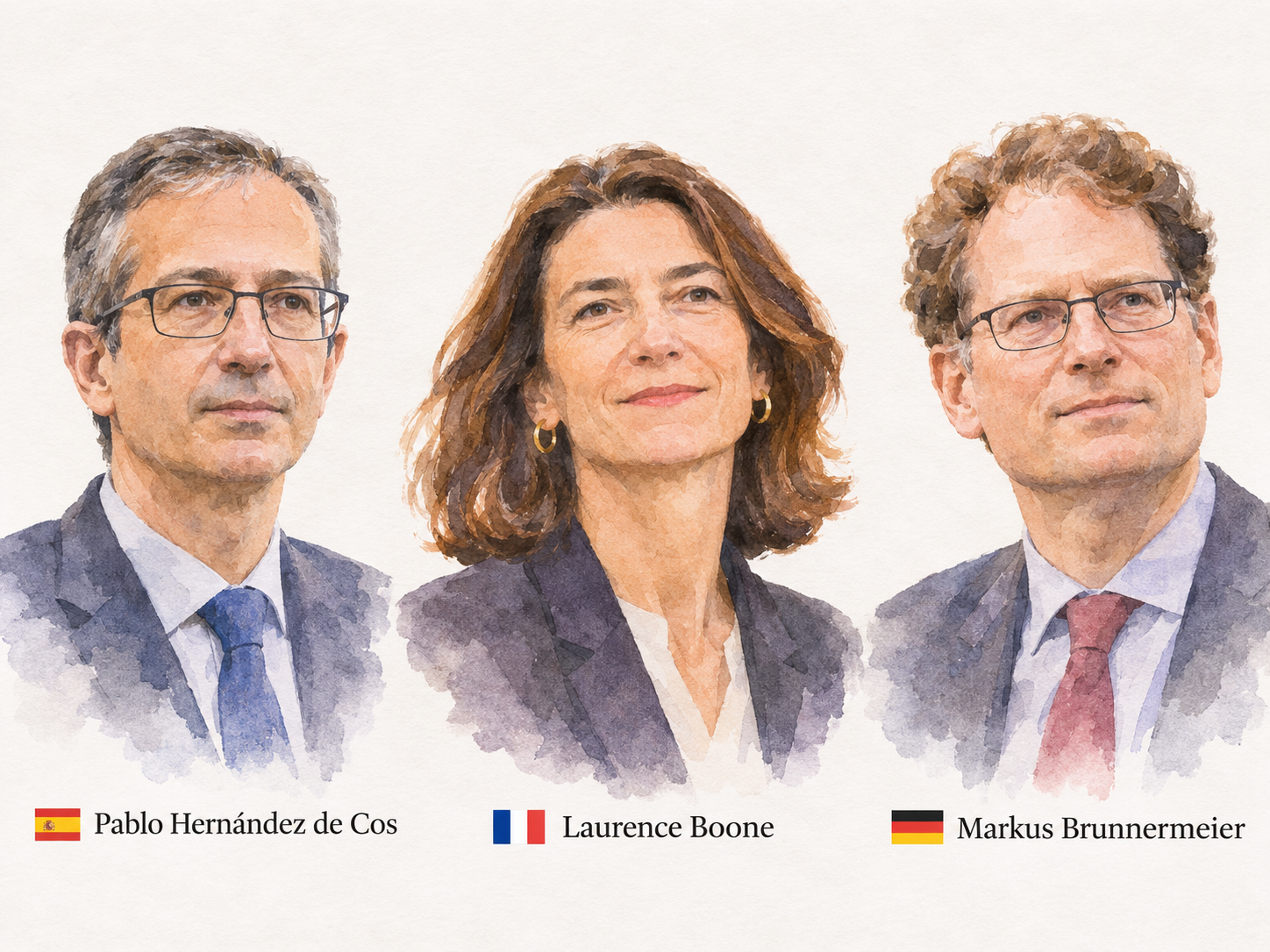
Europe is preparing for a significant transition in monetary leadership
Euro area leaders have backed Spain’s Pablo Hernández de Cos to succeed Christine Lagarde as President of the European Central Bank, with France’s Laurence Boone and Germany’s Markus Brunnermeier also recommended for key positions on its Executive Board.
The transition comes at a critical moment. Europe is seeking to mobilise private capital, finance strategic technologies, strengthen industrial competitiveness and reduce external financial dependencies. But how compatible are these ambitions with monetary stability?
Five questions deserve closer attention.
▪️ 1. Is Europe choosing continuity or a new monetary direction?
As former governor of the Bank of Spain and current General Manager of the Bank for International Settlements (BIS), Hernández de Cos brings extensive experience in monetary policy, banking supervision and financial stability.
His background suggests institutional continuity rather than a radical departure.
Together with Brunnermeier’s research on systemic risk and Boone’s experience across financial markets and public policy, the proposed leadership brings considerable expertise in financial stability.
Yet the economic environment in which the next ECB leadership will operate is fundamentally different.
The tension: institutional continuity versus structural economic change.
▪️ 2. Can Europe maintain price stability without weakening its investment ambitions?
Europe requires substantial long-term investment in defence, energy infrastructure, semiconductors and artificial intelligence.
Higher borrowing costs can constrain these investments. Excessively loose monetary policy, however, risks undermining price stability and household purchasing power.
Ultimately, the ECB cannot resolve Europe’s structural investment deficit through interest rates alone.
The tension: monetary discipline versus strategic investment capacity.
▪️ 3. Will the digital euro become an instrument of European financial sovereignty?
At the Jackson Hole Economic Symposium in August 2026, Hernández de Cos highlighted the potential risks of “digital dollarisation” arising from the growing adoption of dollar-denominated stablecoins.
With the ECB preparing for a potential digital euro launch in 2029, subject to legislative approval, the debate extends beyond payment efficiency to monetary sovereignty and dependence on foreign financial infrastructure.
Who controls the infrastructure through which Europeans conduct their financial transactions?
The tension: global financial innovation versus European monetary autonomy.
▪️ 4. Can a new ECB leadership help unlock Europe’s fragmented capital markets?
Europe has substantial household savings, yet its emerging technology companies frequently struggle to secure sufficient growth capital domestically.
The ECB supports deeper financial integration. But completing the Savings and Investments Union requires political decisions, regulatory convergence and greater private-sector participation.
Monetary integration has not automatically produced capital market integration.
The tension: a common currency versus fragmented investment markets.
▪️ 5. How independent can monetary policy remain in an increasingly geopolitical world?
Defence expenditure, sovereign debt, energy security and technological competition are placing new demands on European governments.
As financing these ambitions becomes more urgent, political expectations of the ECB may increase.
Its primary responsibility, however, remains price stability.
The tension: institutional independence versus geopolitical necessity.
🟦 The Altair Perspective
Europe’s next monetary leadership will inherit more than responsibility for inflation and interest rates.
It will operate at the intersection of financial stability, technological transformation and geopolitical competition.
But monetary policy cannot substitute for industrial strategy, integrated capital markets or political coordination.
Europe is choosing its next central banker. It has yet to reconcile monetary stability with its strategic ambitions.
Image credit
Altair Media | AI-generated editorial watercolour illustration.
Image caption
Pablo Hernández de Cos (Spain), Laurence Boone (France) and Markus Brunnermeier (Germany) represent a proposed new generation of ECB leadership at a critical moment for Europe’s monetary stability, financial integration and strategic autonomy.
