Europe’s Operators Need a Better Business Model
Europe wants stronger networks. Operators need a better way to earn from the capacity and certainty they deliver.
Europe wants faster networks, stronger digital infrastructure and less dependence on foreign technology. Operators are expected to build the foundations. But carrying more traffic does not automatically mean earning more money. The question is whether the business model can finance what comes next—and how operators can capture more value from the infrastructure they provide.
Six questions expose the gap between Europe’s network ambitions and the business case behind them.
🟦 Does the current business model actually work?
It can. Subscriptions, business connections and wholesale access generate real revenue. Deutsche Telekom’s European segment reported 3.9% organic growth in service revenues in 2025. Operators can still grow under the current model.
But today’s earnings do not establish the case for tomorrow’s investment. Construction, maintenance, spectrum licences, financing and equipment replacement all have to be paid for.
The harder question is what return the next upgrade will generate—and whether that return justifies the risk.
Being essential to the economy does not guarantee an attractive return on capital.
🟦 Why don’t Netflix and Microsoft pay for all that traffic?
They already finance parts of its delivery. Microsoft invests in global fibre infrastructure. Netflix places local servers inside operator networks, reducing the need to transport content over longer distances. Networks also exchange traffic through arrangements that can be paid or carry no additional traffic fee.
Meanwhile, subscribers pay their operator to access those services. A Netflix stream is something the operator’s own customer requested.
The dispute concerns an additional payment to the access network. Who owes it and what extra service would they receive?
“They use our network” is the start of a negotiation, not a complete business model.
🟦 Could a large-user tariff change the equation?
Yes—if it purchases a clear commitment.
A platform could contract for extra connection capacity before a major live event. A factory could buy a dedicated cloud connection with agreed performance targets and a backup route. An operator could commit additional capacity at specific locations and times.
The customer would pay for an identifiable service. The operator would accept consequences if it failed to deliver.
Volume alone is a weaker basis. BEREC has documented falling interconnection costs, so a bigger traffic total does not automatically justify a proportionately bigger bill.
The commercial opportunity is to price a commitment that matters to the customer.
🟦 Does net neutrality block this approach?
It limits how it can work. Operators cannot sell preferential treatment of ordinary internet traffic simply because a platform pays more.
Dedicated connectivity offers commercial possibilities. Specialised services are also possible under legal conditions, including necessary optimisation, sufficient capacity and protection of general internet access. “Reserved capacity” is no automatic exemption.
Operators must therefore define what is additional—and show that subscribers retain the service they already pay for.
A premium product loses its credibility if it depends on making the ordinary product worse.
🟦 What is Brussels doing?
The Commission’s January 2026 Digital Networks Act proposal seeks simpler cross-border rules, longer and renewable spectrum licences and voluntary cooperation between network operators and digital service companies. It also proposes voluntary regulatory conciliation over technical and commercial arrangements while preserving net-neutrality principles.
That could improve investment conditions and help parties negotiate. It does not guarantee operators a payment from platforms.
Brussels has to reconcile affordable access, competition and investment. Operators still have to find customers for their offer.
Regulation can create room for a business model. It cannot create customers for it.
🟦 What can operators change themselves?
Make their capabilities easier to buy and use: dedicated connections, backup capacity, clear availability commitments and software access to useful network functions.
GSMA’s Open Gateway initiative pursues that last approach through common interfaces for developers and cloud providers. The test is whether those functions solve a problem someone will pay to address.
Operators also need investment discipline. Building coverage, attracting paying users and earning a return are different achievements.
A better business model requires better products, transparent prices and responsibility when promises fail.
Signal
Europe should take the economics of its networks as seriously as their strategic importance.
Operators need to earn more from demonstrable capacity, reliability and certainty. Large users can be customers for that value when the additional service is clearly defined and the operator is accountable for delivering it.
Europe’s next network upgrade needs a viable investment case as well as a political ambition.
Credit
AI-generated illustration / Altair Media
Caption
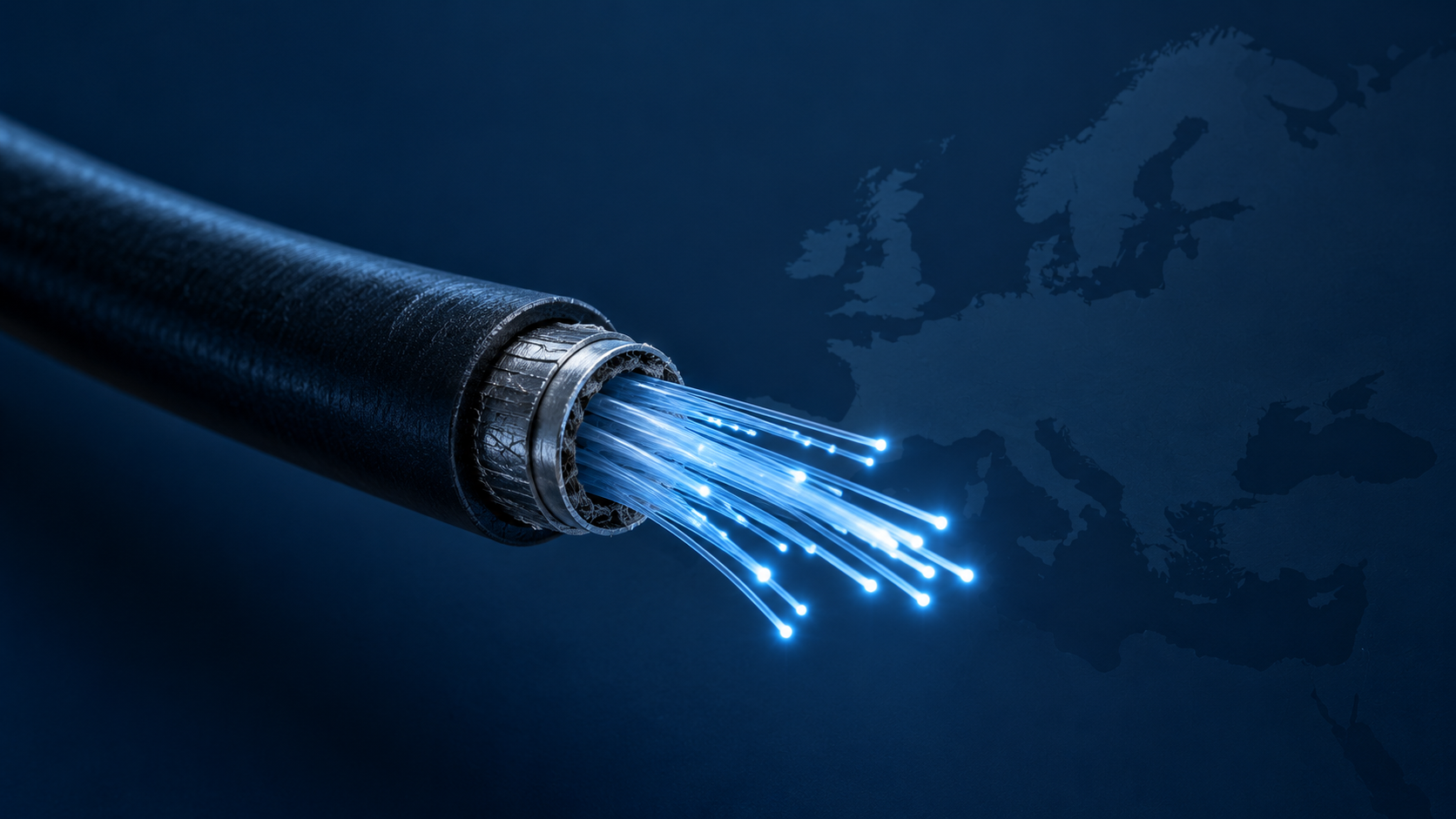
The physical backbone of Europe’s digital economy: building stronger networks requires a viable business model for the operators behind them.
