Where Have Human Rights Gone?
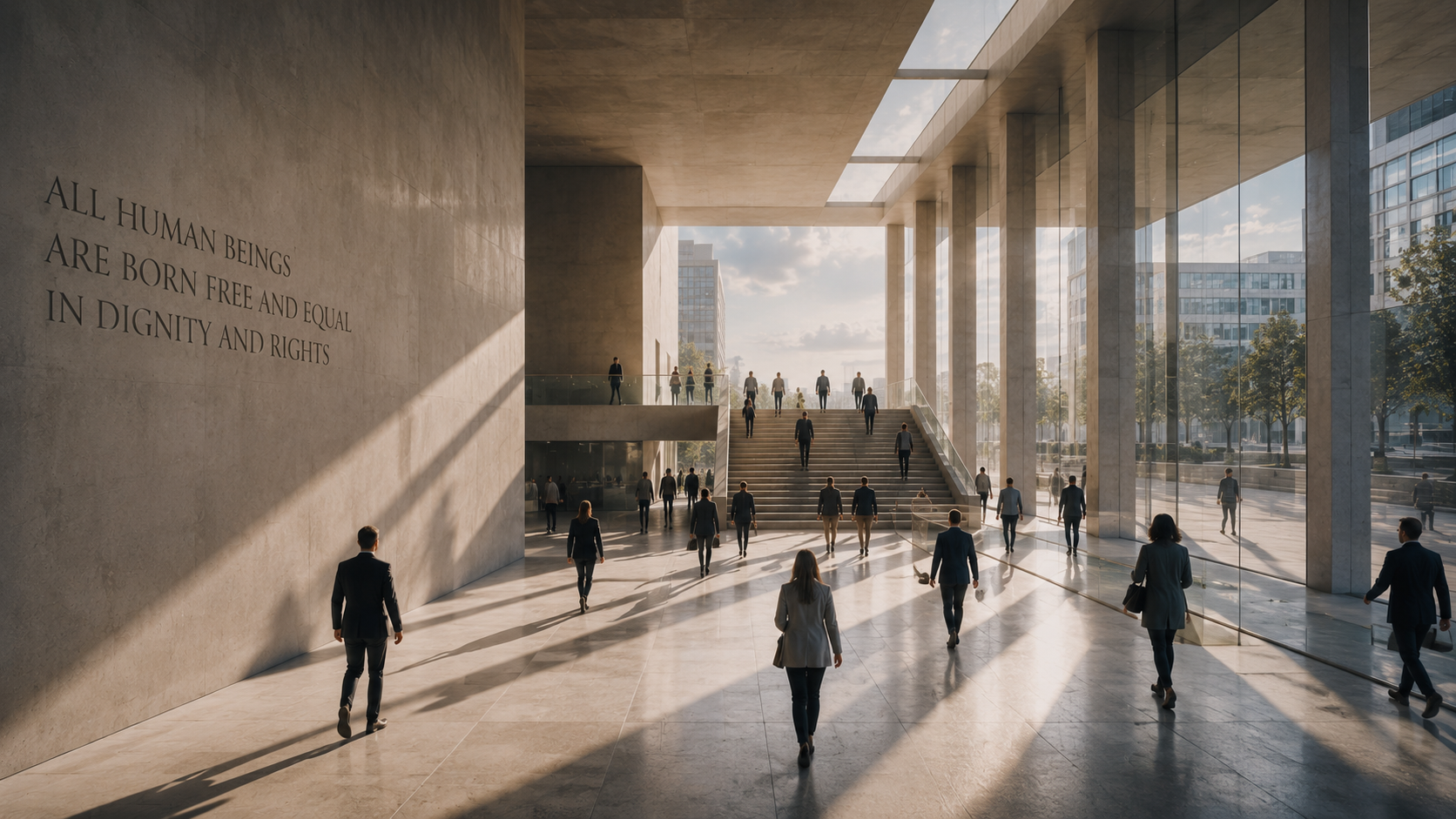
Why the language of international politics appears to be changing
For much of the post-Cold War era, international politics was often framed through the language of democracy, human rights and international cooperation. State visits, multilateral summits and diplomatic negotiations regularly included discussions about political freedoms, the rule of law and human dignity.
Today, the vocabulary has changed. Political leaders increasingly speak about security, resilience, technological sovereignty, critical infrastructure and economic competitiveness. Human rights have not disappeared. International treaties remain in force, courts continue their work and civil society remains active. Yet they appear to occupy a different place within an increasingly crowded geopolitical agenda.
The question is therefore not whether human rights still matter. The question is whether the language through which we discuss them still reflects the realities of the twenty-first century.
🟦 Has the language of politics changed?
The priorities of governments often become visible through the words they use. Where international debates once centred on democracy, development and human rights, today’s discussions increasingly focus on resilience, deterrence, strategic autonomy and technological leadership. Does this represent a temporary response to global instability or a more fundamental shift in political priorities?
🟦 Has geopolitics changed the conversation?
Russia’s invasion of Ukraine, growing strategic competition between the United States and China, conflicts in the Middle East and concerns over critical supply chains have transformed the international agenda. As governments respond to mounting geopolitical pressures, has the balance between strategic interests and universal values begun to change?
🟦 Do rights and security increasingly compete?
Modern democracies are expected to protect both individual freedoms and collective security. Digital surveillance, border management, counterterrorism measures and emergency legislation illustrate how these objectives can reinforce one another, but also create tensions. How should societies navigate these competing responsibilities?
🟦 Have human rights become a domestic debate?
For decades, human rights were often discussed as part of foreign policy. Increasingly, however, the debate takes place within national borders, through questions of migration, digital privacy, freedom of expression, discrimination, housing and social cohesion. Have human rights become less international and more deeply embedded in domestic politics?
🟦 Has public attention simply moved elsewhere?
War, inflation, artificial intelligence, energy security and economic resilience dominate today’s headlines. Human rights institutions continue their work, yet receive comparatively less public attention. Has the issue itself changed, or has public attention shifted towards more immediate geopolitical and economic concerns?
🟦 Do human rights need a new vocabulary?
The challenges of the twenty-first century differ profoundly from those that shaped the post-war human rights framework. Artificial intelligence, biometric surveillance, digital identity, algorithmic decision-making and platform governance raise questions that earlier generations could scarcely have imagined. If the context has changed, should the language through which we discuss rights evolve as well?
Signal
Human rights have not disappeared from international affairs. They remain embedded in constitutions, international treaties and democratic institutions around the world. What appears to be changing is the context in which they are discussed. As security, technology, economic resilience and geopolitical competition increasingly shape public policy, societies are continually renegotiating the relationship between individual freedoms, collective security and human dignity. Understanding that evolving balance is the starting point of The Architecture of Rights.
Part of The Architecture of Rights, a long-form editorial series exploring the evolving institutional, political and technological frameworks that shape human rights in the twenty-first century.
Image Credit
Image: AI-generated editorial illustration for Altair Media.
Caption
The illustration contrasts the enduring principles of Article 1 of the Universal Declaration of Human Rights with the contemporary language of international politics. Rather than suggesting that human rights have disappeared, it visualises how today’s debates increasingly unfold alongside concepts such as security, resilience, technological sovereignty and artificial intelligence.
