The Price of a Moving Budget
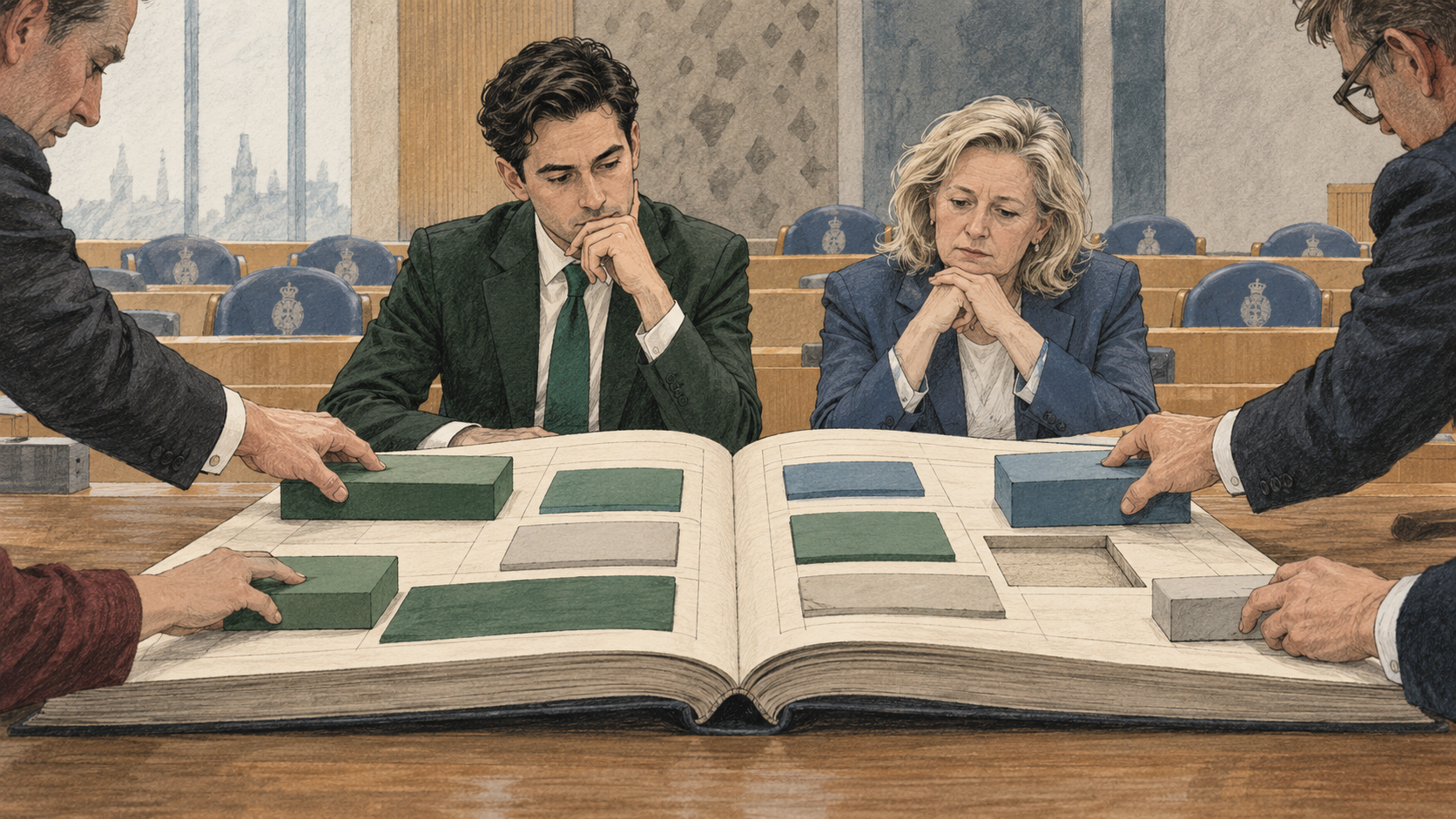
Every concession can bring the Dutch minority cabinet closer to a majority. Each one also raises a harder question: who pays?
The Dutch budget talks have begun to produce results. Proposed cuts to social security have been taken off the Social Affairs budget, opening a path to support from PRO and Volt. Yet the agreement has exposed another fault line. A tax plan meant to help finance a new system for taxing investment gains would draw more small savers into box 3. Parliament has pushed back and Finance Minister Eelco Heinen is looking for another solution.
The budget is moving. Five questions show why movement alone is not yet a settlement.
🟦 When a concession removes a saving, where does the bill go?
The social security dispute shows the difference between removing a measure and resolving its cost. Heinen has moved the expected savings, rising to €2.5 billion by the end of the cabinet’s term, to a central Finance Ministry reserve. He expects employers and unions to develop reforms and says the government will revisit the figures in the spring. If those savings do not materialise, other spending plans may face pressure. PRO has gained room for a social agreement; the cabinet has gained time. The financial outcome remains open.
🟦 Can a tax reform survive its own funding plan?
Heinen wants to move more investments towards taxation of realised gains. To help pay for that change, the cabinet proposed lowering tax-free thresholds in box 3. Opposition parties objected to the effect on smaller savers and investors, and VVD and CDA lawmakers raised concerns too. Heinen acknowledged the problem on Thursday and promised to seek a different threshold before the Tax Plan is debated. Raising that threshold would require another source of revenue. The political agreement on how to tax gains is proving easier than agreement on who funds the transition.
🟦 What would make opposition support durable?
The parties are asking for different things from the same budget. PRO wants a broader agreement, backed in both chambers, with a substantial shift in taxation from labour towards capital. Volt is positive about the social security change but says it has not signed off on the wider Tax Plan. JA21 wants relief for working households and remains unwilling to promise support on the basis of a single concession. These positions leave room for negotiation. They also make each proposed source of funding a political choice that must be defended across the whole package.
🟦 Are the parties arguing over the same time horizon?
In the financial debate, JA21 warned about rising interest costs and the long-term growth of care and social security spending. PRO argued that fiscal debt is only one measure of what the country leaves behind, pointing also to climate commitments. Both are asking who will bear future costs, while proposing different answers. A budget deal can pass one year’s vote without settling that disagreement. The cabinet needs to explain which obligations it intends to meet now, which it will negotiate later and what happens if the expected savings fail to arrive.
🟦 Where does Europe enter the calculation?
The same tension surfaced in the debate over Europe’s next budget. Heinen argued for tighter EU spending and rejected common borrowing; Volt’s Laurens Dassen warned that holding the budget down could leave too little room for shared investment in security, technology and the green economy. That disagreement belongs in the Dutch budget discussion too. Decisions on defence, energy and industrial capacity extend beyond one parliamentary term and beyond national borders. They need a financing path as credible as the immediate deal.
The Signal
The cabinet has shown that it can respond to opposition demands. Parliament has shown that it will examine the costs of those responses. The next test is whether the government can present the changes as one coherent set of choices: with clear funding, an honest timetable for unresolved reforms and enough support to carry them through both chambers. Until then, every agreement risks becoming the starting point for the next negotiation.
Image credit
Illustration: Altair Media / AI-generated
Caption
As parties move spending and tax measures across the budget, each compromise leaves another question to resolve: where will the money come from?
