Sunday, December 21, 2025

While much of the global AI conversation is dominated by American hyperscalers and Chinese platform giants, a quieter — yet arguably more consequential — transformation is unfolding in Europe. At the center of this shift stands Siemens, a company better known for turbines, factories and rail systems than for artificial intelligence. Yet today, Siemens is emerging as one of Europe’s most strategically important AI actors, not by chasing consumer AI dominance, but by embedding intelligence deep into the continent’s industrial and infrastructural backbone. This is not AI as spectacle. It is AI as system logic.
Read More
Sunday, December 21, 2025

Artificial intelligence has quietly become one of the most loaded words in European education. Not because of what it can do, but because of why institutions increasingly want to use it. Across Europe — and notably in the Netherlands — higher education institutions are facing financial pressure. Budget cuts, rising costs and structural reforms are pushing boards to look for efficiency gains. In that context, AI is often framed as an obvious solution. Faster processes. Fewer people. Lower costs. That framing is understandable — and fundamentally flawed.
Read More
Tuesday, December 2, 2025

Germany approaches deep technology not as a speculative frontier but as a long-term strategic layer that supports industrial resilience, technological sovereignty and the next era of algorithmic innovation. Quantum computing, neuromorphic chips and advanced materials are treated as foundational—technologies whose payoff may take years, but whose absence would leave Europe structurally dependent on foreign compute, platforms and intellectual property. Germany’s investments reflect this long view: build capacity now, secure autonomy later.
Read More
Friday, November 28, 2025
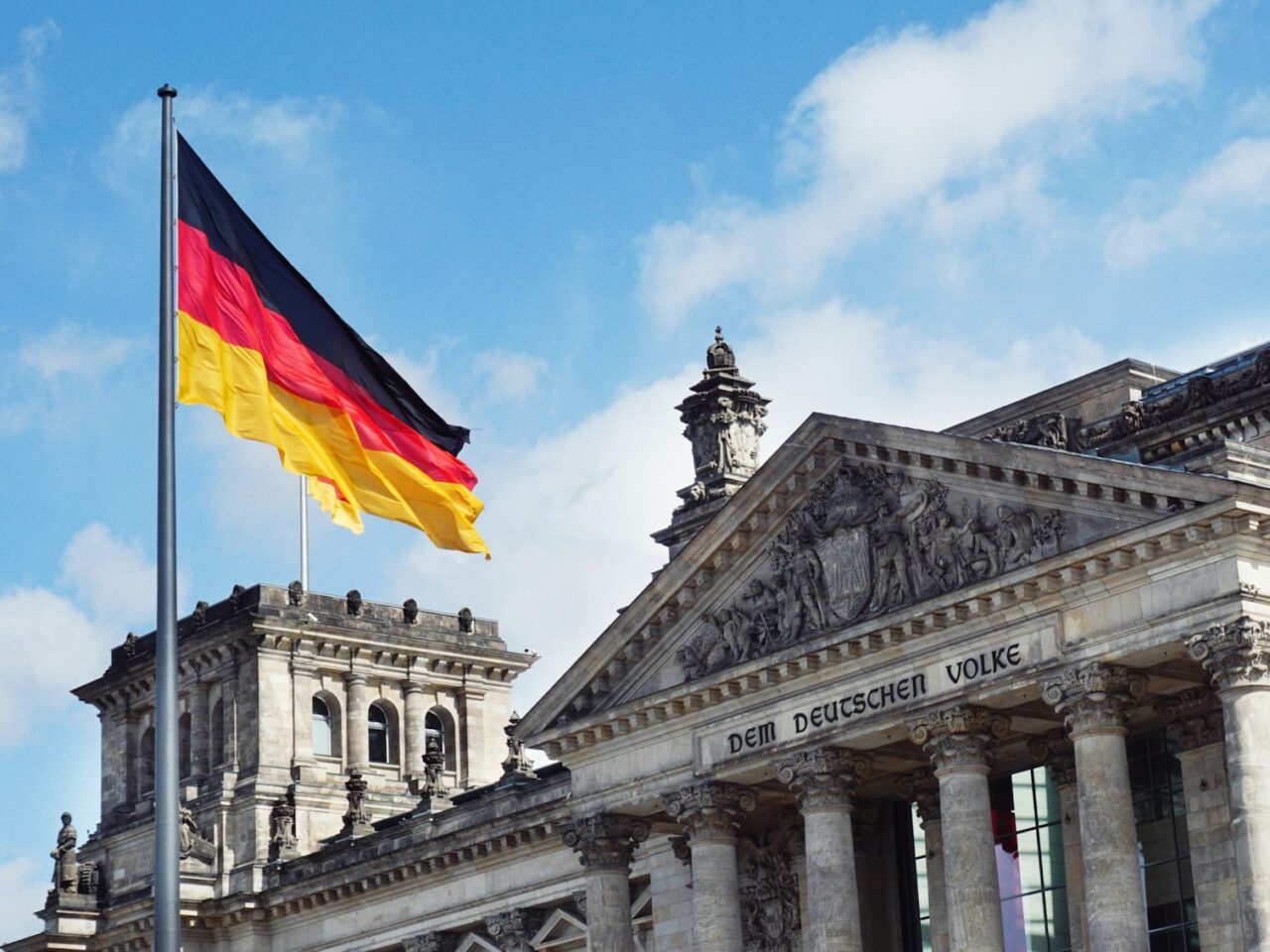
Germany does not dominate headlines in the global AI race. It does not chase frontier models with the same fervour as the United States or China. Instead, Germany is building something far more structurally important: an AI-enabled industrial base that underpins Europe’s economic strength—and increasingly, its strategic autonomy.
Read More
Friday, November 28, 2025

Europe is entering a decisive phase in its technological trajectory. While the global AI race is often framed as a binary contest between the United States and China, the real story is more complex. Europe is quietly, sometimes reluctantly, shaping itself into a multi-node AI power structure—one built on industrial strength, democratic governance and a patchwork of national strategies that do not always align but together form a distinctive technological identity.
Read More
Thursday, November 27, 2025

When it comes to artificial intelligence, it’s as if Europe, the United States and China are playing entirely different games. Europe writes the rules. The US builds the race-cars — fast, aggressive and often messy. China tries to build an entire ecosystem, from roads to regulations to surveillance. In this global match, what counts is not only how you play, but how and why.
Read More
Monday, November 24, 2025

When the world talks about technological leadership, the conversation is dominated by the United States and China. The U.S. builds hyperscale AI platforms and attracts the world’s largest pools of venture capital. China orchestrates state-directed innovation and industrial ecosystems at a scale that few nations can match.
Read More

 Available here: