Sunday, December 21, 2025

While much of the global AI conversation is dominated by American hyperscalers and Chinese platform giants, a quieter — yet arguably more consequential — transformation is unfolding in Europe. At the center of this shift stands Siemens, a company better known for turbines, factories and rail systems than for artificial intelligence. Yet today, Siemens is emerging as one of Europe’s most strategically important AI actors, not by chasing consumer AI dominance, but by embedding intelligence deep into the continent’s industrial and infrastructural backbone. This is not AI as spectacle. It is AI as system logic.
Read More
Tuesday, December 2, 2025
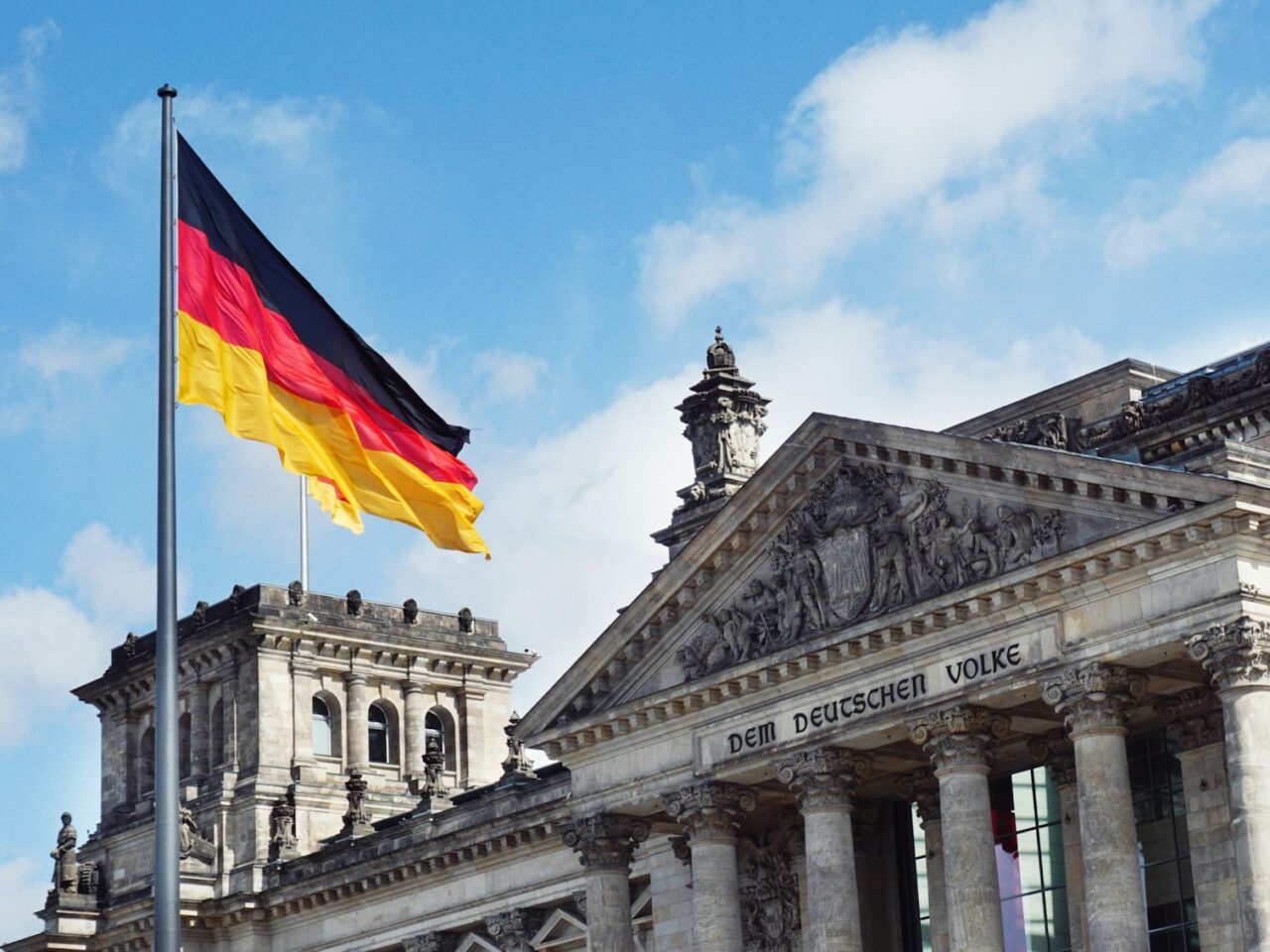
Germany is entering the AI era on its own terms—shaped not by big-tech platforms, but by engineering culture, industrial depth and a deliberate push for strategic autonomy. The country does not dominate global AI headlines, nor does it race to build frontier models. Instead, it is constructing something Europe may find far more valuable: an AI-enabled industrial backbone capable of delivering resilience in a decade defined by supply chains, energy shocks and geopolitical tension.
Read More
Tuesday, December 2, 2025

Germany’s AI ambitions are shaped as much by infrastructure as by research, industry or policy. Datacenters, energy supply and high-performance computing form the essential backbone for AI deployment, yet they also introduce constraints that influence where, how and how quickly AI capabilities can scale. Ambition alone cannot overcome the realities of electricity grids, cooling requirements and permitting processes.
Read More
Tuesday, December 2, 2025

Germany’s relationship with artificial intelligence is rarely framed as a software story; it is, fundamentally, an industrial one. While Silicon Valley speaks in models and scale, Germany speaks in production lines, logistics chains and quality assurance. The country’s economic engine—automotive clusters in Munich, precision machine builders in Baden-Württemberg and medtech research networks spanning Heidelberg to the Rhine Valley—has become the proving ground for AI integration in Europe.
Read More
Tuesday, December 2, 2025

For years, Germany has been described as Europe’s “industrial engine”, a country where engineering discipline meets long-term economic planning. As artificial intelligence accelerates globally, Germany finds itself at a crossroads: well-equipped with research depth, industrial muscle and public investment—but also challenged by the speed, capital intensity and platform dynamics that define the AI race. What emerges today is a nation trying to translate a century of industrial expertise into leadership within a technology wave dominated elsewhere by hyperscale software ecosystems.
Read More

 Available here: