Monday, May 4, 2026

Europe is not leading the quantum race in headlines—but it may be shaping its foundations. Beneath the noise of global tech rivalry, a quieter strategy is emerging: one built on infrastructure, collaboration and long-term control over computation.
Read More
Saturday, May 2, 2026

As photonics moves from lab to platform, chips begin to sense, measure and interact with the physical world. From healthcare to quantum systems, this shift marks a transition from processing information to perceiving reality.
Read More
Saturday, May 2, 2026

For the first time, photonics brings light generation, guidance and coupling together on a single chip. This shift transforms a long-standing experiment into a scalable platform—marking a turning point in how chips interact with the physical world.
Read More
Saturday, May 2, 2026

The next generation of chips is not limited by code, but by materials. As photonics advances, the challenge shifts to integrating fundamentally different substances—where even atomic mismatches can determine whether light is guided or lost.
Read More
Friday, May 1, 2026

For decades, chips have relied on invisible infrared light to move data. A new shift is emerging, where visible light introduces precision, sensing and interaction—moving technology beyond transport toward a deeper connection with the physical world.
Read More
Friday, May 1, 2026

Blue light is emerging as the next frontier in chip technology. As photonics moves beyond infrared, new materials and architectures are redefining what chips can do—shifting from data transport toward precision, sensing and interaction with the physical world.
Read More
Tuesday, February 17, 2026

Europe excels at inventing the future but struggles to integrate it. In Brainport Eindhoven, breakthrough technologies collide with infrastructure limits, labour mismatches and institutional inertia. The Missing Middle reveals where innovation becomes friction — and where technological transitions are ultimately won or lost.
Read More
Sunday, December 28, 2025

Semiconductors have become the fault line of modern geopolitics. The United States and China are investing aggressively in domestic chip production, treating semiconductors not as consumer goods but as strategic infrastructure. Europe, by contrast, spent decades optimising research while outsourcing large-scale manufacturing — until recent crises exposed how fragile that model had become.
Read More
Tuesday, December 2, 2025
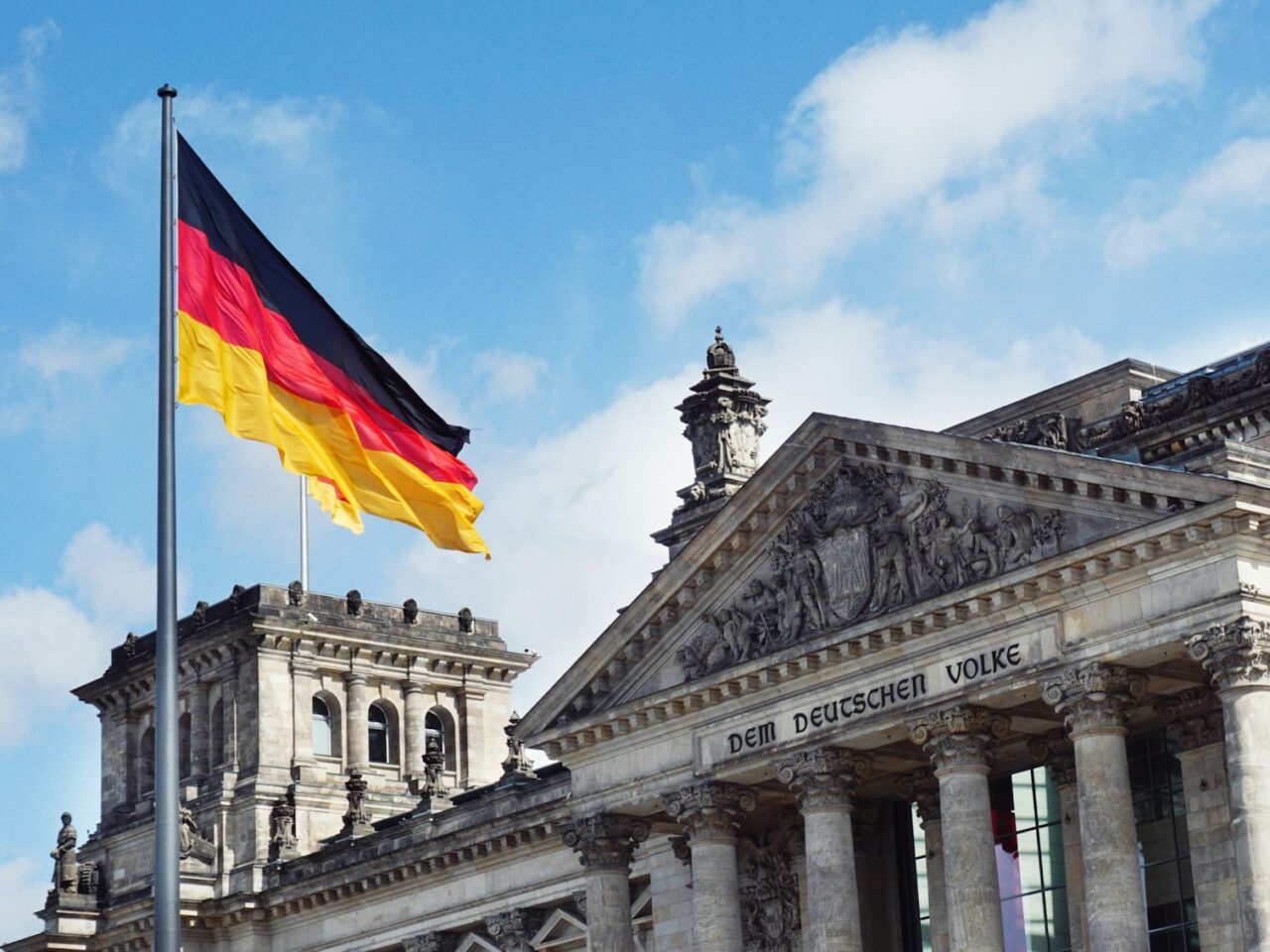
Germany is entering the AI era on its own terms—shaped not by big-tech platforms, but by engineering culture, industrial depth and a deliberate push for strategic autonomy. The country does not dominate global AI headlines, nor does it race to build frontier models. Instead, it is constructing something Europe may find far more valuable: an AI-enabled industrial backbone capable of delivering resilience in a decade defined by supply chains, energy shocks and geopolitical tension.
Read More
Tuesday, December 2, 2025

Germany approaches deep technology not as a speculative frontier but as a long-term strategic layer that supports industrial resilience, technological sovereignty and the next era of algorithmic innovation. Quantum computing, neuromorphic chips and advanced materials are treated as foundational—technologies whose payoff may take years, but whose absence would leave Europe structurally dependent on foreign compute, platforms and intellectual property. Germany’s investments reflect this long view: build capacity now, secure autonomy later.
Read More

 Available here: