Monday, October 12, 2026

UBS places human autonomy at the centre of its AI approach. But as algorithms shape advice and commercial opportunities, effective oversight depends on whether advisers have the time, evidence and authority to challenge the system.
Read More
Tuesday, August 25, 2026

When a platform can monitor performance, judge behaviour and withdraw access to income, it no longer acts merely as an intermediary. The Uber case reveals how employer-like power can emerge without a visible employer or accountable human decision-maker.
Read More
Tuesday, August 11, 2026

AskDiana is not simply another AI model, assistant or agent. This Executive Dialogue explores the organisation behind the platform—and its ambition to create a governed foundation through which organisations can control knowledge, reasoning, permissions and technological choice.
Read More
Wednesday, July 29, 2026

AskDiana presents an ambitious architectural vision for enterprise AI. Rather than accepting its claims at face value, this Signal examines three fundamental questions about private deployment, Conversation Intelligence and knowledge governance—and why they matter for organisations.
Read More
Saturday, July 18, 2026

AskDiana presents enterprise AI as an architectural challenge rather than a software product. As organisations differ in governance, accountability and risk, the question is no longer whether AI can assist—but whether one architecture can responsibly support them all.
Read More
Thursday, July 16, 2026
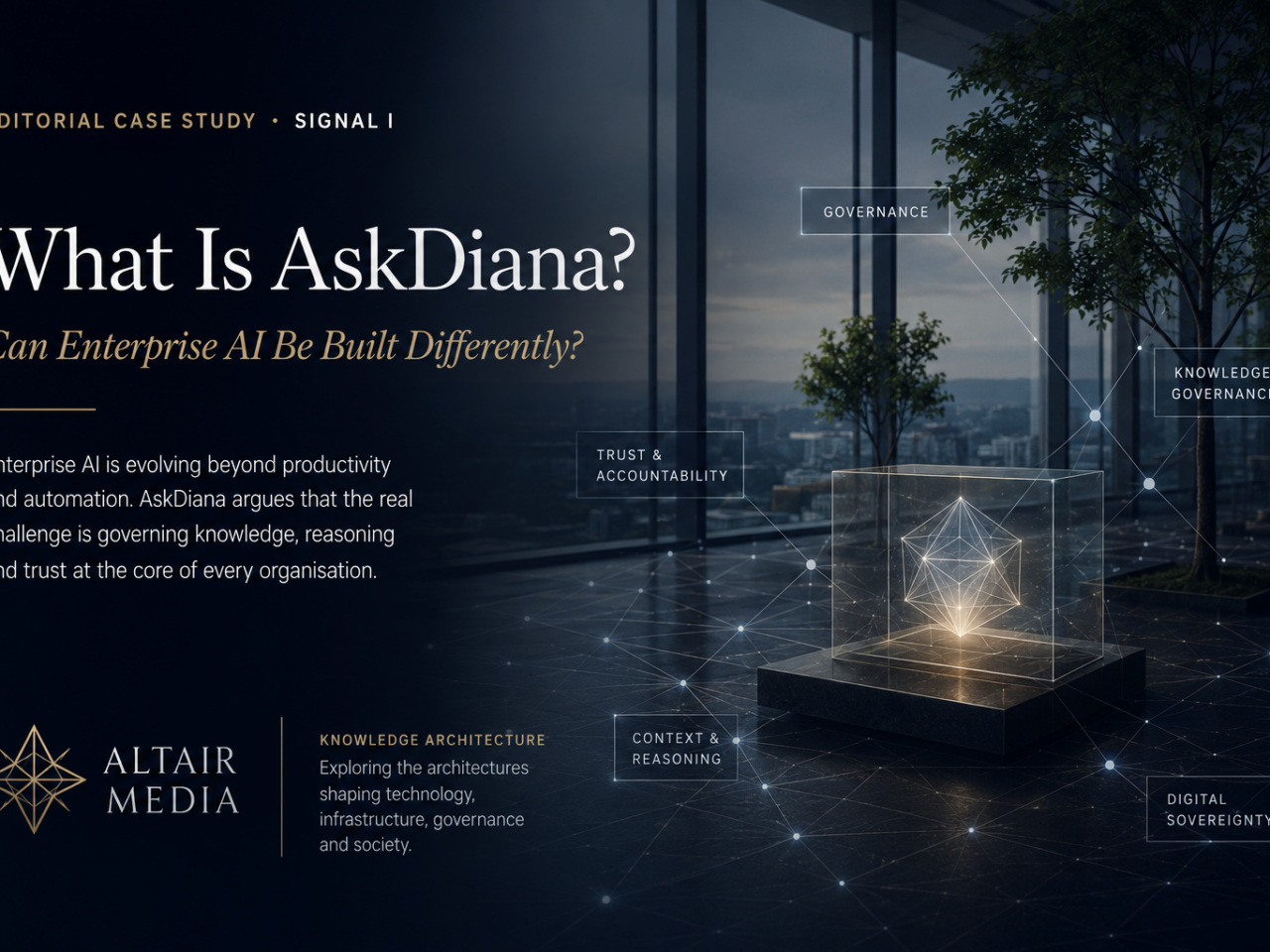
Enterprise AI is entering a new phase. AskDiana challenges the assumption that larger language models alone will define its future, placing knowledge governance, trusted reasoning and organisational control at the centre of enterprise AI architecture.
Read More
Thursday, July 16, 2026
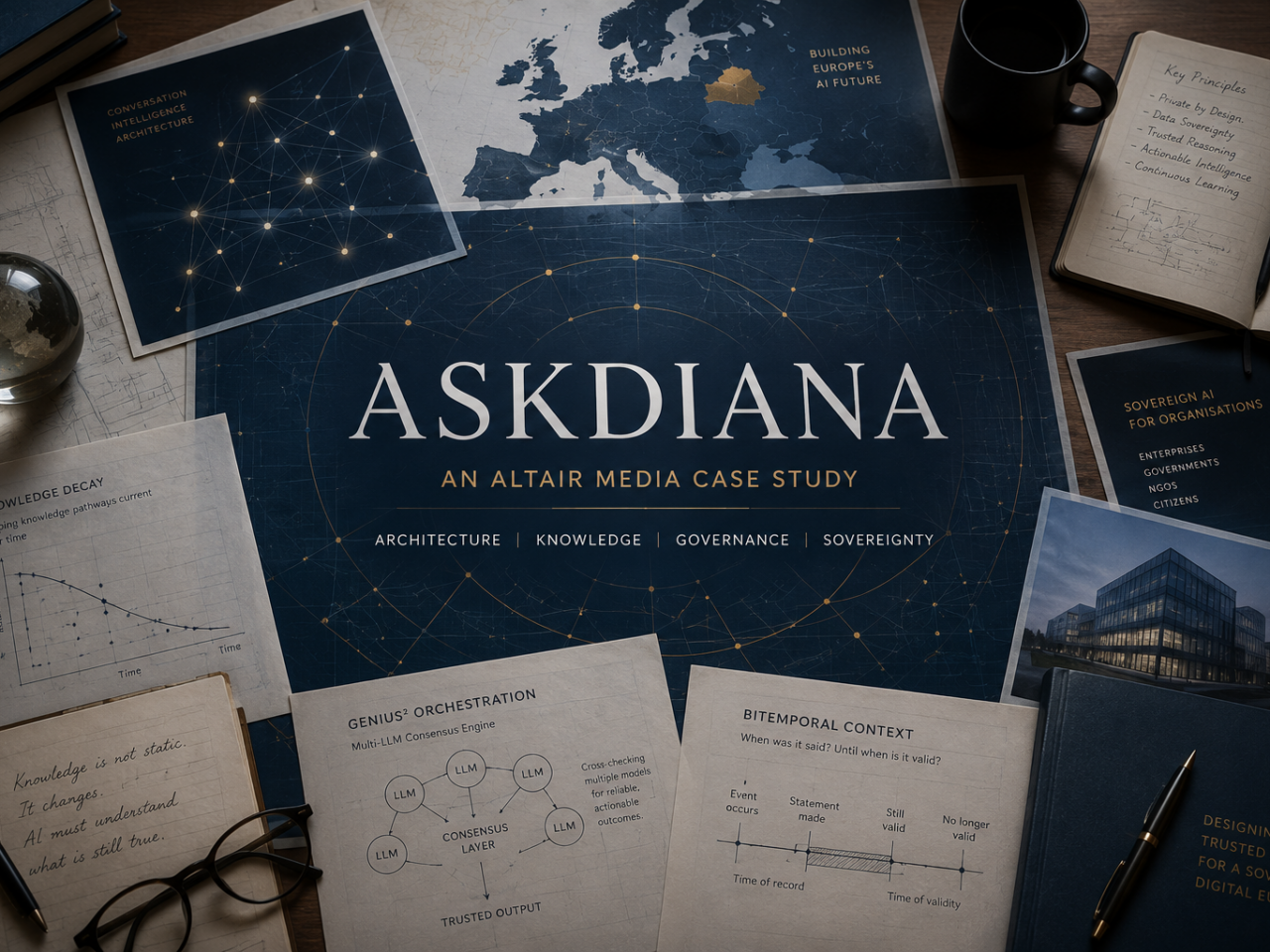
AskDiana is more than an enterprise AI platform. It represents a broader discussion about knowledge architecture, governance and digital sovereignty, raising important questions about how organisations build trusted AI in an increasingly complex European landscape.
Read More
Monday, May 18, 2026

As China plans and America scales, Europe faces a deeper question: can democratic societies still build long-term technological and social direction? This opening essay explores infrastructure, sovereignty, culture and public systems in the search for a new European architecture for the digital age.
Read More
Sunday, May 17, 2026

Europe is entering a new phase of technological and societal transformation. The European Architecture explores how infrastructure, finance, AI, culture and democratic legitimacy can be reconnected in a human-centred vision for Europe’s digital future and long-term social resilience.
Read More
Saturday, May 9, 2026

As artificial intelligence becomes increasingly embedded within banking systems, the central challenge is no longer only whether algorithms are explainable. It is whether the underlying logic shaping financial legitimacy, risk and economic participation remains understandable, contestable and democratically legitimate.
Read More

 Available here: