The Age of Light

Why Intelligence Is Leaving the Cloud
Artificial intelligence is usually discussed as software. Faster models. Bigger datasets. Smarter algorithms. But what if the real shift is not in the code — but in the physics?
The Age of Light explores a fundamental transition that is already underway: the move from electronic computing to photonic computing. From electrons to photons. From heat-limited silicon to light-based architectures.
This is not a technical manual.
It is a conceptual map.
Open Source as Europe’s Last Exit

Digital Sovereignty Reframed as an Architectural Emergency
This article is prompted by a concrete intervention. In early 2026, Orange EU Policy submitted a formal contribution to the European Commission’s call for evidence on Open Digital Ecosystems. On the surface, it reads like a policy position on open-source software. Read more carefully and it reveals something else: a large European telecom incumbent signalling that the old proprietary model no longer offers strategic shelter.
This is not an abstract debate. It is an institutional admission.
“Sovereignty discourse tends to be loudest where actual power is weakest.”
— Information Labs, Digital Power Briefing (2025)
Europe’s renewed emphasis on digital sovereignty does not emerge from confidence. It emerges from constraint. The fact that Orange now frames open source as a pillar of security, resilience and strategic autonomy is less a vision of the future than a diagnosis of the present.
Read MoreIf We Designed Data Centers From Scratch Today, What Would Change?
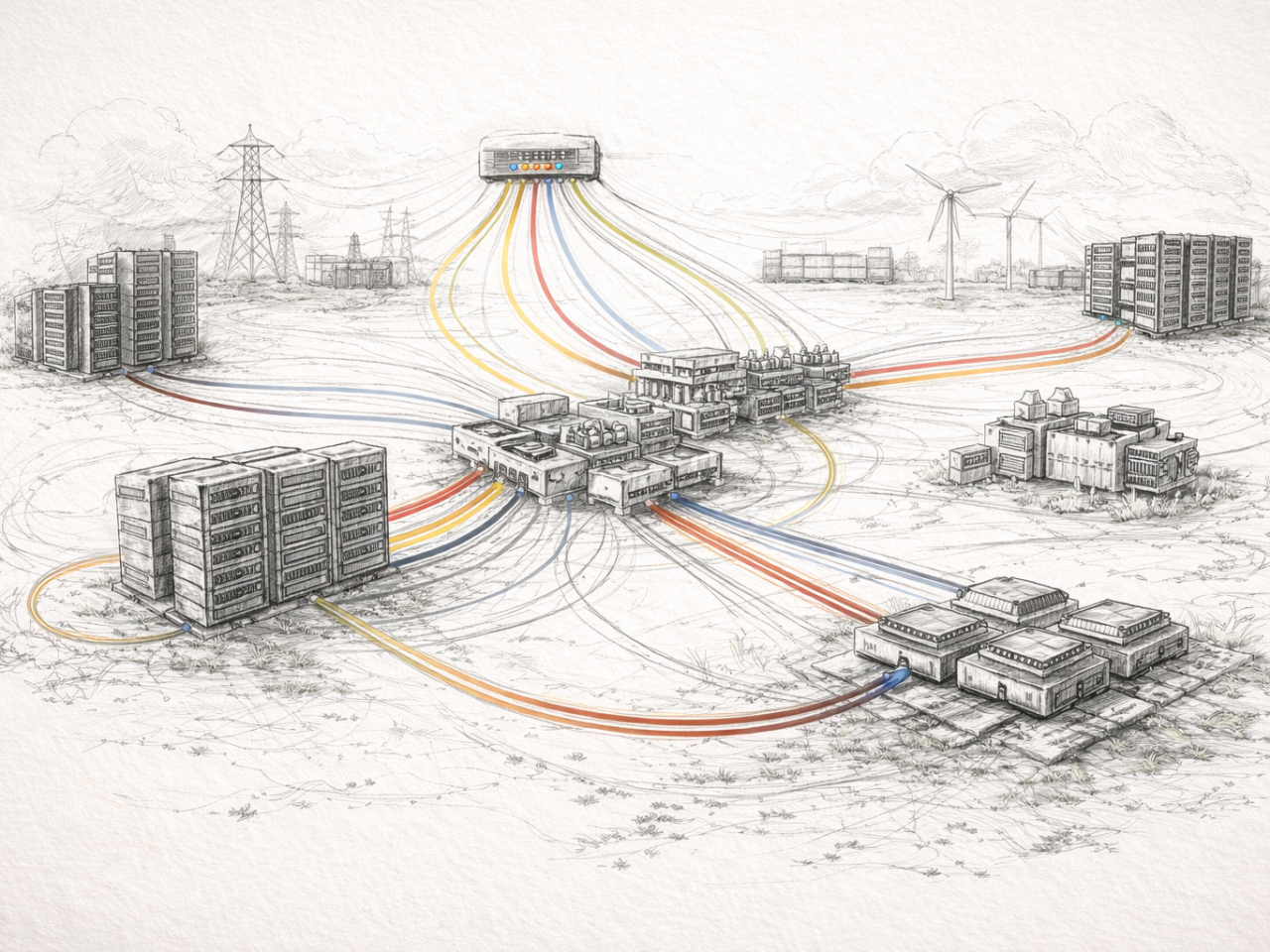
Revisiting digital infrastructure from first principles
From Innovation to Inheritance
Modern data centers present themselves as the pinnacle of technological progress: dense racks, immense processing power and ever-growing capacity. Yet beneath this appearance of novelty lies a quieter truth. Most data centers today are not truly designed; they are inherited. Their structure reflects decades-old assumptions about how computation should be organised, scaled and cooled.
This raises an uncomfortable question. If we were not constrained by legacy — not by existing buildings, wiring standards or historical design choices — would we still build data centers the way we do today?
Architectural Debt: When Yesterday’s Logic Shapes Today’s Limits
In software engineering, there is a well-known concept called technical debt: the accumulated cost of decisions that once made sense but now limit progress. Digital infrastructure carries a similar burden, though it is rarely named. It is architectural debt — the cost of building ever more powerful systems on a physical logic shaped by the constraints of another era.
At the heart of this debt lies a foundational assumption: that computation must be tightly packed, centrally organised and physically compact. This is not a law of nature, but a response to electrical constraints.
Read More