Freedom and Security
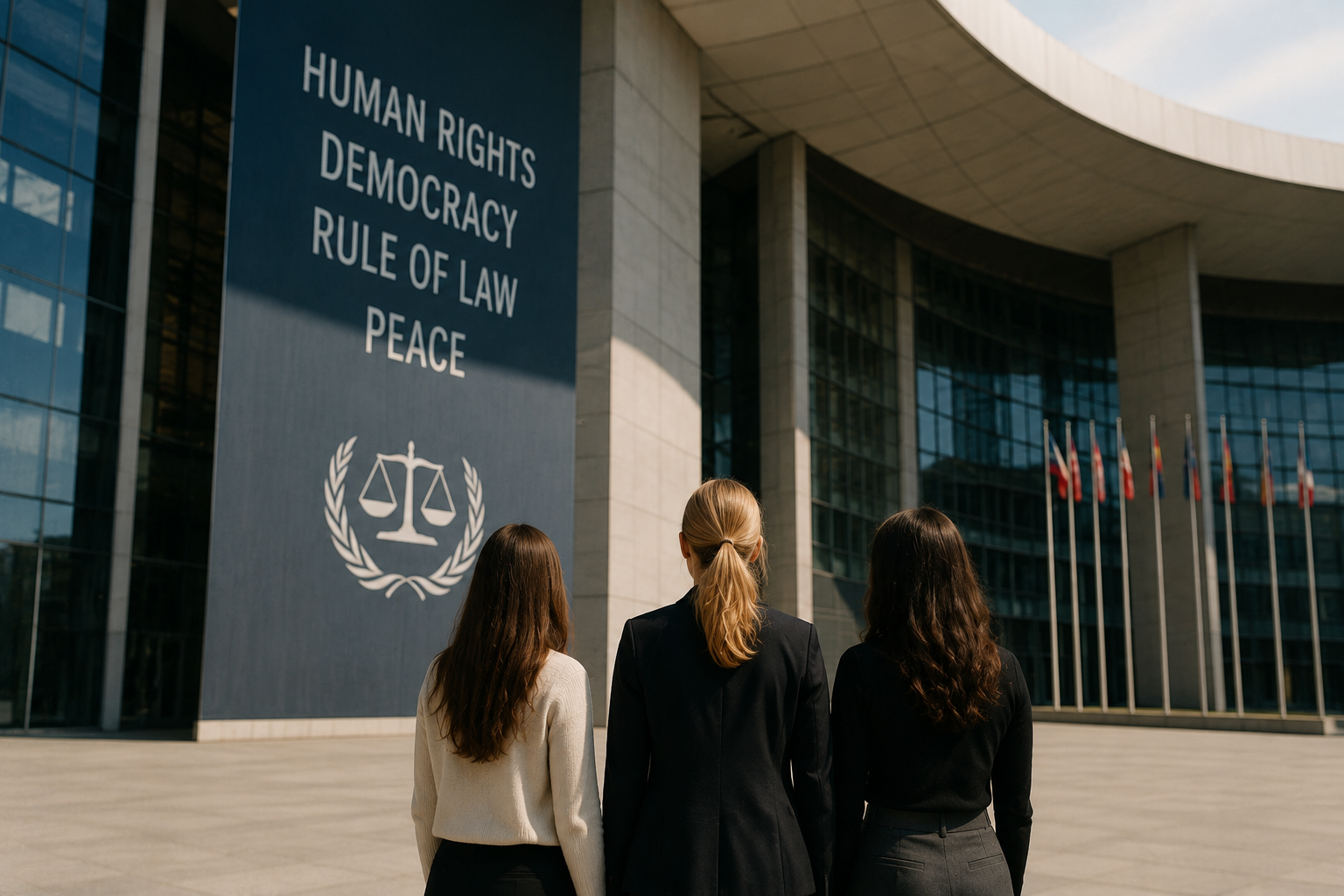
Can democracies protect both?
For much of the post-war era, democracy was often described as a careful balance between liberty and security. Governments were expected to protect citizens from external threats while preserving the freedoms that define an open society. These objectives were rarely viewed as contradictory. Security created the conditions in which freedom could flourish, while fundamental rights established the limits within which public authority could legitimately operate.
That balance has become considerably more complex. Modern democracies now face an expanding spectrum of risks. Terrorism, cyberattacks, foreign interference, organised crime, hybrid warfare, artificial intelligence and attacks on critical infrastructure have transformed the meaning of national security. Citizens increasingly expect governments not only to respond to crises, but also to anticipate them before they occur.
The defining challenge of modern democracy is no longer choosing between freedom and security. It is preserving both at the same time.
The challenge is no longer whether governments should protect society. The challenge is how they do so while preserving the freedoms that give democratic societies their legitimacy.
🟦 Security has changed
The concept of security has broadened dramatically over the past two decades. Where national security was once associated primarily with military defence and policing, it now encompasses cyber resilience, digital infrastructure, public health, energy systems, financial stability and technological sovereignty.
The result is that governments operate across a much wider landscape of potential risks than previous generations could have imagined. As the definition of security expands, so too does the scope of public authority. This evolution is understandable.
Whether it remains proportionate is a question democracies must continue to examine.
🟦 Surveillance is becoming part of everyday governance
Few technological developments illustrate this transformation more clearly than digital surveillance.
Camera networks, automated border controls, biometric identification, financial monitoring, artificial intelligence and algorithmic risk assessments increasingly support public authorities in preventing crime, protecting infrastructure and managing security risks.
Many of these technologies offer genuine public benefits. They can improve efficiency, strengthen resilience and help governments respond more rapidly to emerging threats. Yet their cumulative effect also deserves attention.
Technology does not diminish the importance of human rights. It increases the importance of governing technology democratically.
The relationship between citizen and state is gradually becoming more data-driven, more predictive and increasingly dependent upon digital systems whose operation is often invisible to the people they serve.
The question is therefore not whether surveillance exists. The question is how democratic societies govern it.
🟦 Temporary measures often become permanent institutions
Periods of crisis frequently require exceptional government action. History shows, however, that emergency powers rarely disappear entirely once a crisis has passed. New legal authorities, institutional arrangements and technological capabilities often remain embedded within public administration, gradually becoming part of normal governance.
This is not necessarily evidence of democratic decline. Rather, it reflects an important institutional reality. Governments accumulate responsibilities over time, particularly when societies continue to expect protection against new and evolving risks.
The challenge is ensuring that exceptional powers remain subject to democratic oversight long after the emergency itself has faded.
🟦 Trust is the real infrastructure of democratic security
Security ultimately depends on more than technology, intelligence agencies or legislation. It depends on trust.
Citizens are generally willing to accept far-reaching security measures when they believe institutions act transparently, proportionately and within the rule of law. Where institutional trust weakens, identical measures may instead be perceived as intrusive, excessive or politically motivated.
Security protects institutions. Trust allows institutions to protect society.
Security therefore rests not only on operational capability but also on democratic legitimacy. Trust is not simply a social value. It is critical public infrastructure.
As governments increasingly rely on digital systems to exercise public authority, legitimacy becomes inseparable from transparency. Citizens do not merely need secure institutions; they need institutions whose decisions remain understandable, contestable and subject to democratic oversight. When that transparency weakens, it is not only technology that comes under scrutiny, but the legitimacy of public authority itself.
🟦 From reactive government to predictive government
For centuries, public institutions largely responded to events after they occurred. Increasingly, digital technologies enable governments to anticipate risks before they materialise. Artificial intelligence, predictive analytics and large-scale data processing promise earlier intervention, more efficient public services and greater societal resilience.
This represents more than technological innovation. It reflects a gradual transformation in the way governments exercise public authority.
If institutions increasingly act on probabilities rather than established facts, democratic societies must continuously reassess how prevention, proportionality and individual freedoms are balanced.
Predictive governance may strengthen security. It also demands a renewed commitment to transparency, democratic accountability and the rule of law.
🟦 Artificial intelligence changes democratic accountability
Artificial intelligence introduces an entirely new dimension to the relationship between freedom and security. Unlike earlier technologies, AI can analyse enormous volumes of information, identify behavioural patterns and support decision-making at unprecedented speed and scale.
This creates remarkable opportunities for protecting society. It also raises profound questions about accountability.
Democratic legitimacy depends not only on knowing who is responsible for automated decisions, but also on whether citizens can understand how decisions affecting them were reached and whether meaningful avenues for review or appeal remain available.
The question is therefore no longer whether governments should use artificial intelligence. It is how democratic societies ensure that technological capability remains consistent with democratic accountability.
🟦 Freedom and security are not opposing values
Public debate often presents freedom and security as competing objectives. Reality is more nuanced. Without security, citizens cannot fully exercise their freedoms. Without fundamental rights, security measures gradually lose the democratic legitimacy that justifies their existence.
Freedom gives democratic power its limits. Human rights give democratic power its legitimacy.
Successful democracies therefore do not choose between freedom and security. They continuously negotiate the relationship between them. That negotiation may become one of the defining governance challenges of the twenty-first century.
Perspective
The architecture of democratic societies has never been static. Each generation reshapes the relationship between individual liberty, public authority and collective security in response to new realities. Today’s geopolitical instability, rapid technological innovation and expanding security landscape make that task more complex than at any point in recent decades.
Democratic societies will almost certainly become more digital, more connected and more security-conscious. The question is not whether this transformation will continue, but how it will remain anchored in democratic legitimacy.
The question is therefore not whether democracies should protect their citizens. The question is whether they can continue to do so while preserving the principles from which their authority ultimately derives.
Security protects citizens. Human rights protect the legitimacy of power.
Part of The Architecture of Rights, an editorial series exploring the evolving institutional, political and technological frameworks that shape human rights in the twenty-first century.
Image Credit
AI-generated editorial illustration for Altair Media.
Caption
Three citizens stand before a contemporary democratic institution, reflecting on the relationship between freedom, security and public authority. The architectural setting symbolises the institutional foundations of democratic governance, while the inscription evokes the enduring principles of human rights that continue to shape the legitimacy of public power in an age of technological and geopolitical change.
