A Larger Europe Needs a Different Decision-Making System
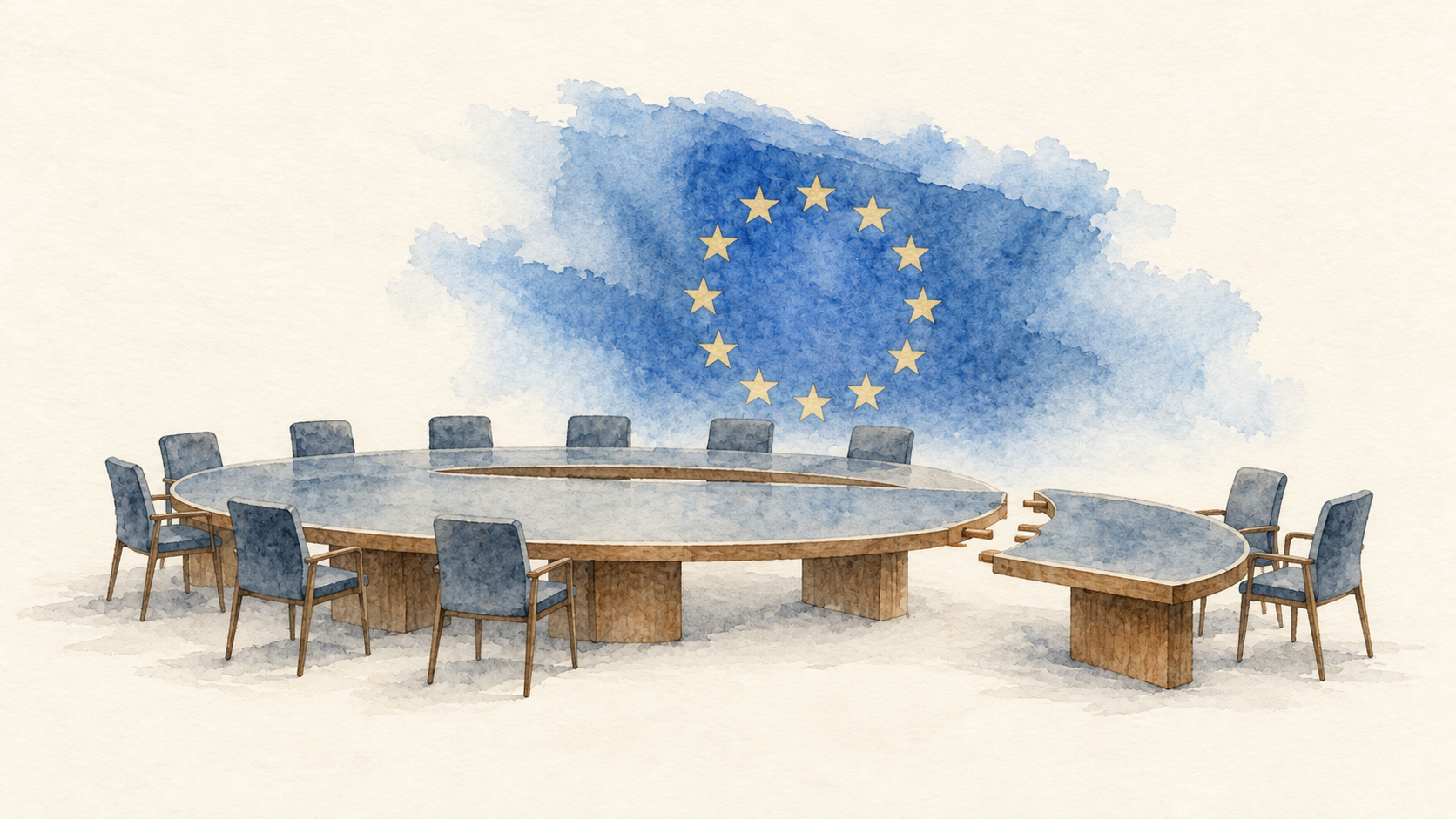
Candidate countries must prepare for membership. The European Union must prepare to govern.
Europe’s enlargement agenda requires reform on both sides of the negotiating table. Candidates must build institutions capable of applying European law. Existing members must prepare to make decisions, distribute resources and enforce obligations within a larger Union.
The Commission’s proposals of 6 October address that connection. At their October summit, EU leaders likewise called for candidate reforms alongside internal changes to the Union. The political commitment now needs an operational answer: how will a larger Europe remain governable?
🟦 What does a new member bring into Europe’s legal system?
When a country joins, its courts, regulators and financial controls become part of the machinery on which other members depend. Businesses need enforceable contracts. Governments need confidence that European funds reach their intended recipients. Citizens need effective protection when authorities breach their rights.
A politically compromised judiciary therefore creates consequences beyond national borders. It weakens the mutual trust supporting the single market and cross-border cooperation. The Council explicitly identifies that connection between the rule of law, market functioning and sound financial management.
The accession test is whether institutions can withstand political pressure in everyday practice. Adopting legislation establishes a commitment; independent enforcement gives it substance.
🟦 How many vetoes can a larger Union accommodate?
More members bring additional interests and negotiating coalitions. Under unanimity, each also gains the capacity to withhold agreement.
That power can protect a country facing exceptional costs. It can also allow a government to attach unrelated demands to a shared European decision. Where external powers can influence a blocking capital, the same mechanism creates a potential route for pressure on the wider Union.
Qualified-majority voting already governs much European decision-making. The Commission proposes extending it selectively, including to certain foreign-policy decisions and intermediate steps in accession negotiations. Final admission remains subject to unanimity under current rules.
Reform must make collective action possible while preserving credible protection for essential national interests. Governments need confidence that losing a vote will not mean losing their voice.
🟦 Who enforces the commitments after accession?
Before accession, the EU can make progress towards membership conditional on reform. Once membership begins, that particular incentive disappears.
Enforcement continues through EU law, court proceedings, budget protection and Article 7. But withholding membership and disciplining an existing member are different instruments, with different political constraints. The Union must prepare for that change in leverage.
The Commission proposes stronger safeguards in future accession treaties, including an institutional mechanism potentially allowing suspension of voting rights in serious cases. These proposals have yet to become agreed accession conditions.
Their credibility will depend on consistent standards. Tougher requirements for newcomers cannot substitute for enforcing obligations among existing members. The objective is durable compliance across the Union, supported by proportionate measures and legal protection.
🟦 Who accepts the financial redistribution?
Enlargement changes the claims on European resources. Ukraine’s agricultural economy and reconstruction needs make that distributional question particularly significant.
With an unchanged spending envelope and existing allocation rules, additional beneficiaries would increase pressure on transfers to current recipients. Some countries could face lower receipts or a changed net position. The outcome depends on budget size, contribution arrangements, policy reform and transition periods.
Becoming a net contributor is therefore no mathematical inevitability. The redistribution conflict is nevertheless real.
Governments must decide whether to contribute more, redirect spending, redesign agricultural and cohesion support, or combine those choices. Candidates need clarity about what support membership would bring.
A credible accession promise requires a financial bargain that governments can defend before their own electorates.
🟦 Can gradual integration sustain a credible membership promise?
Earlier participation in European markets and programmes can give candidates practical benefits while reforms continue. The Commission identifies opportunities in energy, transport, digital infrastructure and defence, linked to readiness and reform progress.
Such participation can build administrative experience and strengthen economic connections. Its political value depends on a clear route towards full membership.
Without transparent conditions and credible progression, gradual integration risks becoming permanent provisional status. Citizens may see obligations accumulating while political participation remains out of reach.
Existing members face a corresponding responsibility: internal reform needs decisions, ownership and deadlines. Europe’s readiness cannot remain an indefinitely movable condition for countries meeting their commitments.
Signal
Enlargement tests Europe’s ability to turn strategic ambition into collective capacity.
Candidates must demonstrate institutions that remain effective through political change. Existing members must agree how a larger Union will decide, finance its commitments and enforce shared rules.
Both reform agendas must advance together. Otherwise, accession promises lose credibility while institutional weaknesses remain unresolved.
A larger Europe gains strength when it retains the power to decide—and the trust needed to carry those decisions through.
This Signal is the second article in Europe’s Power to Decide — Vetoes, enlargement and the struggle to govern a larger Union.
Credit
AI-generated watercolour illustration created with OpenAI for Altair Media.
Caption
An additional section awaits connection to a European council table, symbolising the institutional changes needed to accommodate new members while preserving the Union’s capacity to act.
