Europe’s Photonics Test Begins at the Factory
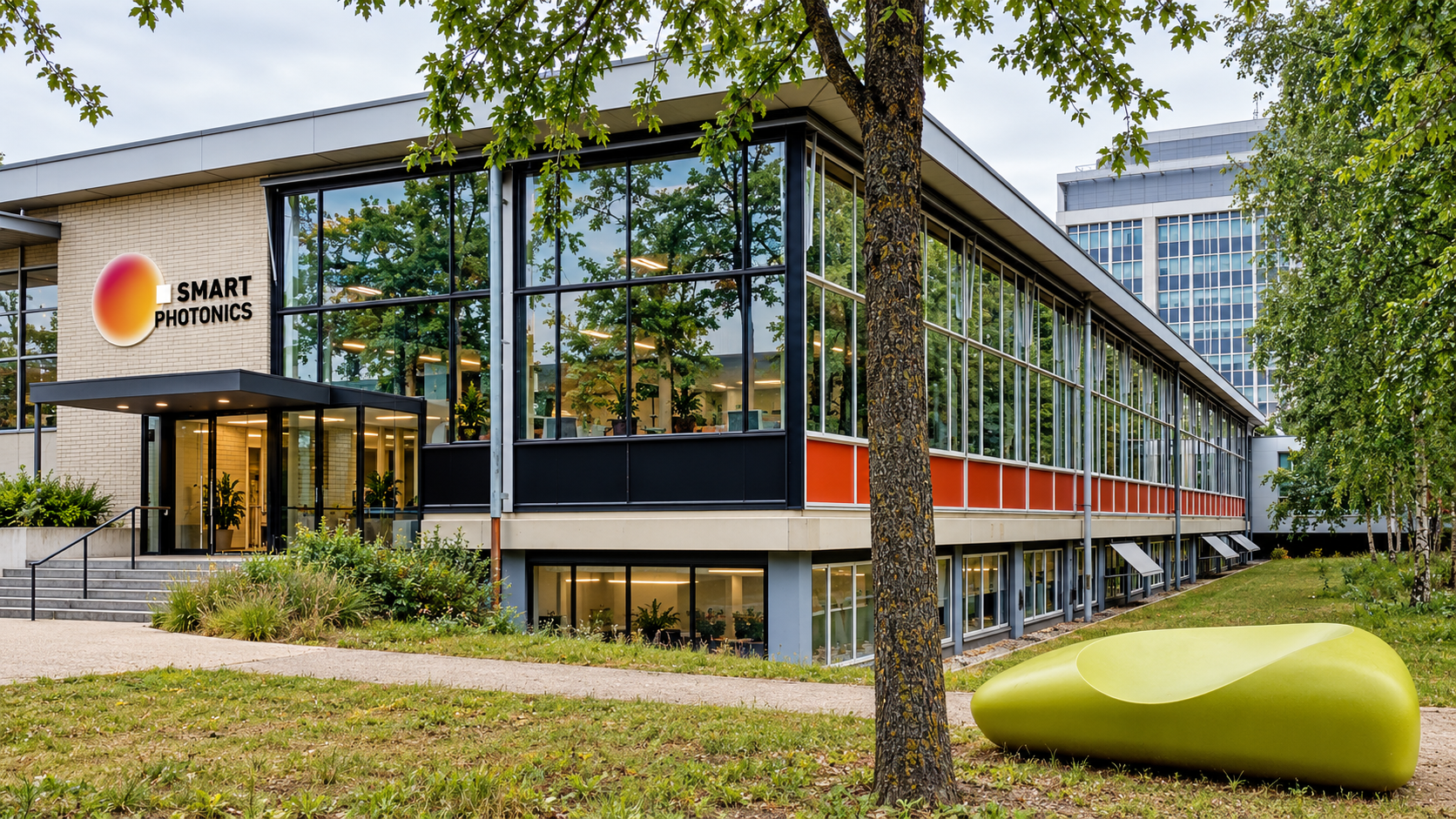
Eindhoven is building the capacity to produce light-based chips at scale. A new partnership with GlobalFoundries shows both the opportunity and the tension in Europe’s industrial ambition.
A photonic chip can work brilliantly in a laboratory and still fail as an industry. Eindhoven is moving toward six-inch indium phosphide production, while SMART Photonics has partnered with GlobalFoundries to combine its optical components with a silicon photonics platform. These are significant steps. They also expose a harder question: who will shape the path from prototype to product?
That path runs through factories, customers and decisions about where value is created.
🟦 Is a larger wafer already an industrial breakthrough?
No. SMART Photonics currently produces on four-inch wafers and expects its six-inch capacity to become operational in 2028. Larger wafers offer a route to producing more chips efficiently. Customers also need consistent yields, dependable testing and a practical way to package those chips into products. Eindhoven’s pilot line is being built to develop those capabilities. A bigger wafer opens the door to scale; it does not settle the economics of scale.
🟦 What exactly is Europe trying to sell?
A photonic component is rarely the whole product. Lasers, modulators and other devices must work together within a system that customers can manufacture and use reliably. SMART Photonics’ agreement with GlobalFoundries addresses that challenge by integrating indium phosphide components with a silicon photonics platform. This is where the industrial stakes become clear. Will European firms help define the platform, or supply valuable parts for systems shaped elsewhere?
🟦 Does working with an American foundry weaken European sovereignty?
It makes the meaning of sovereignty more precise. GlobalFoundries brings an established silicon platform and manufacturing reach. SMART Photonics brings expertise in indium phosphide devices. Their joint production service is targeted for general availability in the second half of 2027.
The partnership could bring Eindhoven closer to global customers. The test is whether it also makes European capability indispensable to the products those customers build. Participation in a supply chain is valuable. Influence over how that chain develops is more valuable still.
🟦 Who will turn production capacity into an industry?
Factories need customers willing to design products around their processes. Customers need confidence that a factory can deliver the same performance repeatedly. The new Eindhoven pilot line is intended to bring research, industrial testing and production closer together. That can shorten the distance between a promising design and a manufacturable chip. It cannot guarantee that customers will place orders.
🟦 What would success actually look like?
More than a European chip inside a global product. Success would mean that European firms help set the designs, manufacturing processes and commercial terms on which future products depend. That is a higher bar than demonstrating excellent technology. It is also the point at which photonics becomes industrial power.
Signal
Europe’s photonics transition has reached the factory floor. The decisive question is whether it can turn production capacity into a lasting position in the value chain.
Image credit
AI-generated editorial image for Altair Media, based on a reference photograph of the SMART Photonics building. Logo placement is illustrative.
Caption
SMART Photonics in Eindhoven, shown in a photographic impression. Europe’s next photonics challenge is turning technical expertise into reliable production at scale.
