The Parliamentary Polder Faces Its First Real Test
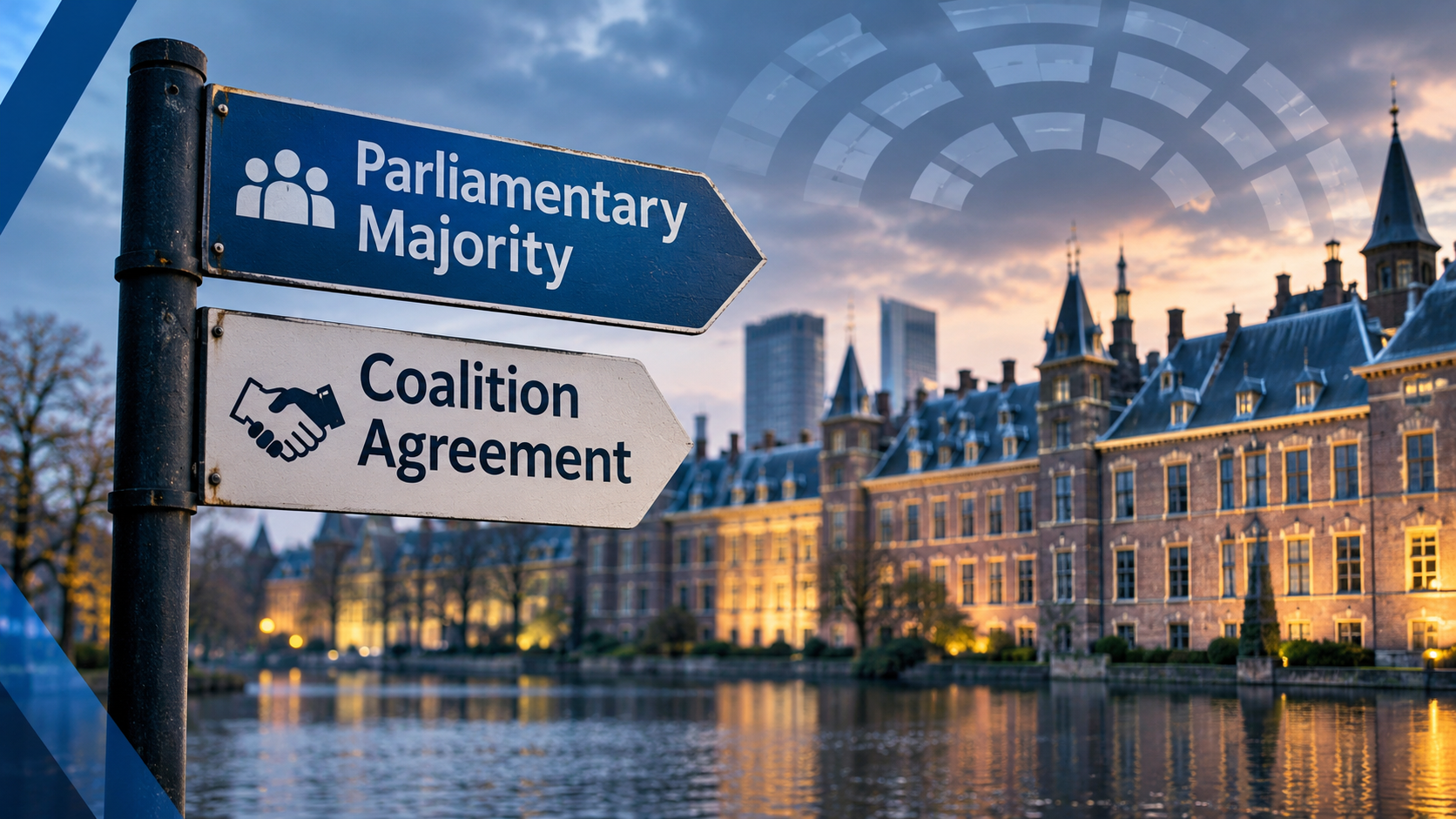
When parliamentary majorities collide with coalition agreements
The Dutch minority government has survived a political confrontation over its tax plans, but the disagreement between D66, CDA and VVD remains unresolved. A parliamentary majority approved legislation opposed by one of the governing parties. The crisis raises a fundamental question: can coalition partners govern together while pursuing different parliamentary majorities?
On 12 November, the House of Representatives approved the 2027 tax package by 76 votes to 74. D66 and CDA had reached an agreement with progressive opposition parties PRO and Volt, shifting part of the tax burden from labour towards higher investment returns.
The VVD opposed the changes, arguing that they crossed political and economic boundaries agreed within the coalition.
The majority settled the vote. It did not settle the disagreement.
Following crisis talks on Friday, Prime Minister Rob Jetten acknowledged that the governing parties needed to improve their cooperation. Discussions will continue over the weekend.
Five questions reveal the tensions behind this new experiment in Dutch democracy.
🔹 Does a parliamentary majority outweigh a coalition agreement?
Parliament has the authority to decide. Coalition agreements provide the political foundation for governing.
A coalition agreement cannot prevent elected representatives from supporting alternative proposals. In a minority government, such compromises are essential to passing legislation. But coalition agreements also establish expectations about policy and shared responsibility. The VVD argues that its partners crossed those boundaries.
D66 and CDA secured the necessary parliamentary support. Whether they respected the political commitments underlying their government remains disputed.
The majority settled the vote. It did not settle the disagreement.
🔹 Can a government defend legislation one of its own parties rejects?
The tax package passed, but the governing parties did not speak with one political voice.
The VVD voted against legislation that the government, including its VVD finance minister, must now defend during consideration in the Senate.
Prime Minister Jetten acknowledged this unusual situation during Friday’s press conference.
Parliamentary authority and collective government responsibility have become politically difficult to reconcile.
The legislation can proceed. But who takes political ownership when the parties responsible for implementing it fundamentally disagree?
🔹 Does greater parliamentary freedom make government less stable?
The minority coalition depends on opposition support. That dependence can also undermine its internal cohesion.
D66, VVD and CDA hold just 66 of the 150 seats in the House of Representatives. Finding parliamentary partners is therefore a necessity, not an exception.
The agreement with PRO and Volt demonstrated that alternative majorities are possible. Other issues may require cooperation with parties elsewhere on the political spectrum.
This gives parliament greater influence over government policy. But it also raises a question about predictability. If different coalitions determine different policies, how can the government maintain a coherent direction?
🔹 Who holds the power of veto inside a minority coalition?
The VVD wants stronger political commitments. But giving coalition partners greater control could restrict the parliamentary flexibility they need.
Dilan Yeşilgöz has called for a fundamental reset. Jetten speaks of improving cooperation and finding a new way forward.
The disagreement exposes an important question about political power.
If every governing party can block compromises negotiated with the opposition, minority government may become increasingly difficult.
But if coalition partners can negotiate without meaningful internal consultation, collective responsibility loses much of its political substance.
Neither approach offers an easy solution. The challenge is to determine when coalition agreement is essential and when parliament must remain free to decide.
🔹 Can the parliamentary polder become a durable way of governing?
The government has survived the vote. Its governing model still needs to prove itself.
Traditional Dutch coalition politics relies heavily on agreements negotiated before governments take office.
Minority government creates more opportunities for parliamentary negotiation, but also greater uncertainty about political commitments.
The tax dispute has demonstrated both possibilities.
The next test is whether D66, CDA and VVD can establish clear procedures for negotiating with opposition parties while maintaining sufficient trust to govern.
The question is no longer whether alternative majorities are possible. It is whether they can become part of a dependable political system.
Signal
The Dutch minority government has survived its first major confrontation over parliamentary authority. The underlying dilemma remains.
A majority of 76 votes was enough to approve the tax package. It was not enough to preserve confidence between the governing parties.
Democracy determines how decisions are made. Governing requires agreement on how those decisions are carried out.
The parliamentary polder now faces its defining challenge: turning political flexibility into stable and accountable government.
Previously in Altair Media
This Signal builds on our earlier analysis of the Netherlands’ emerging parliamentary polder and the opportunities and challenges of minority government.
Read: The Parliamentary Polder: A New Kind of Dutch Politics? → [Link to previous article]
Image Credit
AI-generated editorial illustration | Altair Media Europe
Image Caption
Parliamentary majority or coalition agreement? The Dutch minority government faces a fundamental test as political freedom collides with coalition commitments.
