Saturday, September 5, 2026

Maria Luís Albuquerque is trying to connect Europe’s vast household savings with the companies, infrastructure and technologies the continent needs—while navigating fragmented markets, national resistance and the tension between productive investment, financial stability and citizen protection.
Read More
Wednesday, July 15, 2026

Despite sharing a common currency, Europe’s capital markets remain fragmented across national legal and financial systems. This essay explores why the Capital Markets Union seeks to bridge those divisions—and why deeper financial integration has become essential for Europe’s future competitiveness.
Read More
Tuesday, July 14, 2026

Europe has built a single market and a common currency, yet its capital remains fragmented. This opening essay explores why the Capital Markets Union has become a strategic priority—and why financial markets are increasingly part of Europe’s critical infrastructure.
Read More
Tuesday, July 14, 2026

Europe has a common currency, yet its capital markets remain fragmented. This series explores the stock exchanges, financial infrastructure and institutions shaping investment, innovation and long-term ownership—and why a stronger Capital Markets Union has become central to Europe’s economic future.
Read More
Sunday, July 12, 2026

Europe has no shortage of innovation. The greater question is who ultimately owns the companies that transform scientific breakthroughs into industrial power. Ownership is no longer simply a financial issue. It increasingly determines where decisions are made, where ecosystems grow and where Europe’s future competitiveness takes shape.
Read More
Sunday, July 5, 2026
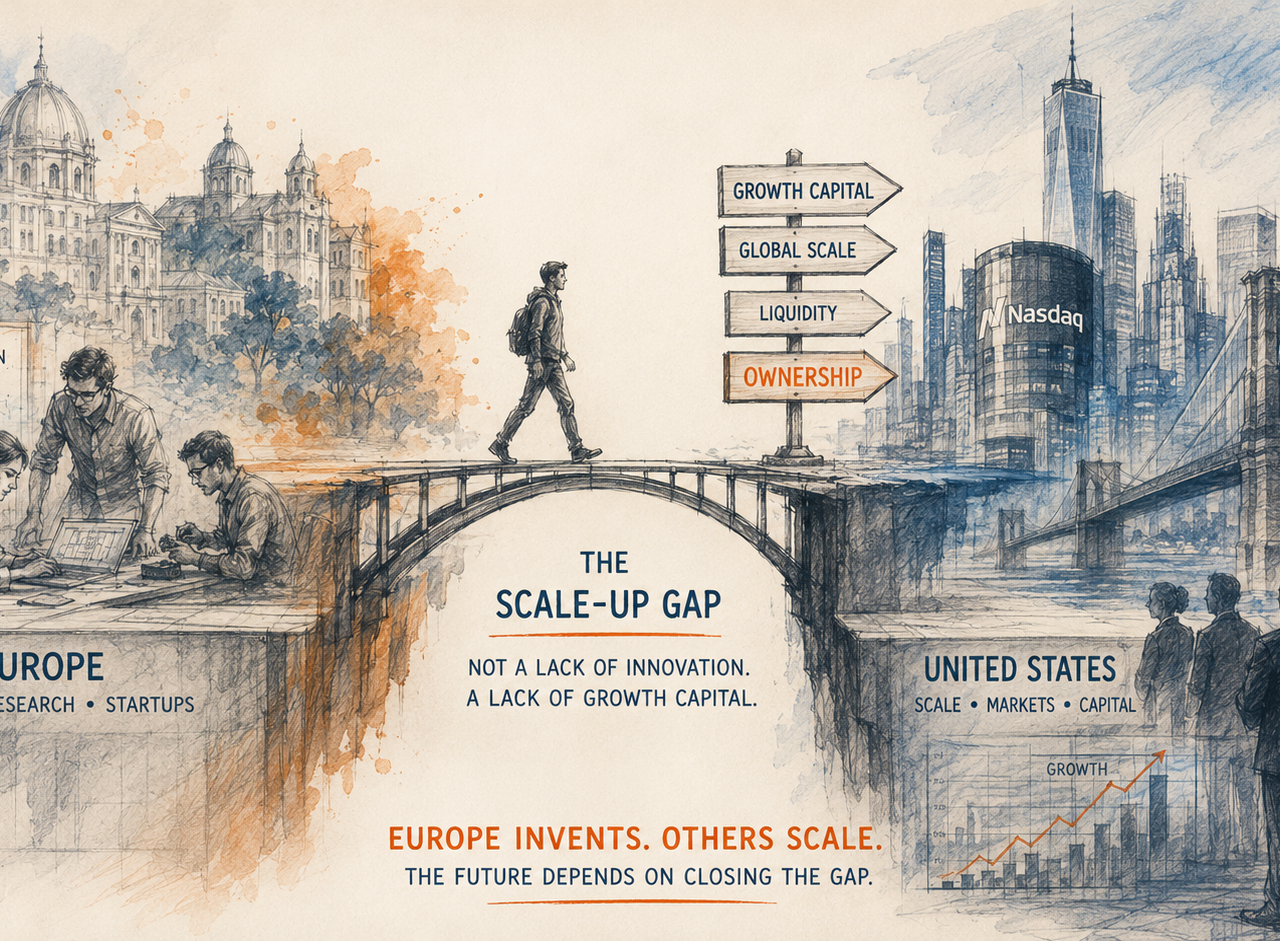
Europe has never lacked innovation. Its challenge has been transforming research excellence into global companies that remain rooted in Europe. The scale-up gap raises a deeper question: can Europe build the capital architecture needed to turn innovation into ownership, influence and long-term sovereignty?
Read More
Saturday, June 13, 2026

Europe’s challenge is no longer simply competing with foreign companies. It is increasingly competing with state-backed industrial ecosystems. As strategic industries shift from products to infrastructure, Europe faces difficult questions about resilience, sovereignty and the future of open markets.
Read More
Thursday, June 11, 2026

While much of Europe embraced market liberalisation, France maintained a stronger belief in the strategic role of the state. Today, as debates over industrial policy, energy security and technological sovereignty return, France’s economic model appears more relevant than it has in decades.
Read More

 Available here: