Sunday, March 8, 2026

Modern civilization runs on invisible systems. Power grids, digital networks, financial platforms and logistics chains quietly connect the world around us. The Infrastructure Age reveals how these hidden systems shape economies, societies and geopolitics — and why understanding them matters more than ever.
Read More
Wednesday, March 4, 2026

As artificial intelligence moves beyond the cloud into factories, vehicles and cities, telecom networks are emerging as a critical strategic layer of the digital economy. At Mobile World Congress 2026, BT Group CEO Allison Kirkby argues that connectivity is becoming the nervous system of the AI age.
Read More
Tuesday, March 3, 2026

AI agents are beginning to replace apps as the primary gateway to digital services. As execution overtakes interaction, power shifts toward those controlling infrastructure, compute and energy — redefining platform dominance, marketing strategy and digital sovereignty in the process.
Read More
Thursday, February 19, 2026

Europe’s telecom giants are discovering that the true constraint on digital growth is no longer spectrum or software, but electricity. As AI spreads across networks, connectivity itself is becoming energy-intensive infrastructure — forcing operators to rethink costs, strategy and their role in the physical economy.
Read More
Sunday, February 15, 2026

As AI shifts power from software to hardware, Europe confronts a deeper vulnerability: dependence on foreign compute infrastructure. Initiatives like PIXSpain aim to rebuild strategic autonomy at the physical layer — where chips, energy and photonics increasingly determine economic and geopolitical power.
Read More
Saturday, February 14, 2026

Long dismissed as “dumb pipes”, telecom operators control something increasingly scarce in the digital age: geographically distributed infrastructure with power, connectivity and proximity to users. As energy and latency become binding constraints, networks may evolve from transport systems into Europe’s most valuable compute platforms.
Read More
Friday, February 13, 2026

Europe’s telecommunications sector is undergoing a structural redefinition. What was once treated as a competitive consumer market is now recognised as strategic infrastructure — a foundational layer for artificial intelligence, cloud computing, defence coordination and democratic governance.
Read More
Friday, February 13, 2026

For much of the past half-century, innovation followed a recognisable pattern. New technologies emerged at the margins, matured through research and industry, and were eventually absorbed into stable infrastructures. Strategy assumed continuity. Institutions assumed predictability. Progress, however fast, remained legible.
Read More
Wednesday, February 11, 2026

Artificial intelligence is usually discussed as software. Faster models. Bigger datasets. Smarter algorithms. But what if the real shift is not in the code — but in the physics?
Read More
Tuesday, February 10, 2026
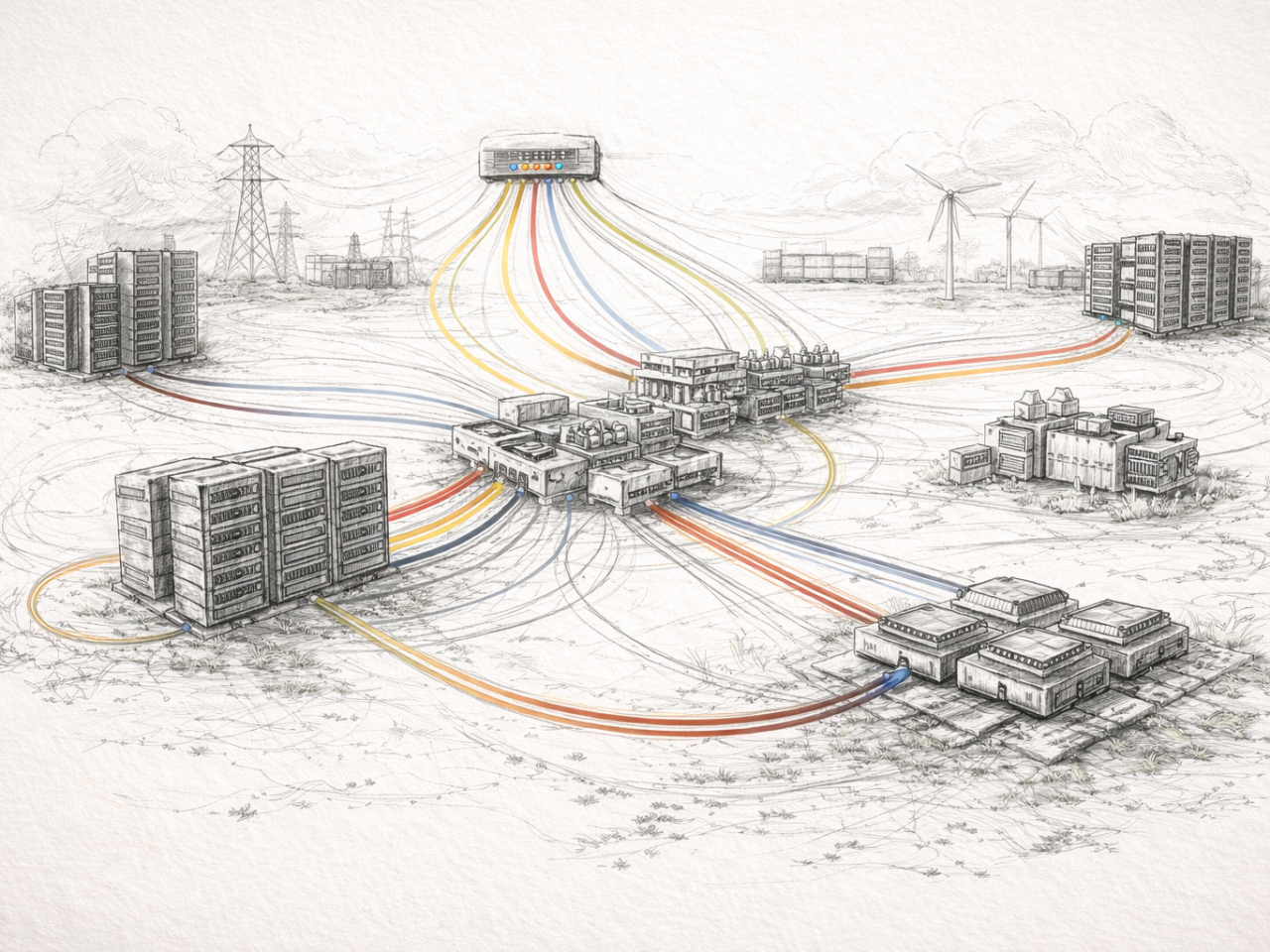
Modern data centers present themselves as the pinnacle of technological progress: dense racks, immense processing power and ever-growing capacity. Yet beneath this appearance of novelty lies a quieter truth. Most data centers today are not truly designed; they are inherited. Their structure reflects decades-old assumptions about how computation should be organised, scaled and cooled.
Read More

 Available here:
